
Buying Vintage Hair Accessories You’ll Actually Wear
A barrette that snaps shut cleanly and holds without snagging will see more wear than a drawerful of beautiful ones with tired catches. That matters if you buy vintage partly to avoid buying new: an old accessory is only a useful alternative if you can wear it, look after it and keep it in service. A few dependable pieces can provide variety without a steady stream of purchases.
Vintage is not an automatic environmental credential. Buying second-hand may reduce demand for a newly made equivalent, but manufacture, transport and repair have impacts too, and the full history of a piece is rarely known. Ask instead whether it suits your life. In a British wardrobe that moves between work, weekends and the occasional evening out, a reliable comb or slide may earn its place more readily than a fragile ornament kept only for display.
Choose a role before choosing an era
Decade labels are tempting, but start with what the accessory needs to do. A comb supports or decorates gathered hair; a slide secures a section. A bow might be attached to a clip, elastic or pin, each likely to wear differently. Turn the piece over and examine the fastening as carefully as the front.
- For a quick everyday fastening: look for a slide or barrette with a firm catch that sits comfortably against the head. Check the hinge for looseness.
- For decoration on an existing style: a small comb or pin can sit beside a bun without bearing its full weight. It is a kinder job for a delicate vintage piece.
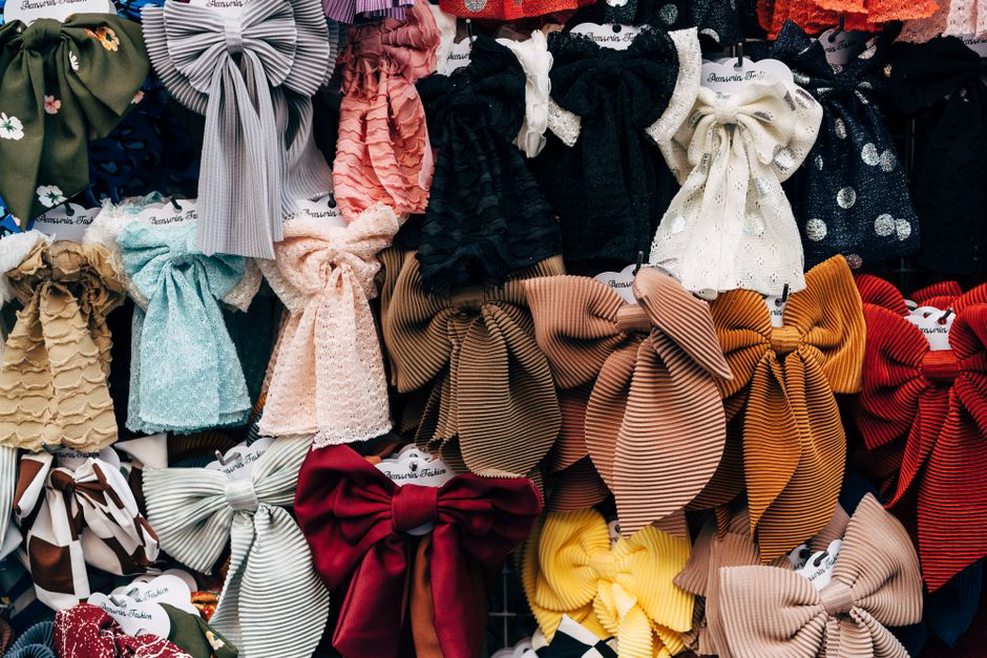
- For a change of silhouette: a fabric bow, scarf or padded band changes the outline without a rigid ornament. Check the stitching and whatever part provides the grip.
- For occasional wear: keep heavy beadwork or brittle early plastics for times when you can position them carefully. Take them out before dropping them into a crowded bag for the trip home.
Fit is personal, not a test of whether you can achieve a prescribed look. A curved comb may hold in one arrangement and slip from another; a large French barrette may need more hair under its clasp than a small slide. Try the mechanism gently if you can. If trying it on is inappropriate, measure an accessory you already use and compare both the decorative width and the usable length of the fastening.
What the decades offer—and what they do not prove
Early twentieth-century combs could be tall and openworked, made to show above a dressed hairstyle. Art Deco taste favoured geometry; later decades brought neat postwar slides as well as broad plastic shapes. Such silhouettes are useful references, not proof of age. Bows recur across periods, and a geometric clip could be a later revival.
Let a piece work with your clothes rather than dressing entirely to its supposed date. An elongated comb adds height to a plain evening outfit. A modest metal slide gives a contemporary shirt collar a crisp companion; a generous bow holds its own against a simple jumper. Mixing periods often leaves the accessory room to be noticed without turning the whole outfit into historical imitation.
Production methods changed through the twentieth century, too. Ornaments might be cut or carved, moulded or stamped, plated, sewn or assembled from separate parts. A hand-finished edge has its appeal, but machine production does not make a piece less worthy of reuse. Weigh its construction and condition against its price and the job you expect it to do.
Materials call for different kinds of caution
Celluloid and other early plastics can have striking colour and pattern, but call for more cautious handling than many later synthetics. A mottled brown comb is not necessarily genuine tortoiseshell, nor is every clear piece a particular named plastic. Sellers may be describing what they see rather than a confirmed material. When in doubt, avoid heat, solvents and vigorous polishing.
Give metal fittings a close look. Green staining, flaking plating, sharp edges or a pin that scrapes the underside can make an appealing find unpleasant to wear. Glass stones may be securely set or held by ageing glue; good light and a view from both sides help reveal gaps. Fabric bows and padded bands can look sound at the front while the backing has stretched or the stitching has weakened.
Older accessories may contain shell, horn, feathers or ivory. If the material or provenance is uncertain, do not take a seller’s guess as confirmation. Rules on selling and moving certain materials can be complicated, particularly across borders. Wood, metal, glass or a clearly identified plastic may be a simpler choice than an object whose legal or ethical status is unclear.
A useful environmental test: will it displace anything?
The clearest case for a vintage purchase is that you will use it instead of buying a new accessory for the same purpose. You need not claim an exact carbon saving; that is seldom possible for an individual find. You do need to be honest about likely wear. A repairable comb used every week is a different purchase from a cheap curiosity that goes straight into a drawer.
Think about how you get it, too. Looking in a local charity shop while running other errands differs from making repeated long trips for single low-cost finds. Ordering online might help you find a better fit, but excessive packaging and returns can work against an intention to buy less. Combining orders only helps if you actually want the additional pieces.
Repair deserves the same practical judgement. A new stitch or a professionally secured catch may give a favourite piece years of use. Even a repair costing more than the purchase price can make sense if you will wear the result often. But not every damaged ornament needs to become a project: crumbling parts, heavy corrosion or fittings that cannot be secured may be reasons to leave it behind.
Shop with a short brief, not a treasure-hunt mandate
Before visiting a vintage shop, antiques fair or charity shop, name one gap in your collection: perhaps a compact weekday slide or a dressier comb for something you already own. Bring the approximate measurements of a piece that fits. At a fair, inspect the back before asking its age. Online, look for clear photographs of the fastening, teeth, edges and any repairs. A listing showing only the decorated front omits the evidence you most need.
- Check operation: gently open and close the fastening once or twice. It should move predictably, without force.
- Check contact points: carefully feel accessible edges and look for protruding wires, rough seams or cracked teeth.
- Check completeness: compare the pattern on both sides for missing stones, beads or decorative sections.
- Check the description: distinguish a documented maker or date from a seller’s estimate. Ask questions if the claim matters to your decision.
- Check your intended use: decide where the piece will live and when you would wear it before paying.
For a close look at assessing a decorative motif as an object, rather than admiring only its front, the collector's guide to the p371 leaf hair clip offers a focused example. The same attention to construction helps with plainer finds.
Authenticity without the costume-party anxiety
“Vintage-style” means a look; “vintage” means an older object. Neither promises quality, and an unlabelled piece may be hard to date. Wear can suggest age, but deliberate distressing, replacement clasps and later reproductions complicate matters. Judge the object and the evidence offered, not the confident decade in a listing title.
You need not seek a rare or expensive original to build a thoughtful wardrobe. A modest second-hand piece of uncertain age can still be useful if it is described honestly. Do not pass a reproduction off as an antique or repeat an unverified maker’s name when lending, gifting or selling it. Keep any information supplied with the piece, and distinguish documented facts from your own impressions.
A replacement fastening is not necessarily a flaw. It might make a sound decoration wearable again, provided the attachment is secure and does not strain the old material. A seller should disclose significant known alterations. If you prize untouched construction, the repair changes its interest as a collectible; if you want regular wear, a good repair may be welcome. Both priorities are reasonable.
Make the accessory work with clothes already in rotation
Try echoing one element of an outfit without matching it exactly. A dark velvet band can pick up the depth of a wool coat; a pale bow can soften a sharply cut jacket; a clean-lined metal slide can relate to the hardware on a bag. Consider scale, too. Beside prominent earrings, collar and print, a narrow clip may do more than an elaborate comb.
For daytime, wear one visible accessory with familiar separates. A mid-century-inspired slide beside a striped cotton shirt feels different from that same slide paired with matching period jewellery and dress. A bow at the base of loosely gathered hair brings texture to denim or knitwear. In the evening, set a decorative comb to one side of a simple arrangement so its shape shows without asking it to support all the hair.

British weather and everyday travel can settle the choice for you. A windy, rainy walk may call for a firm, unobtrusive fastening rather than a tall comb or wide ribbon. Keep fragile pieces out of coat pockets where keys could scratch them. If an ornament is comfortable for only a few hours, take a small protective pouch rather than expecting its delicate clasp to last all day.
Care for continued use, not a showroom finish
Gentle handling suits a mixed vintage collection better than an all-purpose cleaner. Hold the fastening when removing a piece instead of pulling the ornament. After wear, use a soft dry cloth on a sound, non-porous surface if needed. Keep moisture away from uncertain adhesives, fabric backings and vulnerable metals; do not soak a composite piece because one component can tolerate water.
Store pieces so clasps cannot press against decorated fronts. A shallow divided box, fabric pouches or layers of soft, clean material can prevent scratches and tangled chains. Give comb teeth room so they do not catch in lace or ribbons. Avoid prolonged direct sunlight and heat, particularly when material or colour stability is uncertain. Do not crush the pile of a velvet band beneath heavier objects; the collector's guide to the p382 velvet braided headband looks more closely at that construction.
If a clasp loosens, stop wearing the piece until it can be assessed. Repeatedly snapping a failing hinge shut may damage the ornament as well as the mechanism. Photograph the back and fastening before taking it for repair, so you have a record of how the parts were attached. Give a newly acquired slide a short first outing close to home: you will soon learn more about its grip and comfort than any front-view photograph could tell you.