
1920s Hair Accessories: How to Read and Wear Them
A beaded band worn low across the forehead and a narrow slide tucked beside a cloche may both be labelled “1920s”, but they do quite different things. The band draws the eye to the face and evening dress. The slide might almost vanish beneath the brim while holding a wave in place. Where an accessory sits, and what it needs to do, can tell you as much as its decoration.
Start with the hair, not the ornament
The bob is the decade’s defining silhouette, but it was never the only one. Hair might be cut to the jaw, shingled shorter at the nape, or kept longer and arranged to look compact. Soft waves and close-fitting hats affected the choice of ornament. An upright comb made for an earlier, fuller hairstyle had less room to sit; a clip at the temple, or a piece following the curve of the head, worked with the new outline.
The shift was cultural as well as practical. Short hair became associated with fashionable modernity, though choices differed by age, community, occupation and personal preference. Encyclopaedia Britannica’s account of the flapper places cropped hair within a wider image of changing dress and behaviour. It is useful context, not a portrait of every woman in 1920s Britain.
When looking at a period photograph, ask three separate questions: what holds the hair, what provides the visible decoration, and what supports the hat? A plain pin may do the hard work while a sparkling ornament gets all the attention.
The vocabulary: band, slide, comb and pin
Forehead bands and evening headpieces
Bands of fabric or ribbon, as well as elasticated and jewelled versions, could sit low across the forehead or farther back in the hair. In fashionable evening images, a band might carry a feather, beadwork or a central jewel-like motif. Its horizontal line framed the face and suited the close lines of contemporary hairstyles. The feathered headband has become shorthand for the decade, but it belongs to a particular festive look, not everyday dress.
Even the angle of a feather changes the effect. A tall plume adds theatrical height; a flatter spray follows the head. Nor does a feather in a modern “flapper” assortment prove that the original style was worn to a dance. Stage wear, costume photography and later revivals all draw on the same vocabulary.
Slides, clips and small combs
A slide near the ear can emphasise a finger wave or hold back a growing-out section. Matching slides create symmetry; one decorated piece gives the eye a focal point. Small combs may sit at the side or back, their teeth largely hidden. Placement can reveal more about the intended effect than sparkle: an ornament behind the ear may show beneath a hat brim, while one high on the crown may disappear under it.
Names are less reliable. “Barrette”, “slide” and “clip” can describe overlapping forms in old advertisements and modern listings, so look at the fastening. A sprung clasp, hinged clip and toothed comb each grip differently, particularly on short hair.
Pins and hat-related fittings
Plain grips and hairpins seldom dominate fashion images, though they helped secure arrangements that appeared effortless. Hatpins, where used, belonged to the relationship between hair and hat rather than serving simply as decoration. The close-fitting cloche called for a different balance from the broad-brimmed hats of earlier years: anything worn beneath it had to fit a snug silhouette. For the history of the hat shape itself, Britannica’s description of the cloche offers a useful point of reference.
What materials and motifs could communicate
Surface mattered when a small ornament had to show against hair and fabric, sometimes in artificial light. Glass stones, paste, beads and polished metal caught highlights; enamel offered a clear patch of colour; ribbon and velvet softened an edge. Celluloid and other early plastics could imitate more expensive-looking materials or make bold shapes relatively light. Examine a pale insert described as “mother-of-pearl” closely: its appearance alone cannot tell you whether it is shell or an imitation.
Stepped outlines, fans and repeated lines fit the design language now called Art Deco. But a geometric pattern does not automatically date a piece to the twenties, and genuine 1920s ornaments were not all geometric. Floral shapes, bows and delicate sprays remained in use. A motif is a clue to taste, not proof of a manufacturing date.
Occasion shaped the effect, too. A dark, restrained slide could accompany daytime clothes without drawing much notice; a densely beaded band might hold its own beside evening fabrics and jewellery. These are tendencies, not rules about who wore what. Advertisements show what sellers hoped to sell, while surviving pieces reflect what owners kept and which materials endured.

How to read a 1920s image without mistaking costume for evidence
First, identify the source. A dated family photograph, a contemporary fashion plate, an advertisement and a film still answer different questions. A fashion plate proposes a look; an advertisement shows what was offered for sale; a film costume serves a character and the camera. A family photograph records an actual arrangement, though a wedding or party outfit may still be exceptional.
Then consider the accessory alongside the hair and clothes:
- Position: Is it on the forehead, at the temple, behind the ear or beneath the hat? Placement affects what can be seen.
- Scale: Does it follow the hairstyle’s close outline, or project from the head for dramatic effect?
- Function: Are teeth, a clasp or pins likely to support the style, or is the piece chiefly decorative?
- Occasion: Do the clothes and setting suggest ordinary daytime wear, formal evening dress or a staged performance?
- Date: Was the photograph taken in the 1920s? A later revival can reproduce the silhouette remarkably well.
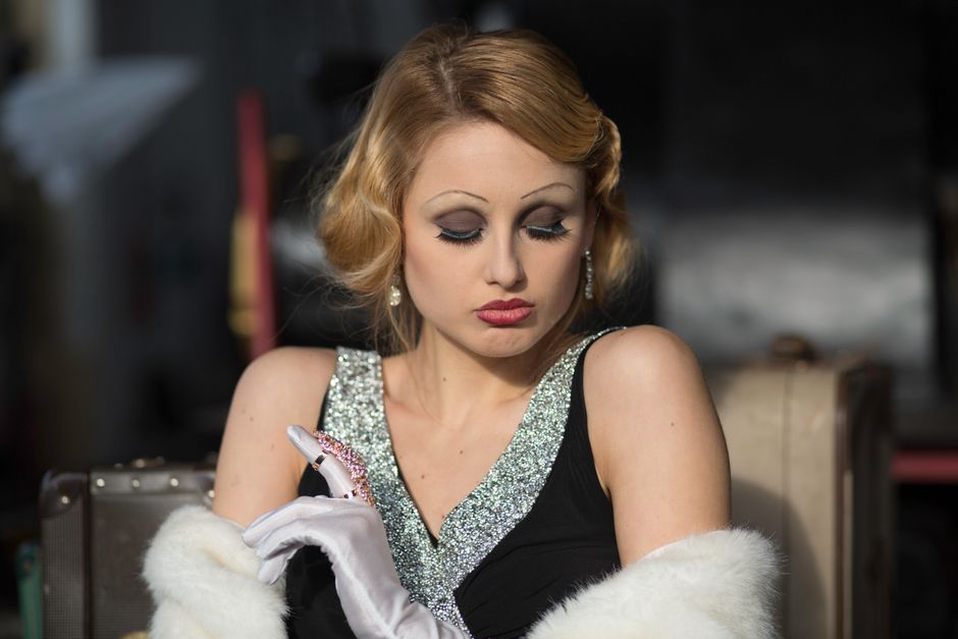
It is tempting to spot a “flapper headband” and let it represent the whole decade. Look again at the hat, hair length and placement; they may tell a different story.
Reading a surviving piece with appropriate caution
An accessory in a British vintage collection may have passed through several hands, been repaired or acquired a newer fastening. Examine the back as carefully as the front. Uneven wear around teeth or a clasp can suggest where it was handled; a cleaner patch may point to a replacement. Such marks help explain condition but rarely establish an exact year. A family note, dated packaging or photograph of the original wearer is stronger evidence, provided the connection to the piece is clear.
“1920s style”, “Art Deco” and “1920s original” make different claims. The first describes an influence; the second may describe a visual language; only the third claims a period object. A reproduction is a perfectly legitimate choice when it is identified honestly. If a seller gives a precise date, ask what supports it. A sunburst motif or feather is not proof on its own.
For anything meant to grip, check for missing teeth, loose bead threads, sharp edges and a clasp that no longer closes securely. Do not force a stiff hinge or bend brittle early plastic to make it fit. With fragile beadwork, hold the supporting band rather than pulling on the decoration.
Translating the language into a modern wardrobe
A contemporary outfit need not copy a complete costume. One well-chosen relationship is often enough: a small metal slide beside a side part suggests the close line of a 1920s wave without requiring one. A restrained beaded band can accompany simple evening clothes. With a cloche, a flat ornament near the temple is less likely to compete with the brim than an upright plume.
Nor is a bob required. A narrow band can make the same horizontal line over longer hair worn low, while a small comb adds a discreet glint to a tucked arrangement. Fit and security matter more than an exact historical position; a piece that slips or catches is difficult to wear well.
Before wearing a slide near the ear, close the fastening without hair and check that its edges meet smoothly. If you are wearing a hat, try the slide beneath the brim and adjust it until the ornament remains visible without disturbing the hat’s close outline.