
The Hair Turban in British Fashion: Reading the Shape and Its History
Look closely at a hair turban in a fashion photograph: is it a length of cloth wound round the head, a stitched hat made to look wound, or a scarf knotted above the forehead? The three can look much alike, but they do not share one history. In Britain, the shape has appeared in elite costume, theatrical fashion, workwear and later revivals. Fashion magazines did not always explain the meanings of the head coverings they borrowed from.
An imported silhouette, not an invented one
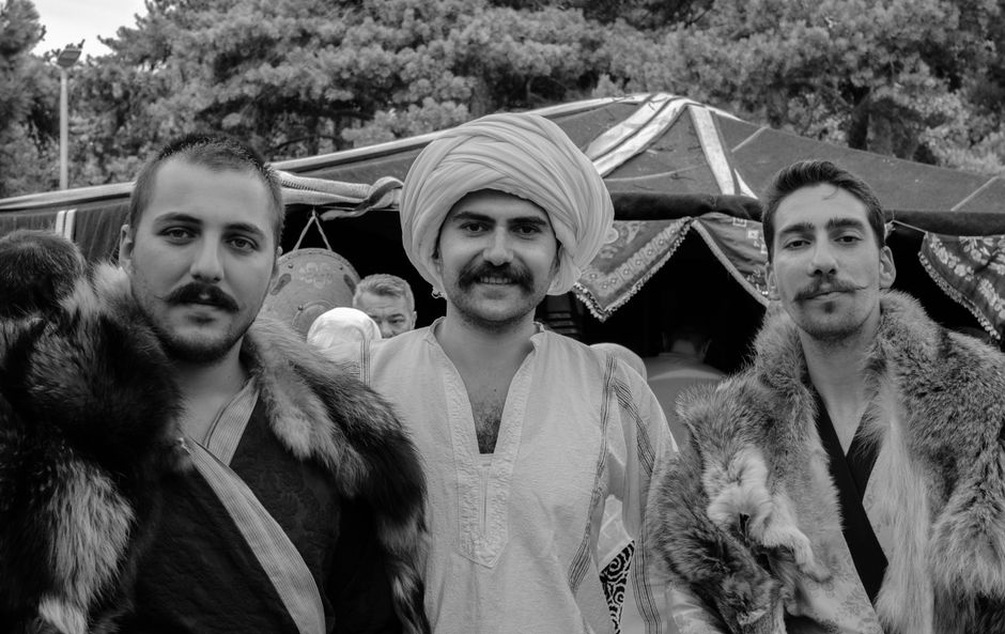
British fashion did not invent the turban. Wrapped head coverings have long histories across South Asia, the Middle East and Africa, with forms and meanings that differ between communities. A Sikh dastar, for example, is not simply a styling option. Nor do the people who wear these coverings necessarily call them all turbans. The broad English label can blur distinctions between religious observance, regional dress and practical clothing.
In British fashion history, ‘turban’ has also described a Western hat or hairstyle designed to suggest wrapping rather than reproduce a particular tradition. That matters when reading an old portrait or a vintage-shop label. A British milliner’s turban-shaped hat tells us about British taste, not necessarily about the covering it was meant to evoke.
From portraiture to the milliner’s workroom
Turban-like forms appeared in fashionable European dress and portraiture in the late eighteenth and early nineteenth centuries. Trade, empire, travel accounts and enthusiasm for imagined versions of the ‘East’ all helped make wrapped silhouettes appealing to wealthy Britons. A painter might arrange a shawl around a sitter for dramatic effect; it could be closer to studio costume than to anything she wore outdoors.
Milliners turned that effect into a hat. They gathered silk, velvet or other fabric over a shaped foundation, making folds that stayed in place without daily winding. The result followed European hat-making conventions while retaining a borrowed visual language. That is why a surviving ‘turban’ may have seams, a lining and a fastening rather than one continuous strip of cloth.
Stage glamour and the problem of the ‘exotic’
Wrapped silhouettes worked well on stage: fabric could build height, frame the face and show clearly under theatrical lighting. In the early twentieth century, theatre and designers such as Paul Poiret helped bring dramatic turban-like headwear into European fashion. British wearers met the look in performances, fashion images and millinery, where a jewel or feather could make it an evening piece.
The glamour has a less comfortable side. Descriptions such as ‘exotic’ treated other people’s dress as decorative novelty while overlooking the people and contexts behind it. Colonial power shaped what British audiences saw, collected and renamed. Calling every old wrapped hat ‘Oriental’ repeats a vague period term rather than identifying the object. ‘Stitched satin turban-style hat with a gathered crown’ tells us more about its construction and makes fewer claims about its origins.
The interwar turban: fabric made into architecture
By the 1930s, the turban-style hat had a place alongside other sculptural millinery in Britain. Its folds gave volume without a wide brim, while a fitted base could sit over carefully arranged hair. Some versions made the most of a striking piece of cloth; others were built with pleats secured to a foundation. An evening hat might have a brooch-like ornament, while a daytime one relied on the direction of its folds.
‘Turban’, ‘draped hat’ and ‘wrapped hat’ do not always mean the same thing. If you are examining a piece, see how it holds its shape:
- A wound scarf is a length of fabric whose shape changes each time it is tied.
- A pre-tied wrap has stitching that fixes a knot or folds, even if its ends still adjust.
- A turban-style hat has a constructed base and is put on largely as one piece.
These distinctions can help when dating an object, but none establishes its age on its own. A contemporary maker can recreate period folds, and an older scarf can be tied into a modern shape.
Wartime Britain: shared shape, different lives
During the Second World War, wrapped scarves became familiar in Britain for reasons far removed from evening millinery. Factory workers needed to keep hair contained around machinery; other women wore scarves while working outdoors, travelling or making do during clothing shortages. A square or rectangular scarf was quick to tie, adaptable and could be made from fabric already to hand. Wartime photographs of these wraps record working life, not just a look to copy.
There was no single ‘wartime turban’. A practical scarf tied for a shift and a structured hat worn for an occasion served different purposes. Wartime government guidance addressed safe dress at work, but a fashion photograph cannot tell us whether a particular wrap was safe near a particular machine. Similar-looking head coverings reveal little, by themselves, about the people wearing them.
After the war: Hollywood, home and high fashion
Film kept the turban associated with glamour in the mid-twentieth century. On screen, a wrapped silhouette could suggest sophistication, wealth or carefully composed leisure. Britain had humbler versions too: scarves and fabric caps worn at home or for errands. The outline might appear in both a cinema still and a family snapshot, without telling us that the fabric, price or purpose was the same.
Later designers returned to turban-style hats and headbands, sometimes presenting them as rediscoveries of earlier decades. Those revivals are part of the silhouette’s history, not evidence of one unbroken fashion cycle. A 1970s version may resemble a 1930s hat at first glance yet use different synthetic fabric, lining or construction. Seams, labels and the way the folds are anchored tell you more than the outline alone.
Reading a vintage example without overclaiming
Start with a gentle, mostly visual inspection. Are the folds arranged by hand or stitched down? Is there a foundation, lining, comb or piece of elastic inside? Note any strain or fading. If the hat has a maker’s label, record its wording, but do not date the piece by the label alone: labels can be moved, and materials and stitching need to be considered together.
Choose your description with the same care. ‘Turban-style’ is often the most accurate term for a British fashion hat. For a scarf, describe its fabric, dimensions and method of tying rather than assigning it a cultural origin on the strength of its shape. Provenance can add context; resemblance alone cannot establish where a piece was made or how its first owner understood it.
Wearing the shape now, and caring for an older piece
A vintage turban-style hat can sit happily with plain modern clothes: a dark coat or uncluttered shirt leaves its folds in view. If it has an original brooch or decorative pin, check that the attachment is firm before wearing it. Do not push a rigid comb or clip through a fragile lining to secure a hat that does not fit. It may be better saved for another occasion.
Care depends on the material. Keep an older fabric hat dry and out of prolonged direct light, and support its crown loosely in storage so the folds are not crushed. Do not assume that velvet, embellishments or a lining can be washed just because a modern fabric wrap can. Loose threads, brittle elastic and tarnished metal fittings are reasons to handle a piece less, not to test it with a full day’s wear.
If you want to try the shape without putting a fragile find at risk, tie a scarf you already own. When storing the older stitched hat, slip acid-free tissue beneath its most prominent fold, without forcing the fabric into a new shape.