
Wartime Hair Accessories in Britain: Scarves, Pins and Practical Style
A scarf tied above the forehead could keep loose hair clear of machinery, hide a missed trip to the hairdresser and brighten a coat that had to last another season. In wartime Britain, hair accessories often did several jobs at once. Look past the familiar victory rolls and neat curls, and the things holding those styles in place tell a story of work, rationing, safety and personal taste.
Why the head became a focus
Clothes rationing began in 1941, making garments harder to replace. Utility clothing followed in 1942, with controls on materials and production. None of this produced a single wartime look: a woman’s wardrobe depended on her job, income, location and what she already owned. But a ribbon or scarf could change the appearance of a familiar dress or coat without calling for a new outfit.
A small ornament brought colour close to the face while a serviceable coat stayed the same. Hair offered room for individual styling too, within the limits of time and workplace rules. A carefully arranged front section could sit beneath a practical covering during the day; once the covering came off, the style might be ready for an evening out.
Accessories were not exempt from shortage. Fabric, elastic and metal all had competing uses, and availability changed as the war went on. Being resourceful often meant reaching into a drawer rather than buying something new.
Scarves between workplace and street
The tied headscarf remains one of the most recognisable images of wartime dress, especially in photographs of women doing industrial work. Its purpose was practical: loose hair could get in the way or catch in equipment, and a covering kept off some of the dirt and dust. Factories had their own safety requirements, though. An attractive scarf was not necessarily approved protective headwear.
A square scarf could cover most of the hair, its ends tied above the forehead, or be folded into a band to hold a front roll. Knots, visible corners and printed borders gave it character without changing its basic function. Surviving photographs show plenty of variation; there was no single compulsory way to tie one.
Scarves had uses beyond the factory. An office worker or someone cycling could use one to protect a set hairstyle against wind and weather. Printed cloth enlivened an outfit worn repeatedly, while a plain scarf could sit quietly beside a patterned dress. Practicality and personal taste often met in the same knot.
Pins, nets and the structure beneath the style
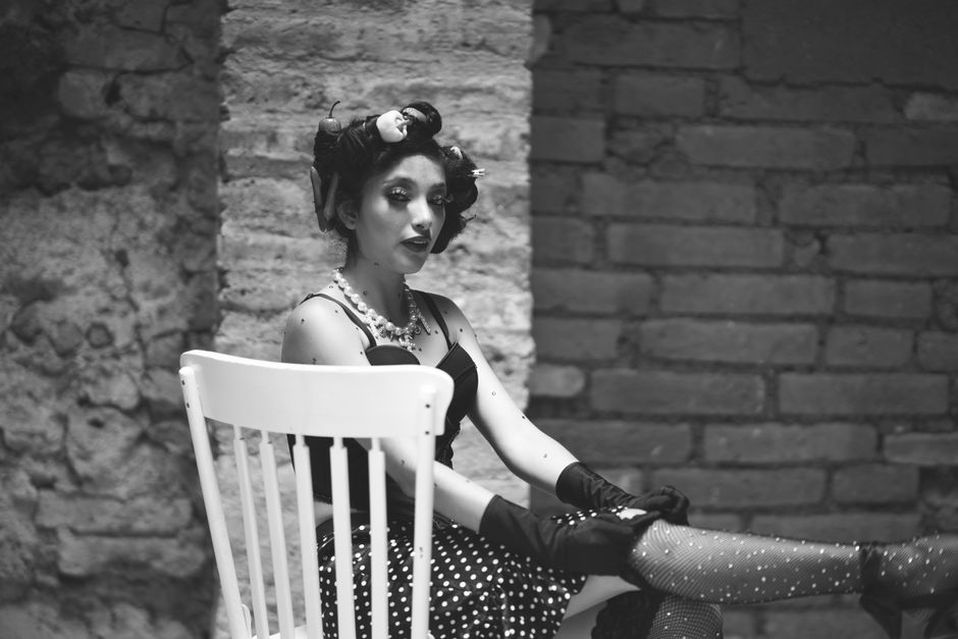
Many popular 1940s hairstyles depended on support you could barely see. Front rolls and waved sections needed pins or grips; a chignon or tucked back section might need a net. These small pieces seldom dominate fashion photographs, but they help explain how a polished silhouette lasted through a working day or an evening out.
What each accessory contributed
- Hair grips and pins secured rolls, curls and tucked ends. Where they were placed mattered more than whether they showed.
- Hairnets contained back sections or covered arranged hair. Some blended with the hair; others were meant to be seen as part of a dressed look.
- Combs and slides anchored side sections or added a modest accent, though they did not suit every hair texture or workplace.
- Ribbons and bows tied hair back and added a crisp line or a spot of colour, sometimes using a short length saved from another purpose.
Decorative and structural roles often overlapped. A scarf tied over pinned rolls helped hold them steady; a slide chosen for its finish still had to grip. One well-placed pin could matter more than a conspicuous ornament, particularly if a hat or work covering had to fit over the style.
Not every British woman wore elaborate rolls. Simple pinned-up hair, shorter cuts and styles kept beneath a covering belong in the picture too. An immaculate hairstyle in a photograph may record a special occasion or a posed portrait rather than an ordinary shift.
Materials, making do and changing conditions
Wartime restrictions affected what could be made and what shoppers could find. Metal was needed for the war effort, while textiles faced many demands. Familiar accessory styles did not disappear, but choice was limited. A pre-war comb, an existing packet of pins or a scarf already owned might stay in use for years.
Home sewing gave small fabric remnants a purpose. An offcut long enough to tie securely could become a narrow band or bow; a scarf could be refolded to show a less worn edge. That does not mean every wartime accessory was homemade. Manufactured pieces, older possessions and improvised additions all appeared side by side.
Material alone rarely proves that a surviving piece dates to the 1940s. Plastic ornaments were made across several decades, and an old-fashioned shape might remain on sale long after it first appeared. Plain metal grips are harder still to date. Period photographs, packaging with reliable provenance and documented ownership offer better evidence than a piece that merely looks wartime.
Hats and the hairstyles beneath them
Headscarves did not replace hats across Britain. Hats still had a place for travel, church, social visits and smarter occasions. Wartime styles could be compact or tilted, leaving a front roll or waved section on show. Their position shaped the hair beneath: height at the front could frame the face, while too much bulk at the back could make a hat unstable.
A hatpin, comb or grip might help, but no one method worked for every hat. Anyone changing between work and another engagement needed an arrangement they could remove or adjust. Contained back sections and well-secured front hair made sense when the hairstyle had to accommodate an actual hat, not just look good in a fashion plate.
Reading wartime images without flattening the decade
Reproduced wartime images tend to favour striking contrasts: a headscarf beside heavy machinery, or immaculate curls beneath a jaunty hat. Both offer clues, but neither represents every day between 1939 and 1945. Conditions changed during the war, and styles did not change overnight when it ended. Photographs of servicewomen also reflect uniform rules, not general civilian fashion advice.
Start with what a photograph can show. Does the scarf cover the back of the head, or act only as a band? Are pins visible beneath the rolls? Does the hat sit over the hair or beside its highest point? The image cannot tell you the wearer’s routine, whether the accessory was new or how comfortable it felt after several hours.
Access to shops, inherited accessories and workplace demands varied by region and by person. Civilian hair fashion was a series of practical choices, not a uniform.
Using the history in a present-day wardrobe
A wartime reference need not look like costume. Borrow the relationship between accessory and hairstyle instead: a scarf that actually contains hair, a narrow ribbon securing a back section or a modest slide placed where it does some work. Worn with contemporary clothes, one such detail can suggest the period without pretending that today’s circumstances are the same.
Choose the piece for the task first. A slippery scarf that needs constant retying misses the practical appeal of a secure covering. Before wearing a vintage comb or slide, check that its teeth are smooth and its fastening works. Old plastics can be brittle; a decorative find need not become an everyday accessory if its condition makes that unwise.
Nor must every piece have a 1940s provenance. A newly made scarf can recall the period through its fold and placement, while a genuine vintage slide can be worn without a historically exact hairstyle. That distinction respects the object’s history.
For a simple working-day reference, fold a square scarf into a broad band. Set its centre at the nape, tie the ends above the forehead and leave enough cloth for it to sit securely rather than perch on the hairline. Tuck away loose corners if the scarf is meant to contain hair. If you work around moving equipment today, follow your workplace’s safety rules rather than taking protection cues from an old photograph.