
How to Wear Edwardian-Style Hair Accessories Today
An Edwardian-style comb does not need a towering hairstyle beneath it. Slip a small openwork comb into the side of a low twist, leaving its decorative edge in view. The curved outline gives the look its period character; there is no need to recreate every inch of an Edwardian coiffure.
Edward VII reigned from 1901 to 1910, though hair fashions did not change on cue at either end of his reign. In Britain, the soft, enlarged silhouette of the early years gradually gave way to narrower arrangements before the First World War. Tall combs, smaller side ornaments, ribbons, pins and hat trimmings all had their place. It helps to know which detail you are borrowing.
Start with the silhouette, not the ornament
Early Edwardian hair often appeared full around the head, sometimes rising above the forehead. The familiar ‘Gibson Girl’ profile, influential on both sides of the Atlantic, is one reference: soft volume and hair gathered up, rather than a severe, flat finish. Fashion illustrations show some of the most dramatic versions, not a uniform everyday look. Hats mattered, too. Hair was arranged to work with headwear, so an elaborate shape in a period image may have been supporting a substantial hat.
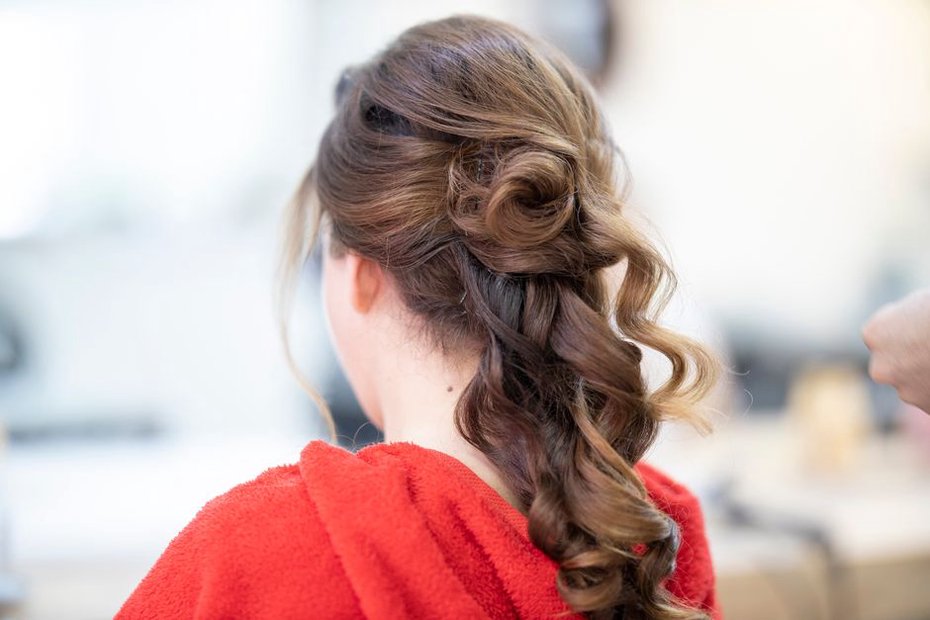
With present-day clothes, scale the idea down. A slightly loose low bun gives a comb something to frame; a gentle roll at the side suggests period softness without a large structure. If an updo is impractical, try a half-up twist. The question is where the ornament’s outline will show, not whether the hairstyle is historically exact.
Which details read as Edwardian?
Openwork combs and shaped pins
An arched top, pierced scrollwork or a fan-like outline can suggest the period even beside a plain shirt. Period combs were made in materials including horn, imitation tortoiseshell, early plastics and metal, sometimes decorated with paste stones, glass or cut steel. A carved-looking surface, on its own, proves neither age nor material. A modern comb can borrow the shape without pretending to be antique.
Look at how the decorated top relates to the teeth. A tall crest needs enough depth of hair to support it; a shorter side comb is easier to settle against a modest twist. Two small matching combs can frame a centre parting, while one set off-centre tends to feel less formal.
Ribbons, bows and restrained sparkle
Ribbon offers another way in. Forget the oversized theatrical bow: a narrow length threaded around a gathered section or tied at the base of a bun is often enough. Muted grosgrain adds texture; satin gives a sharper contrast against matte clothing. Neither calls for a period hairstyle.
For evening, a small paste- or glass-set ornament can catch the light without looking like a tiara. Keep the sparkle in one place, perhaps a pin at the edge of a roll, rather than scattering bright clips across the head. When using a portrait as a reference, check whether the apparent hair ornament is actually part of a hat.
Materials, age and honest description
‘Edwardian-style’ describes a look; ‘Edwardian’ dates an object to the period. A newly made metal comb with scrollwork may be just the thing to wear, but it should not be described as an original. Nor does an old-looking finish prove age. Combs have been reproduced, altered and repaired for decades.
Examine a vintage candidate as a whole. Are the teeth integral to the decorative top or attached separately? Are the joins sound? Can you see missing stones under angled light? Wear may be consistent with use, but no single mark reliably dates a piece. Components can also come from different periods. Ask for clear photographs of the back, teeth and fastening, not just the front. If the material is uncertain, ‘tortoiseshell-effect’ or ‘horn-look’ is more honest than a guess presented as fact.
Take particular care with claims of genuine tortoiseshell. Historical pieces do survive in private collections, but trade in protected wildlife materials is restricted. A convincing imitation gives a similar visual warmth without any claim that it is real shell. Buyers and sellers should check the rules for the specific object and transaction; age alone does not settle the question.
Build an outfit around one period cue
Let the hair accessory be the only overtly period element. An openwork comb above a low twist softens a crisp cotton shirt and tailored trousers. A dark ribbon at a loose bun sits easily with a fine-gauge jumper. For evening, a small paste-set pin adds detail to a simple dress without calling for gloves, lace or a period neckline.
Colour changes the effect. A comb close to your hair colour lets its shape emerge gradually; contrasting metal or a pale ornament makes the outline more obvious. Neither is more authentic. Consider the fabric and neckline alongside it: a high collar already hints at the period, so a quiet hair detail may suffice. A plain crew neck leaves room for a taller comb.
Proportion matters more than matching. A broad comb can hold its own beside a roomy modern jacket, while a tiny pin might vanish against bold clothing and become the focus of a spare outfit. Hold the piece near its intended position in a mirror before putting it in, and look at the outline from the side as well as the front.

Make the placement work in real life
A low twist with a side comb
- Gather the hair loosely at the nape and turn it into a compact twist or bun. Secure it with the simple fastening that already works for your hair.
- Choose a comb whose teeth can enter the edge of the twist rather than press straight against the scalp.
- Insert the teeth towards the gathered hair, then ease the comb into place just above or beside the twist.
- Move your head gently to test the hold. If the comb shifts, adjust the angle or choose a smaller piece. Do not force fragile antique teeth.
Let the underlying fastening carry the hairstyle’s weight. A decorative comb need not do all the work, especially if it is vintage and its teeth are less forgiving than those of a contemporary piece. Keep the support underneath simple so it does not crowd the visible ornament.
A ribbon without a period updo
Tie a narrow ribbon around a half-up section or the base of a low ponytail, leaving short ends instead of a long trailing bow. If the ribbon slips, secure the hair first and add it afterwards. Fold or trim the ends neatly. The Edwardian suggestion comes through in the soft placement, not a costume-sized bow.
A ribbon and a small pin can work together if they have separate jobs: the ribbon marks the gathered section, while the pin sits to one side. Decoration repeated across the whole head can blur the clean outline.
Choose vintage pieces for condition as well as character
At an antiques fair or when browsing a second-hand listing, start with the working parts. A comb missing three teeth may still be lovely to display, but unreliable to wear. A hairpin needs a sound stem; a bar fastening should close without excessive pressure. Ask whether embellishments are sewn, wired, glued or set into metal, since each construction has its weak points. Loose wire can catch hair or clothing, and old adhesive may give way unexpectedly.
- Check the back: repairs, exposed wire and sharp edges are often easier to see there.
- Inspect the teeth: look for chips and fine cracks, especially where they meet the top.
- Confirm the size: measurements tell you more than a close-up photograph about whether a piece will suit a low twist.
- Ask what is known: an honest account of uncertainty beats an elaborate, unsupported provenance.
Not every original needs to be worn. A fragile comb can be kept for study, with a well-made modern interpretation taking its place in regular use. Repairs are part of an old piece’s history, but a replaced fastening or repaired tooth should be disclosed when it affects wearability.
Care for the accessory you actually have
Clean gently, according to the materials. Dust an openwork metal top with a soft, dry brush, taking care around loose settings; wipe a sound modern comb with a soft cloth after wearing it. Avoid soaking vintage pieces made from mixed materials, as moisture can reach old adhesive, backing or hidden metal fittings. Resist polishing an unidentified surface aggressively. A delicate coating may come away with the tarnish.
Store combs separately so their teeth cannot scrape other ornaments. A padded box or divided drawer will stop a heavy metal piece resting on a fragile one. Lay ribbons loosely rather than leaving them knotted, particularly older fabric that may hold a crease. Keep a note of known repairs with an antique accessory so its next wearer knows where to take care.
Before wearing a vintage comb out, try it at home for an hour. If the crest tilts, set it at a shallower angle against the twist. If a tooth catches, take the comb out and inspect that edge in good light rather than tugging at it while it is still in your hair.