
The Rose Crown Headband: A Victorian Revival in British Hair Accessories
The rose crown headband—a circlet of fabric or metal blooms worn across the crown of the head—has resurfaced in British vintage circles with quiet authority. Unlike the tiara, which signals formality, or the simple Alice band, which leans toward the utilitarian, the rose crown occupies a distinct space: it is botanical, architectural, and deeply rooted in 19th-century sentimental jewellery traditions. For collectors and stylists alike, understanding its construction, its material evolution, and its precise placement in a modern wardrobe transforms a pretty accessory into a deliberate historical choice.
Origins in the Language of Flowers
The rose crown headband draws directly from the floriography craze that swept Victorian Britain. In the 1840s and 1850s, coded floral messages appeared on everything from calling cards to hair combs. A crown of roses—especially damask or cabbage roses—symbolised love, secrecy, and the promise of a wedding. Hair accessories of the period often featured millinery flowers wired onto metal or tortoiseshell bases, worn low on the nape for evening events or perched atop a chignon for garden parties. The original pieces were painstakingly handcrafted: each petal cut from velvet or silk, wired individually, and assembled into a cohesive wreath. The result was lightweight, sculptural, and surprisingly durable.
Materials and Techniques Across Eras
Authentic vintage rose crown headbands fall into three broad material categories:
- Silk and velvet millinery flowers (1880–1920) — Hand-dyed, often backed with fine wire and cotton gauze. The petals show visible finger-pressing and asymmetrical folds. These pieces are rare and require careful storage away from direct light to prevent fading.
- Plastic and resin blooms (1930s–1950s) — Celluloid and early Bakelite allowed mass production of rose clusters. The petals are stiffer, with a glossy finish. Collectors prize the marbled and tortoiseshell-toned varieties. These headbands are heavier than they appear but hold their shape well.
- Fabric-covered wire frames (1960s–1980s) — A revival of Victorian silhouettes using synthetic taffeta and polyester satin. The roses are often larger and more stylised, sometimes mixed with leaves or berries. These pieces are the most affordable entry point for new collectors and respond well to gentle steaming.
A common mistake among new buyers is assuming all rose crowns are interchangeable. A 1910 silk piece will sit differently on the head than a 1970s taffeta band—the former nestles into the hair, the latter sits above it. Trying both against your own hair type and face shape is the only reliable method.
Silhouettes That Defined the 20th Century
The Edwardian era favoured the bandeau-style rose crown—a narrow strip of roses running from temple to temple, often paired with a low bun. By the 1920s, the flapper crown emerged: a tighter cluster of small roses placed just above the forehead, echoing the dropped waistlines and geometric jewellery of the Jazz Age. The 1940s brought a practical wartime version: fabric roses made from recycled silk scarves, mounted on elastic bands that could be worn with victory rolls. In the 1970s, the rose crown expanded into a full wreath, covering the entire crown of the head, often mixed with dried baby’s breath and worn with flowing maxi dresses.
For British collectors, the most covetable period remains the late Victorian through to the 1910s. These pieces are scarce, but they surface at estate sales and specialist vintage fairs in towns such as Brighton, Bath, and Edinburgh. The key identifier is the back of the flower: if you see hand-stitched wire wrapping and a cotton calyx, you are holding a pre-1920 example.
Rose Crown Headbands and the Modern Wardrobe
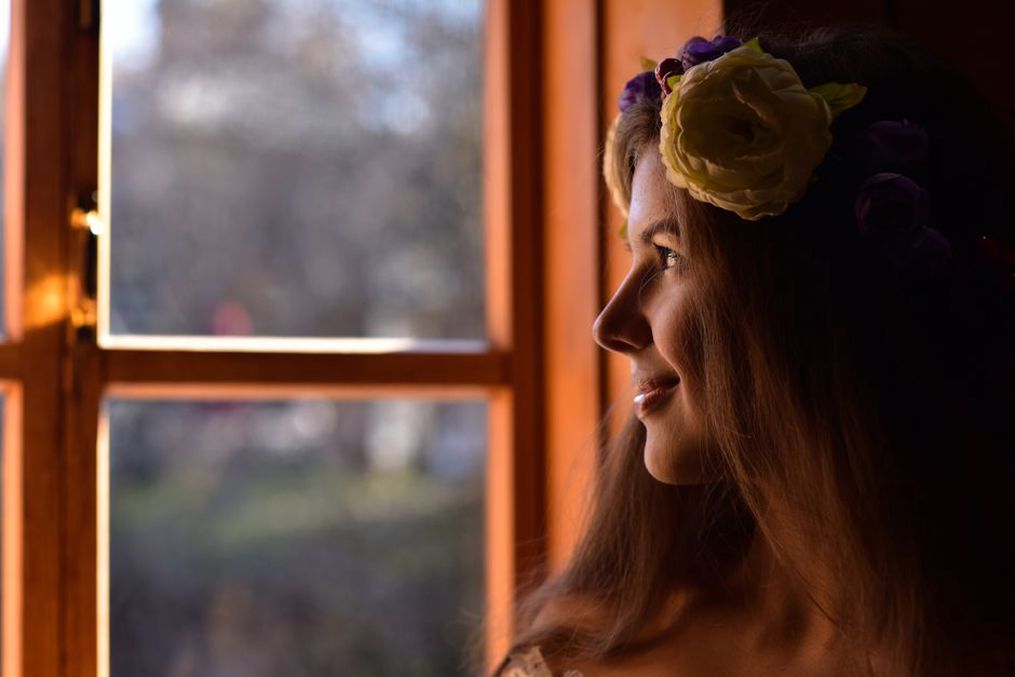
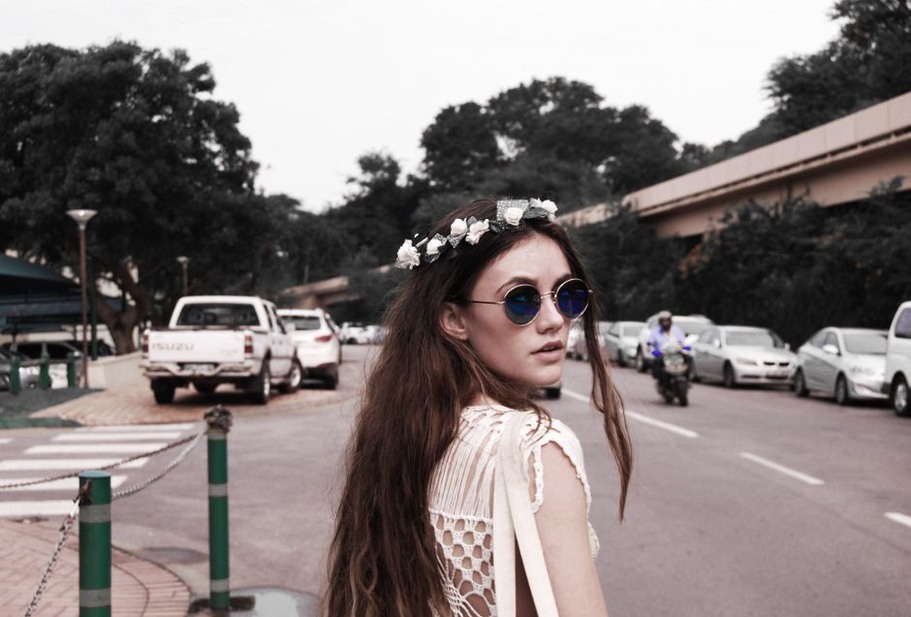
Integrating a rose crown headband into a contemporary outfit requires attention to proportion and texture. A single row of small silk roses can lift a simple white cotton dress or a tailored blazer without veering into costume. A full Victorian wreath works best with solid colours and minimal jewellery—the headband becomes the focal point. For colder months, a velvet rose crown in deep burgundy or forest green pairs naturally with a wool coat and leather boots. In summer, pastel-toned fabric roses complement linen and muslin.
One practical approach is to treat the rose crown as a statement collar for the head. Just as a high-necked blouse draws the eye upward, a well-placed headband frames the face and balances a simple silhouette. If you already own a braided headband, such as the Georgia Maxi Braided Headband in Blue, you will notice that the rose crown offers a softer, more romantic alternative—where the braided band provides structure, the rose crown provides texture and depth.
Care and Conservation
Vintage rose crowns demand gentle handling. The primary enemy is humidity, which can warp fabric petals and corrode metal wires. Store each headband flat in a acid-free tissue-lined box, never hung, as gravity will pull the flowers out of shape over months. If a flower becomes crushed, use a handheld steamer held at least 30 cm away—never a direct iron. For stubborn creases in silk, place a damp muslin cloth over the petal and press with a warm (not hot) finger, reshaping as you go. Avoid alcohol-based cleaners; they strip the dye from vintage fabrics and can cloud resin petals.
For resin or Bakelite roses, a soft, dry cloth is sufficient. If the headband has an elastic band that has lost its tension, a hat specialist can replace the elastic without disturbing the flowers. Never attempt to re-dye a faded rose—the colour change is part of the object’s history and contributes to its collectability.
Where to Look and What to Pay
British vintage fairs remain the best hunting ground. The IACF fairs at Newark and Ardingly regularly turn up Edwardian and 1920s examples. Online auction houses such as the-saleroom.com list estate lots that include hair accessories—search under “Victorian hair ornament” and “millinery flowers” to avoid modern reproductions. Prices range from £30 for a 1970s taffeta crown to upwards of £300 for a hand-wired silk piece in good condition. A fair price for a 1940s fabric rose band in wearable state is £60–£90. If a seller cannot identify the material or the approximate decade, proceed with caution—knowledgeable sellers will happily discuss construction details.
For those who prefer a modern piece with vintage authenticity, small British milliners occasionally produce rose crowns using traditional techniques. These are not reproductions but new works that honour the old methods. They cost more than mass-produced imports but offer the same lightweight, sculptural quality that makes the original Victorian pieces so wearable.
Pairing a rose crown headband with a structured dress or a simple knit top creates a contrast that feels intentional rather than theatrical. The accessory does not need to match—it needs to resonate. A burgundy velvet rose crown against a grey wool jumper, or a pale pink silk band with a navy linen shirt, reads as quietly sophisticated. For a more complete vintage look, consider the Empire Waist Maxi Dress; its high waistline and flowing skirt echo the same Regency-meets-Edwardian silhouette that the rose crown headband was originally designed to complement.
Ultimately, the rose crown headband rewards the patient collector. Its charm lies not in symmetry or perfection, but in the slight irregularity of each handmade petal, the faded dye that speaks of summer afternoons, and the quiet way it frames a face without demanding attention. Whether you acquire an original Edwardian piece or a carefully crafted modern version, the key is to wear it with the same ease as a favourite scarf—as an extension of your own style, not a museum piece held at arm’s length.