
The Quiet Allure of a Blue Rose Crown Headband
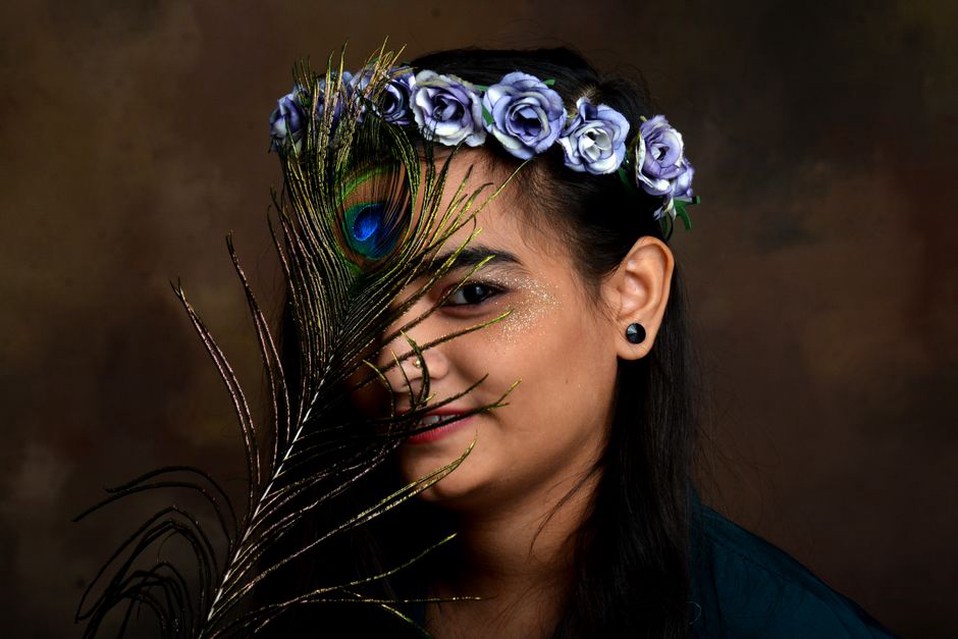
On a damp Saturday morning at a Portobello Road antiques arcade, I turned over a small velvet tray and found a headband unlike any I had handled before. The base was a thin, flexible wire wrapped in faded navy silk, and across the crown sat five hand-crafted roses in a shade of delft blue so deep it seemed to hold the twilight. Each petal had been individually shaped from silk ribbon, stiffened with a whisper of wire, and the centres were tiny seed pearls. It was clearly not a modern reproduction—the patina on the pearls, the slightly uneven stitching, the way the wire had mellowed to a soft brass tone all pointed to the 1920s. That headband became the quiet star of my collection, and it taught me how a single accessory can carry the weight of an era.
The Rose Crown in British Hair History
The rose crown headband is not a Victorian invention, though it borrows heavily from that period’s love of floral millinery. The true rise of the rose crown—a circlet of fabric or silk flowers worn across the forehead or perched on the crown—came in the early twentieth century. Edwardian women favoured elaborate hair ornaments for evening wear, often combining real or artificial flowers with combs and bandeaux. By the 1920s, the rose crown had evolved into a lighter, more sculptural form, influenced by the Art Deco taste for geometric shapes softened by natural motifs. Blue roses, in particular, became a subtle statement: they were rare in nature, so a blue rose symbolised mystery and elegance. In Britain, dressmakers and milliners in London’s West End produced these headbands for the society woman who wanted to stand out without shouting.
The 1950s saw a revival of the rose crown, this time with fuller blooms and often paired with back-combed hair. But the most collectible examples remain those from the 1920s and 1930s, when craftsmanship was at its peak. The tradition of the rose crown headband connects to other Edwardian hair accessories, such as the lace collars discussed in our article on the Henrietta Lace Collar: A Vintage Hair Accessory with Edwardian Grace, where the same attention to delicate materials and hand-finishing defined an era of adornment.
The Allure of Blue
Why blue? In the world of vintage hair accessories, blue is surprisingly uncommon. Most surviving floral headbands use pink, cream, or red roses—colours that read as more obviously romantic. A blue rose crown headband, by contrast, carries a cooler, more enigmatic aura. The shade itself matters: a true cornflower blue recalls the 1920s, while a navy or sapphire blue suggests later decades. Many British collectors seek out the specific “delft blue” that was popularised by Liberty & Co. in their textile prints. That blue, slightly greyed, appears on silk ribbons and velvet bands of the highest quality. When you find a blue rose crown headband, you are holding a piece that was likely made for a woman who valued understatement over flash—a quiet rebel in her own way.
Blue also pairs beautifully with silver or platinum-toned hair, and with grey, navy, or black clothing. It is a colour that reads as both vintage and contemporary, which is why these headbands have found a new audience among modern stylists and brides.
Materials and Craftsmanship
A well-made rose crown headband is a tiny engineering marvel. The base is usually a wire frame—sometimes single, sometimes double—covered in a matching fabric. The roses themselves are constructed from either silk, rayon, or velvet ribbon, each petal cut and shaped by hand. The best examples use a technique called “petal wiring”: a fine copper or brass wire is sewn along the edge of each petal so it can be curved and held in place. The centres often feature tiny beads, pearls, or even glass stamens. The leaves, if present, are cut from stiffened net or silk and wired separately. The entire headband is then assembled by hand, with each rose attached to the base with a few invisible stitches.
When examining a vintage blue rose crown headband, pay attention to the following:
- Base condition: Is the wire intact? Any rust or breakage weakens the structure.
- Fabric integrity: Silk can shatter over time; look for fraying or splits on the ribbon.
- Rose construction: Are the petals still holding their shape? Loose wires can often be re-secured.
- Colourfastness: Blue dyes, especially from the 1920s, may have faded unevenly. A uniform patina is fine; patchy fading is a red flag.
- Maker’s marks: Some British milliners stamped their name on the inner band—a rare but delightful find.
The materials also dictate care. Never immerse a wire-and-silk headband in water. Instead, gently dust with a soft brush and store flat in acid-free tissue paper. If the wire has tarnished, a jeweller’s cloth (used sparingly) can brighten it without damaging the fabric.
Styling a Blue Rose Crown Headband Today
The beauty of these headbands is their versatility. A single blue rose crown can transition from a daytime walk in a British country lane to an evening event with minimal fuss. Here are a few ways to wear it:
- With a simple chignon: Sweep hair into a low bun at the nape, then place the headband just behind the hairline. The roses frame the face without competing with the hairstyle.
- Over loose waves: For a bohemian look, let hair fall in soft waves and wear the headband across the crown, slightly tilted to one side.
- Bridal styling: A blue rose crown headband makes a subtle “something blue”. Pair it with a lace veil or a simple silk dress. The absence of white flowers keeps the look fresh and non-traditional.
- With modern separates: Try the headband with a crisp white shirt and tailored trousers—the contrast between formal clothing and a romantic accessory creates an intriguing tension.
The headband also works well with short hair. If you have a pixie cut or a bob, position the headband further back on the head so the roses appear to float above the hair. Avoid placing it directly on the forehead unless you are aiming for a 1920s flapper silhouette, which requires a straight, low bandeau style.
Sourcing and Caring for Vintage Rose Crowns
The hunt for a genuine blue rose crown headband is part of the pleasure. British antique fairs (especially those in Bath, Brighton, and London’s Camden Passage) occasionally yield them, though they are rarer than floral combs or barrettes. Online auctions can be fruitful, but always request detailed photos of the underside and the wire base. Be wary of modern reproductions sold as vintage; the giveaway is often the use of polyester ribbon and perfectly uniform petals. A true vintage piece will have slight asymmetries and a faint, musty scent of old fabric.
Once you have found your blue rose crown, treat it with reverence. Store it in a box lined with unbleached muslin or acid-free tissue, away from direct sunlight and humidity. If a rose becomes detached, a skilled restorer can reattach it using the original wire holes—do not glue it. For minor cleaning, a soft brush or a gentle blast of compressed air (from a distance) will remove dust. Never use steam or water.
One final note: the emotional connection to these pieces is real. Every blue rose crown headband was once chosen, worn, and cherished. The slight wear on the inner band tells you where it rested against a temple. The faded blue of the outer petals speaks of afternoons in the sun. When you wear it, you become part of that story. And that, more than any trend, is why these quiet treasures endure.