
The Rose Crown Headband: A Vintage Hair Accessory Guide
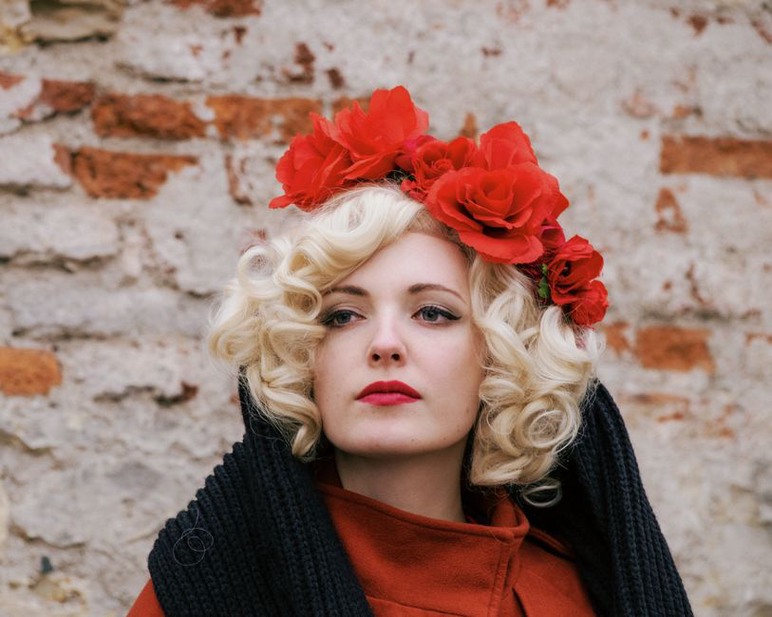
The rose crown headband, with its clustered fabric petals and subtle wire armature, first appeared in British fashion magazines of the 1910s as a garden-party essential. Unlike more elaborate tiaras, this accessory offered a softer, more romantic silhouette — a circlet of silk or velvet roses that sat gently on the crown of the head, often secured with a discreet comb or a velvet ribbon. By the 1920s, it had been reinterpreted for the flapper era, with smaller, more geometric blooms and Art Deco-inspired leaf details. Yet it was the post-war decades, particularly the 1950s and 1960s, that cemented the rose crown headband as a versatile staple in British wardrobes, from bridal trousseaux to weekend country fairs.
A Brief History of the Rose Crown Headband
The rose crown headband draws from a long tradition of floral headwear, but its specific form as a structured band of roses became codified in the Edwardian period. Milliners of the time, trained in the art of fabric flower-making, would hand-dye silk petals and wire each bloom individually. The headband itself was often a simple velvet or grosgrain band, onto which the roses were stitched in a graduated pattern — larger blooms at the centre, smaller ones tapering towards the ears. This design allowed the accessory to frame the face without overwhelming it, a quality that made it popular for afternoon garden parties and early evening soirees.
In the 1930s, the rose crown headband took on a more streamlined form. Flowers were pressed flat and arranged in a continuous band, echoing the bias-cut gowns and sleek hairstyles of the decade. By the 1950s, Christian Dior's New Look had revived a taste for abundant femininity, and British milliners responded with fuller, more opulent rose crowns. These often featured velvet petals in deep burgundy, dusty pink, or ivory, sometimes accented with tiny glass beads or seed pearls. The 1960s brought a bohemian twist: oversized, unstructured roses in bright colours, worn low on the forehead or as a halo crown, inspired by the flower-power movement and the era's fascination with pre-Raphaelite imagery.
Materials and Craftsmanship
The quality of a vintage rose crown headband lies in its materials and the skill of its maker. True vintage pieces (pre-1970) are almost always handcrafted, using techniques that are rare today. Key materials include:
- Silk and velvet petals — hand-dyed and shaped over heated forms to create realistic curves. Silk petals have a subtle sheen; velvet adds a plush, dimensional texture.
- Millinery wire — fine, flexible wire (often brass or iron) that allows each rose to be positioned and held securely. The wire is wrapped in thread or covered with fabric to prevent snagging.
- Grosgrain or velvet headband base — typically 1–2 cm wide, with a slight curve to fit the crown of the head. Some include a hidden comb or elastic for stability.
- Embellishments — glass beads, seed pearls, sequins, or small leaves made of fabric or metal. These are often hand-sewn, not glued, which makes them more durable.
Mass-produced rose crown headbands from the 1980s and later often use synthetic fabrics (polyester satin, acrylic velvet) and glue construction. While these can be charming in a costume-jewellery way, they lack the longevity and nuanced colour of earlier handmade pieces. For a collector, a 1950s silk rose crown headband in good condition is a treasure — the petals may be slightly crushed or the wire showing, but that patina is part of its story.
Cult Silhouettes of the 20th Century
Certain rose crown headband shapes have become iconic among vintage enthusiasts. The circlet — a closed ring of roses that sits flat on the head — was the dominant style from 1910 to 1930. The halo crown, where the roses rise above the headband on wire stems, became popular in the 1950s and again in the 1990s. The asymmetric cluster, with a large rose over one ear and smaller blooms trailing behind, is a signature of the 1960s bohemian look. Each silhouette requires a different approach to styling: circlet works beautifully with updos and centre parts; halo crowns suit loose waves or high ponytails; asymmetric clusters add drama to side-swept hair.
Finding and Choosing a Vintage Rose Crown Headband
Authentic vintage rose crown headbands appear in antique markets, estate sales, and specialist online shops. When examining a piece, check the petals for brittleness — silk can rot if stored in damp conditions, while velvet may have crushed pile that can be gently steamed. Look at the stitching: hand-sewn roses will have irregular, tiny stitches; machine-sewn or glued components indicate later manufacture. The headband base should be flexible but not cracked; if it is made of plastic, check for brittleness (celluloid can degrade). A slight musty smell is normal for older pieces and can often be aired out, but a strong chemical odour suggests improper storage.
For those who prefer a modern take on the silhouette, many contemporary British artisans create rose crown headbands using vintage techniques. These are not reproductions but new pieces that honour the craftsmanship of the past. For example, the Georgia Maxi Braided Headband in Rust offers a similar textured appeal, though with a braided rather than floral motif — a reminder that the same design principles of balance and hand-finishing apply across accessories.
Styling with Modern Wardrobes
A rose crown headband need not be reserved for period costumes. The key is to let the accessory be the focal point while keeping the rest of your outfit clean and intentional. A 1950s circlet in dusty pink pairs unexpectedly well with a cream cashmere jumper and tailored wool trousers — the softness of the roses echoes the knit's texture, while the headband adds a touch of ceremony to an otherwise simple look. For evening, a halo crown in deep burgundy velvet complements a slip dress or a silk blouse; the headband's height balances the low neckline. In warmer months, an asymmetric cluster of ivory silk roses worn with a linen shirtwaist dress and straw bag creates a modern English garden aesthetic that feels fresh, not costume-like.
Care and Preservation
Vintage rose crown headbands require gentle handling. Store them flat in a acid-free tissue-lined box, away from direct sunlight and humidity. If the petals become slightly crushed, you can use a steamer (held at a distance) to revive the fabric — test on an inconspicuous area first. Never submerge the headband in water; instead, spot-clean with a barely damp cloth and mild soap if needed, then air-dry flat. For wire that has begun to show through, a careful application of matching thread wrapped around the exposed area can stabilise it without altering the piece's integrity. Glue repairs are best left to a professional conservator, as many modern adhesives can yellow or stiffen the fabric over time.
Finally, wear your rose crown headband with awareness. Avoid wearing it in heavy rain or while exercising, as moisture and sweat can stain the petals and corrode the wire. With mindful use, a well-made piece can last another fifty years — a small, beautiful link to the hands that shaped it decades ago.