
Vintage Hair Clips: How to Read, Wear and Care for Embellishment
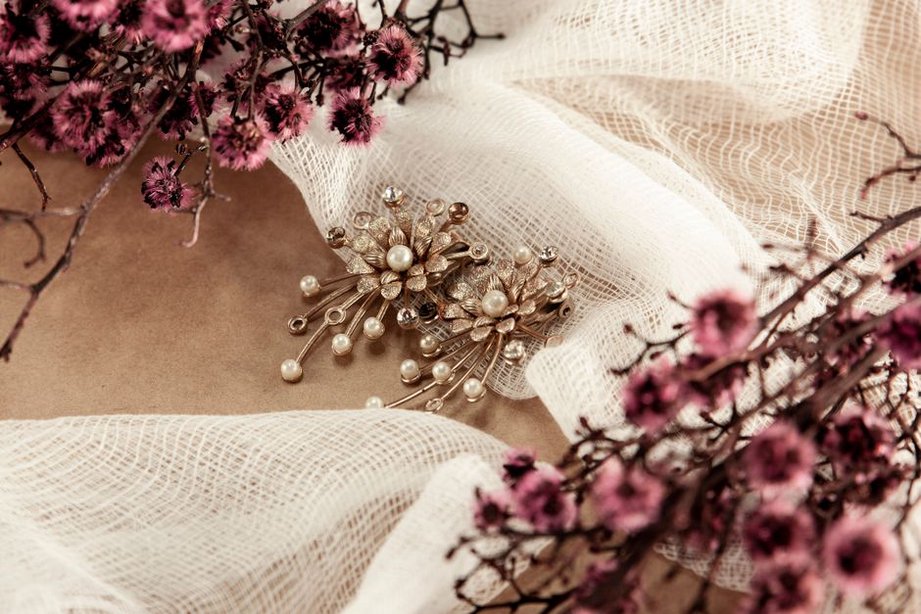
A pearl on a vintage hair clip might be stitched, wired, glued or held in a little metal cup. Each attachment tells you something about how the piece was made, what might come loose and whether it is ready to wear. Turn the clip over before judging its sparkle. The reverse often shows more of the maker’s work than the front.
Embellishment turns a functional slide into a small piece of design. Glass stones give a plain silhouette a sharper edge; folded ribbon softens it; a carved or moulded flower adds relief. British vintage finds include handmade alterations alongside factory-made pieces, so the ornament and its metal base may not have begun life together. The join between them is worth a close look.
Start with the fastening, not the decoration
Most embellished clips have two structures: a mechanism that grips the hair and a decorative face fixed above it. The face of a slide might be riveted to a spring bar, soldered in place or attached through small holes with thread or wire. Some ornaments are simply glued to a flat plate. No single method proves age or quality. A neat repair may be more dependable than an original fitting on the verge of failing.
Holding the base rather than the ornament, open and close the fastening gently. Does the bar meet its catch cleanly? Does the hinge move without twisting the face? Check for edges that could snag fabric. If the decoration lifts when the mechanism moves, leave the clip unworn until the attachment has been assessed. Weight matters as well: a wide slide with little embellishment may sit more securely than a small clip loaded with heavy glass.
The materials behind the ornament
Glass, imitation pearls and light-catching settings
Faceted glass, paste stones and later rhinestones gave makers sparkle without precious gems. Stones may sit beneath metal prongs, rest in shallow cups or attach directly to a decorative plate. Inspect the setting as closely as the stone: a bent prong can catch a sleeve, while an empty cup interrupts a repeated pattern. If a replacement stone differs slightly in colour or cut, describe the difference rather than hiding it.
Imitation pearls include coated glass beads and plastic examples. Even on a sturdy clip, their surfaces can be delicate. Rubbing may expose a differently coloured core, especially around a threading hole. Resist buffing a pearl-like bead; its shine may be a coating that polishing will only wear away.
Textile, lace and handwork
Ribbon loops, velvet-covered faces, lace appliqué and embroidered motifs offer texture rather than glitter. Hidden stitches may shape a bow, or a concealed strip may support its centre. On a worn piece, check the folds where dust gathers and the fabric beside the hinge where rubbing occurs. Don’t pull fragile lace taut for the sake of symmetry; it may have been gathered into that shape from the start.
Textiles make dating trickier. Someone may have tied a modern ribbon to an older fastening, or mounted a surviving period ornament on a newer clip after its first base broke. Contrasting thread, fresh glue beside old stitching or holes that no longer align can point to an alteration. They are clues to the piece’s history, not necessarily faults.
Metalwork, moulded forms and natural materials
Stamped metal leaves, pierced borders and small chains add depth without separate stones. Enamel brings colour, though its raised edges are worth checking for chips before wear. Moulded plastic flowers and geometric forms can be equally expressive. Relief, translucency and repeated shapes often matter more to their design than the value of the material.
Wood, shell and other natural materials sometimes appear as faces or inlays. If you cannot identify one with sound evidence, leave it unidentified. Colour alone cannot establish that a dark, patterned piece is tortoiseshell, and an aged-looking surface does not mean every component is old. With restricted or ethically sensitive materials, uncertainty calls for caution, not a more enticing label.
How embellishment changes a silhouette
Arrangement changes how a clip looks in the hair. A compact crescent of stones frames a section of hair; set the same stones in a straight row and they make a crisp horizontal accent. Paired, symmetrical clips feel composed, while one off-centre flower can give a plain slide character. Look at the piece from the side, too. A tall bow or raised cluster needs room and may sit awkwardly beneath a close-fitting hat.
Twentieth-century tastes made room for streamlined geometry, romantic flowers, bright novelty shapes and theatrical shine. These are useful descriptions of style, not reliable dates. A later maker may have borrowed an earlier silhouette, or an owner may have decorated a plain clip years after buying it. Consider the fastening, materials, wear and any surviving packaging together.
For getting dressed, the ornament’s scale may be more helpful than its supposed era. Small, low-profile clips can mark a parting without competing with a patterned blouse. A larger enamel or textile face can pick up a colour in a plain knit. In another accessory form, the Store P367 neon satin padded headband shows what a bold surface can do across a substantial shape; a vintage clip makes its impression in much less space.
Reading a find without overclaiming
At a market stall or charity shop, good light and a few quiet checks are more useful than a confident decade label. Look over the front for missing elements, then turn to the reverse for repairs and secure attachment points. Ask permission before opening a delicate fastening. If a seller names an age, maker or material, ask what supports the claim. A readable mark, original packaging or documented history carries different weight from a resemblance in style.
- Check repetition: do paired stones, beads or petals match, or has one been replaced?
- Inspect joins: look for loose thread, lifting adhesive, sharp wire ends and stressed rivets.
- Test movement gently: the mechanism should work without pulling the ornament out of position.
- Notice the finish: wear on exposed edges is unsurprising; fresh-looking glue beside older grime may point to a later repair.
- Record uncertainty: “pearl-like beads” is more useful than an unsupported claim of genuine pearls.
Marks can help, but an unmarked piece is not necessarily anonymous craftwork. Equally, a mark on the metal clip may identify its maker without telling you who made an added ornament. Keep any price ticket, box or handwritten note separately from the clip. Such details can preserve part of its history even if they cannot settle its date.
Wearing the detail without risking the piece
Choose a clip for its grip as well as its appearance. A heavy ornament needs a fastening that supports it without slipping repeatedly. When placing a delicate slide, hold the metal base, guide a modest section of hair inside and close it without pressing on stones or petals. If the ornament tugs when you take the clip out, open the mechanism fully rather than pulling the whole piece free.
Two modest embellished clips can look at home together if they share a detail, such as warm-toned metal or similar glass beads; they need not match. One ornate clip, meanwhile, has plenty of room beside a plain collar or simple knit. Keep raised or loosely attached decoration away from scarf edges and bag straps that might brush against it repeatedly.
Care for the embellishment you actually have
With mixed materials, handle the clip according to its most vulnerable part. Water can reach thread, adhesive, metal settings and coated beads in one go, so avoid soaking it. Lift loose dust with a soft, dry brush, supporting each flower or bow as you work. A dry, soft cloth is enough for a firmer metal area; keep it clear of lace and imitation pearls. Household polish can alter a finish or lodge in crevices, so do not apply it across the whole piece.
Store clips with their decorative faces apart. A shallow compartment or a wrap of soft, clean material keeps projecting stones from pressing against other pieces. Fasten the mechanism before putting it away if doing so protects an exposed pin. Should a bead come loose, put it in a labelled packet with the clip rather than adding a quick dab of glue. A repairer can then examine both the bead and its original attachment point.
Before wearing a newly found clip, check once more where the ornament meets the fastening. Hold the base and lift the face only as far as its normal movement allows. Watch for a shifting stitch, prong or rivet, then see whether the catch closes cleanly. If either check gives you pause, set the clip aside for assessment rather than asking its decoration to bear the strain of fastening.