
The p386 Julia Alpaca Jumper: A Vintage Knit Hair Band with a Story
If you have ever come across a soft, cream-coloured hair band with a faint cable-knit texture and a label reading p386 Julia Alpaca Jumper, you have encountered one of the more curious hybrids of British knitwear and hair accessory design. Unlike the many padded headbands or metallic clips that dominate vintage collections, this piece brings the warmth of a alpaca sweater to the top of the head. It is neither a standard velvet band nor a plastic clip; it is a textile accessory that bridges the gap between a cosy winter jumper and a functional hair holder.
The code p386 is not a random stock number. In the few surviving pattern books from small British manufacturers of the 1960s and 1970s, the prefix p often indicated a patterned headwear category. The name Julia likely referred to the model name or the silhouette of the wearer—possibly an early reference to the classic Julia hairstyle popularised by actress Julie Christie. The Alpaca Jumper part describes the material and construction: the band is knitted from a blend of alpaca wool and a small percentage of nylon for elasticity, then sewn onto a flexible wire frame that allows it to sit snugly against the crown.
What Makes the p386 Unique?
Most vintage hair bands from the 1950s to 1970s rely on velvet, satin, or plastic. The p386 is distinctive because it brings the tactility of a hand-knitted jumper directly into the hair. The alpaca fibre, taken from the suri variety, gives a soft, silky feel with a slight sheen—different from the dry texture of sheep’s wool. The knit pattern is a simplified cable stitch, designed to mimic the look of a classic Aran jumper but scaled down to fit a 2.5 cm wide band.
Another distinctive feature is the internal construction. The knitted tube is not simply glued to a plastic band; it is hand-stitched over a thin, springy wire that can be shaped to the wearer’s head. This makes the p386 both flexible and durable—a rare combination in vintage hair accessories, where many bands lose their shape after a few wears.
Materials and Techniques: Alpaca Wool in Hair Accessories
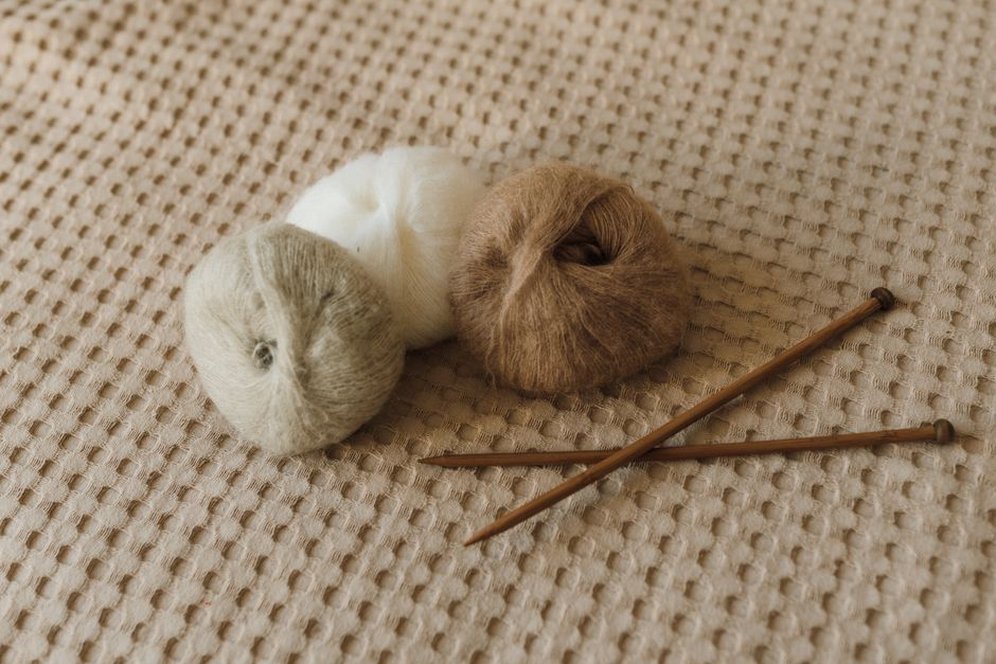
Alpaca wool was a luxury fibre in post-war Britain, prized for its warmth without weight. In the 1960s, as imports from South America became more accessible, small British mills began producing alpaca-blend yarns for the fashion trade. The p386 used a yarn that was roughly 70% alpaca and 30% nylon—a blend that allowed the band to hold its shape while still feeling soft against the hair.
The knitting technique was a flat-knit tube, done on a domestic hand-knitting machine, then seamed lengthwise and attached to the wire frame. The wire itself was a thin, coated steel, often bent into a slight U-shape to follow the contour of the head. At the ends, small fabric loops or elastic bands were added to secure the headband under the hair or behind the ears.
This construction method means the p386 is surprisingly durable. Many surviving examples, even those found in charity shops or online marketplaces, have retained their shape and softness. However, the alpaca fibre can be delicate—it is prone to felting if washed incorrectly, and the wire can bend if stored crumpled.
Cultural Context: The Rise of the Knit Headband
Knit headbands became fashionable in the early 1960s as a practical solution for keeping hair in place under the new, taller beehive hairstyles. But by the mid-1960s, they had evolved into a style statement in their own right. The p386 Julia Alpaca Jumper fits into this later phase—it was not merely a functional band, but a piece that referenced the cosy, handmade aesthetic of the sweater, a garment that symbolised British domesticity and craftsmanship.
The name Julia may also be a nod to the ‘Julia set’ hairstyle—a medium-length layered cut that sat just above the shoulders, very popular after Julie Christie’s role in Darling (1965). A soft knit band like the p386 worked perfectly with that cut, holding the hair back without flattening the volume.
Identifying an Authentic p386
If you are hunting for this piece, look for these clues:
- Colour: Most authentic examples are cream, oatmeal, or a very light beige. Dye variations exist, but bright colours are rare—the alpaca fibre was usually left natural or lightly bleached.
- Label: The original label is a small woven tag, often white with black text, reading p386 Julia Alpaca Jumper. Some later versions may have a printed tag.
- Weight: The band is surprisingly light. Alpaca wool is less dense than sheep’s wool, so the band should feel airy, not heavy.
- Stitching: The seam where the knitted tube is closed should be hand-finished, with small, even stitches. Machine-stitched seams are a sign of a reproduction.
Caring for Your Alpaca Jumper Hair Band
Because the p386 contains wire, standard textile care rules do not apply. Here is a practical guide:
- Cleaning: Hand wash only in lukewarm water with a mild wool detergent. Do not soak longer than 10 minutes. Rinse gently, then roll in a towel to absorb moisture—do not wring or twist.
- Drying: Lay the band flat on a dry towel, shaping it into its original curve. Do not hang, as the weight of the wet wool will stretch the wire.
- Storage: Store in a drawer or box, lying flat, not folded. If you must store it in a ring, use a large circular container to avoid bending the wire.
- Stain removal: For spots, dab with a mixture of cold water and a tiny drop of gentle shampoo. Never rub, as alpaca fibres can felt.
Styling the p386 with a Modern Wardrobe
The obvious appeal of the p386 is its autumnal warmth. It pairs beautifully with a cream cashmere sweater, a woollen coat, or a pair of wide-leg trousers in a neutral tone. But the texture also works as a contrast against sleek modern fabrics: try wearing it with a leather jacket or a silk blouse to create a mix of rustic and refined.
For a more casual look, slide the band over a messy bun or a low ponytail, leaving a few strands loose. The cable-knit pattern adds visual interest without being gaudy. If you have a collection of vintage hair bands, you might find that the p386 complements the more structured pieces like the pearl-embellished velvet headbands or the satin padded bands that are also common from the same era. For a deeper dive into the history of vintage British hair accessories, the The P12 Chloe Susanne Legacy: A Collector’s Guide to British Vintage Hair Accessories offers context on how manufacturers coded their pieces and how styles evolved through the 1960s.
Final Practical Note: What to Do If the Wire Is Bent
One of the most common issues with the p386 is that the internal wire gets kinked from years of improper storage. If you find a vintage example with a bent wire, you can gently reshape it: hold the band at both ends and slowly bend it back into a gentle curve, using your thumbs to smooth out any sharp bends. Work slowly—the wire is thin and can snap if forced. Once the curve is restored, the band will sit comfortably again. This small repair is often all that is needed to bring a lovely piece of British knitwear history back into your daily rotation.