
Pineapple Hair Claw Products: A Vintage Collector’s Guide
A pineapple claw clip is one of those pieces that looks like a joke until you hold it in your hands. The good ones are not simply yellow plastic with a wire spring; they have a sculpted, ridged body that mimics the fruit’s hexagonal skin, a set of teeth that opens with a satisfying click, and a small green leaf motif at the crown that tells you exactly which decade it came from. The vintage pineapple hair claw is a genuine collector’s item, and the range of products that survive from the 1980s and early 1990s is far more varied than most people expect.
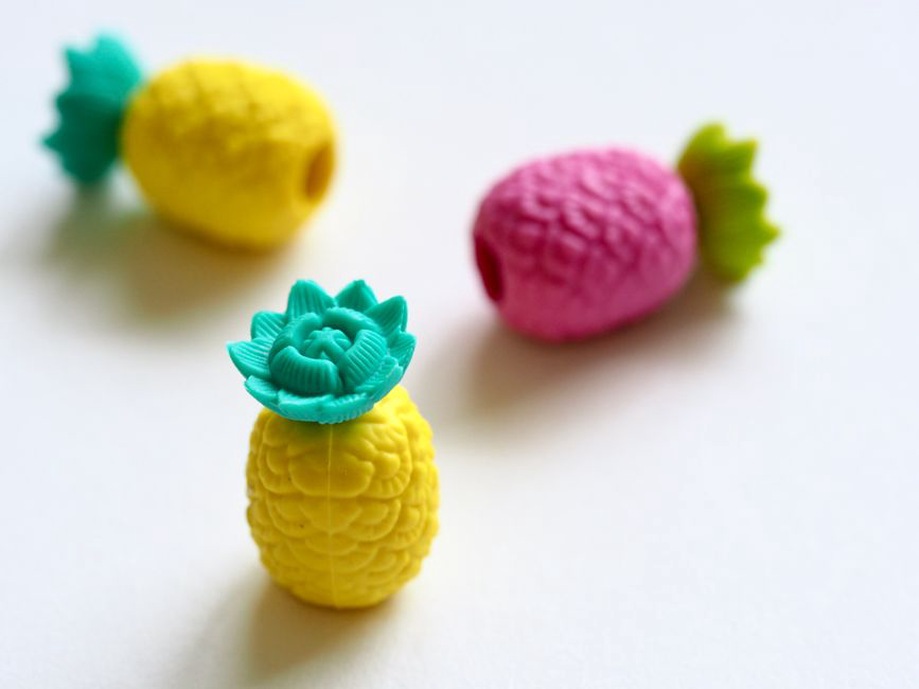
What exactly is a pineapple hair claw?
A hair claw is a hinged clip with interlocking teeth, often called a jaw clip. A pineapple hair claw takes the pineapple as its shape: the body of the clip is the fruit, the teeth are hidden underneath, and the top often has a leaf-shaped finial. Some are small enough to hold a few strands; others are large, deep claws that can anchor a whole twist of thick hair.
The most desirable vintage products are made from cellulose acetate or polyester resin. Cellulose acetate has a warm, slightly translucent quality, while resin pieces can be glossy and almost glassy. The colour is rarely a single flat yellow. Look closely and you will see soft variations, a honeyed amber at the base, a lighter tone at the ridges, and sometimes a faint marbled effect. The leaves, too, vary: some are moulded in the same piece as the body, while others are separate green pieces pinned into a slot at the top.
Size matters for collectors. The smallest pineapple claws, about the length of a matchbox, were often sold in sets of two or three. Medium claws, around six centimetres, are the most common and suit most hair types. Large claws, eight centimetres or more, are harder to find because they used more resin and were more expensive to make. If you see a large one with a strong spring, buy it; they are rare.
The pineapple in British hair accessory history
The pineapple has a long life as a decorative motif in Britain. In the eighteenth century, the fruit was a symbol of hospitality and wealth, and it appeared on everything from carved doorways to silver teapots. Victorian hair combs in horn, tortoiseshell and early celluloid sometimes carried carved fruit and leaves, although the pineapple was never as common as flowers or shells. The claw clip as we know it became a high-street staple in the 1980s, and pineapple-shaped claws appeared alongside other fruit and food motifs in the late 1980s and early 1990s. British shops were full of colourful resin imports, often made in Hong Kong or China for brands that sold through small boutiques and market stalls.
These pieces were not expensive when they were new, but they were well made. The best ones have a solid, balanced weight, a spring that still snaps cleanly, and a surface that has mellowed rather than degraded. For another elusive 1980s British accessory, our collector’s guide to the Elena hair clip traces how small design details help date a piece.
Dating a pineapple claw: small clues
Vintage pineapple claws do not carry obvious date stamps, but they do carry clues. The earliest examples, from the mid-1980s, tend to have a chunky leaf, a deep body, and a high-gloss finish. The colours lean toward honey, amber and mustard. By the early 1990s, the fashion had shifted to softer pastels and smaller, flatter claws. A pale yellow or mint-green pineapple claw with a thin leaf is likely from this later period.
Look at the back of the clip, near the hinge. Many old claws have a small number moulded into the resin. These are mould numbers, not date codes, but they can help you identify the factory. Pieces marked “Made in Hong Kong” are common; unmarked pieces are more likely to be from a small British importer. The spring is also informative. Vintage springs are usually made of steel and sit in a narrow channel. If the channel is rough or the spring is exposed in a way that catches hair, the clip was cheaply made.
Another clue is the leaf. On the earliest pineapple claws, the leaf is often sculpted with a central crease and a slightly pointed tip. Later versions sometimes have a flat, simplified leaf that looks more like a cartoon. Hold the clip up to the light: a well-made leaf will show the same translucent warmth as the body, not a flat, painted green.
How to spot a quality vintage pineapple claw
Because the pineapple motif is popular again, modern reproductions are everywhere. Some are charming; many are not. If you are hunting for a genuine vintage claw, start with these clues.
- Mould seams: On a well-made vintage piece, the seam runs along the centre of the back and is smooth to the touch. A rough or raised line suggests rushed production.
- Teeth: The teeth should be evenly spaced, rounded at the tips, and free of cracks. Check the underside carefully; a genuine vintage claw has cleanly cut teeth, not bent or melted ones.
- Spring: The spring is visible at the hinge, but it should not be loose. Gently open and close the clip. It should move without sticking. A weak spring can often be replaced, but a cracked hinge on a resin claw is very difficult to repair.
- Material: Cellulose acetate has a slightly warm, woody smell when you rub it between your fingers. Modern plastic often smells sharper and more chemical. This is not a foolproof test, but it is a useful one.
- Leaf detail: The leaf at the top may be moulded in one piece with the body or added separately. Separate leaves that are pinned or glued in place are often a sign of a more expensive product.
Vintage versus modern reproduction
| Feature | Vintage 1980s-90s | Modern reproduction |
|---|---|---|
| Material | Cellulose acetate or resin, with slight colour variation | Injection-moulded plastic, uniform colour |
| Surface | Hand-polished, smooth, subtle patina | Shiny, sometimes sticky or tacky |
| Spring | Metal, may show light rust | Newer steel, often stronger |
| Leaf detail | Moulded or separately pinned, with visible craftsmanship | Glued on, often thin |
| Weight | Substantial and balanced | Light, sometimes flimsy |
Not every modern reproduction is bad. Some contemporary makers have copied the old shapes carefully and use good resin. But if you want a true vintage piece, these details will help you sort the 1980s original from a recent lookalike.
Charity shops and car boot sales are still the best places to find pineapple claws under a few pounds. Vintage fairs and flea markets are more expensive, but they often have dealers who specialise in 1980s accessories and can tell you the origin of a piece. Online marketplaces are convenient, but photographs can hide a cracked hinge or a worn spring; ask for a picture of the underside before you buy.
How to wear a vintage pineapple claw today
The pineapple claw works because it is both a practical clip and a small sculpture. The trick is to let it do the talking. With a plain white T-shirt and a linen blazer, it adds a warm, playful note. With a silk slip dress, it looks unexpectedly elegant. The colour is the key: a honeyed amber or soft yellow pairs well with navy, cream, olive and denim, and it brightens the face without shouting.
- Half-up twist: Gather the top section of hair, twist it loosely, and secure it with a medium claw. The pineapple shape sits at the crown like a little ornament.
- Low bun: Pull hair into a low ponytail, twist it into a bun, and anchor it with a large claw. Rotate the clip so the leaf detail faces upward or sideways, depending on the look you want.
- Side sweep: For shoulder-length hair, twist a side section away from the face and clip it at the back of the ear. This keeps hair off the face without flattening the volume.
- French twist: A large pineapple claw can hold a French twist in thick hair. Insert the claw vertically, then angle it downward so the teeth catch the roll.
A small pineapple claw also makes a lovely accent on a low ponytail. Slide it over the elastic band, with the leaf pointing up, and it looks like a piece of jewellery rather than a hair tie.
Caring for a vintage pineapple hair claw
Resin and cellulose acetate need a little more attention than modern plastic. Avoid leaving the clip in direct sunlight, because the colour can fade and the material can warp. Do not use nail polish remover or alcohol-based cleaning wipes; they can dissolve the surface. Instead, wipe the clip with a soft, dry cloth after wearing. If it feels sticky, wash it briefly in lukewarm water with a drop of mild dish soap, then dry it immediately. Never soak a claw clip, because water can reach the metal spring and cause rust.
Store your pineapple claws flat or upright in a lined box, away from other hard accessories. If the spring becomes loose, a jeweller or watch repairer can often replace it. The resin body, however, should never be heated or bent. Do not leave it in a hot car or near a radiator; cellulose acetate can soften and lose its shape.
Next time you are browsing a stall in Portobello Road or a charity shop in Brighton, pick up every pineapple claw you see and look at the underside. The pieces with a separate leaf finial, a smooth polished back, and a spring that still has a gentle resistance are the ones worth taking home. They were made to be used, not just admired, and they still work beautifully today.