
A Century of Hair Bows in British Fashion
A ribbon tied into a bow and a bow stitched onto a metal slide can look much the same from the front. Turn them over and the difference is clear: one can be retied for another hairstyle; the other holds its shape and position. As hairstyles and manufacturing changed across twentieth-century Britain, bows changed with them—not just in appearance, but in how they were worn.
From long ribbons to shorter hair
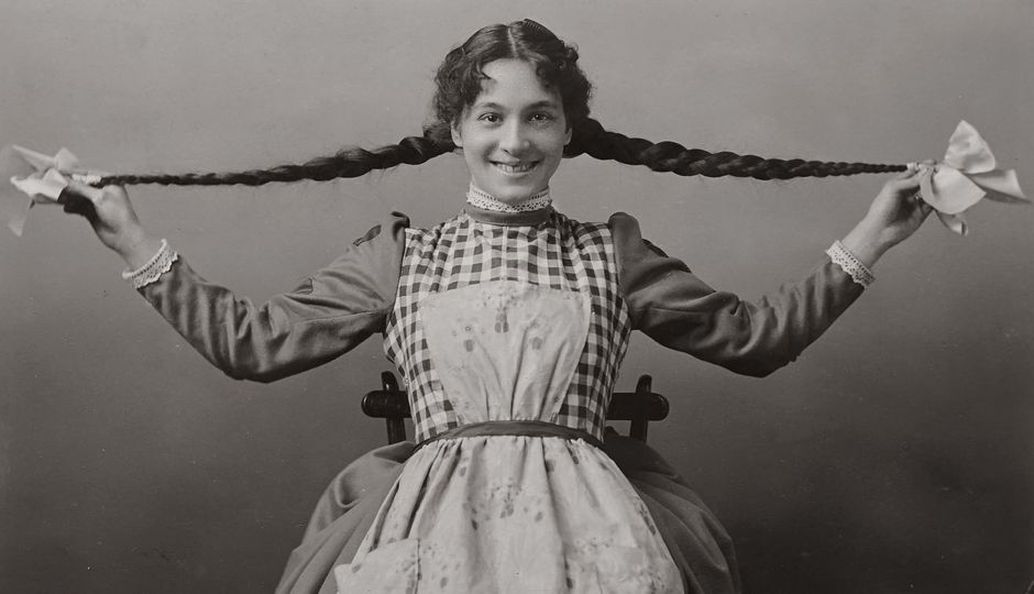
At the start of the century, bows were familiar on girls’ long hair. A wide ribbon might finish a plait or sit above hair drawn back from the face; a neatly tied bow also suited a school uniform. Adult women wore ribbon too, though the generous bow seen on a child was not necessarily an adult fashion. Width, fabric, colour and placement could make all the difference.
Many early bows were simply lengths of ribbon, rather than complete accessories bought ready to wear. Grosgrain’s ribbed surface helped a knot hold; smooth satin had sheen but could slip loose more easily. Silk was prized for its finish, while cotton and other fibres served for everyday wear. In an old photograph, the outline is usually easier to judge than the fibre: a glossy bow is not necessarily silk.
Shorter cuts in the 1920s altered the scale. A bob offered little length for a large bow at the end of a plait, but a small ribbon could sit close to the head or form part of a band. Bows did not vanish, and neither did longer hair; fashions varied across Britain.
Practicality, polish and the ready-made bow
During the 1930s and 1940s, a bow could add colour to hair gathered into a ponytail or pinned in sections without calling for an elaborate ornament. Wartime restrictions made adaptable pieces useful, but a photograph of a ribbon is no proof that it was homemade or cut from scraps. Bought ribbons, constructed accessories and resourceful reuse all had a place.
In the postwar decades, more bows came with their shape fixed. Fabric might be sewn around a clip, attached to a barrette or secured to an elastic: no need to tie two even loops each morning. The fastening introduced another point of wear, though. A sound ribbon can outlast the spring or adhesive that holds it in place.
In the 1950s, a bow might sharpen the neat outline of a ponytail or sit beside a set of curls. Small, crisp bows worked with coordinated daywear, while wider ribbons gave a softer effect. These are possibilities for wearing them, not rules for dating them: a plain grosgrain bow on a later clip can deliberately echo a mid-century look.
Why the fastening matters
Turn over a vintage bow and you may learn more about how it was worn than its front reveals. A separate ribbon can be placed where you like, provided the knot holds. A slide keeps the bow facing one way; an elastic gathers the fabric and hair together. Each affects the textile differently. Stitches may leave firm little holes, while old glue can turn brittle or stain a pale ribbon.
New proportions, familiar shape
Changing hairstyles gave bows other roles in the 1960s. A small bow could punctuate a sleek style without obscuring it; longer hair allowed ribbon at the crown or around a ponytail. Brighter synthetic ribbons added to the available colours and finishes. Colour alone is no reliable guide to fibre, however: old and new materials can both keep a strong hue.
A ribbon in the 1970s might be tied loosely around long hair or worked into a plait, rather than held in a rigid silhouette. In the 1980s, oversized fabric bows and bold colour could sit comfortably alongside bigger hairstyles. Neither decade had one defining bow. A narrow dark ribbon and a large patterned one might belong to the same period and reflect quite different tastes.
By the 1990s, scale and setting could make a bow seem understated, playful or deliberately nostalgic. A modest bow on a simple clip gave a different impression from an oversized piece. The form remained familiar even as its proportions shifted.
Reading and wearing an older bow
A vintage-shop bow may have had more than one life. Its owner might have moved it from an elastic to a clip, replaced stained ribbon or stitched a loose centre band back into place. Those repairs can keep it wearable, but they do not establish that every part is original. If a seller gives a precise date, look for evidence: a labelled package, a documented history or construction details that fit the claim. Shape alone rarely settles it.
Before buying or wearing one, take a moment to inspect it:
- Check the centre wrap. Lift it gently to see whether the stitches hold and whether glue has darkened the fabric.
- Test the fastening cautiously. Open and close a clip once, away from hair. Do not force a stiff hinge.
- Look at both loops. One side may show more fading, fraying or crushed fabric than the other.
- Consider the weight. A large, heavily decorated bow may need a secure style or a different fastening to stay in place.
For everyday wear, let the size set the tone. A narrow ribbon around a low ponytail brings a quiet line to a smart coat or knit; a broad bow can be the focus against a plain shirt. There is no need to copy a period hairstyle. Save a fragile find for occasional wear and reach for a sturdier bow on a busy day.
Store a structured bow without flattening its loops, and keep pale fabric away from fastenings showing rust or staining. Untie a worn ribbon rather than pulling a tight knot through the hair. For an older slide, close the fastening before putting it away, then rest the bow on a little acid-free tissue to help the loops hold their shape.