
The Hair Bow in 20th-Century British Fashion
A large black bow at the nape could suggest a school uniform, mourning dress, evening polish or youthful rebellion, depending on the decade. That shifting meaning made the hair bow one of the most adaptable accessories in 20th-century British fashion. Simple in construction—a length of ribbon tied, stitched or fixed to a clip—it changed repeatedly in scale, fabric, placement and social tone.
British bows were shaped as much by local customs as by international fashion: school dress codes, traditions of formal presentation, wartime thrift, the post-war taste for prettiness, youth subcultures and later revival dressing. Their story is not a neat progression from childish to grown-up. A bow could be deliberately girlish, sharply formal, theatrical, ironic or simply practical.
From Edwardian formality to the 1920s
At the start of the century, ribbon bows belonged to the broader late-Victorian and Edwardian taste for ornament. Women wore them with elaborate hair arrangements, hats and high-necked daywear, while girls often had substantial bows above plaits or at the crown. Grosgrain, satin and velvet were common. Texture mattered: ribbed grosgrain held a crisp, architectural knot, while velvet absorbed light and gave dark colours particular depth.
Black bows carried several associations. They suited formal dress and could be worn in mourning, although black ribbon alone is not evidence of mourning use. Photographs, the garment worn alongside it and the bow’s scale offer more useful context than colour by itself.
The 1920s left less room for large hair ornaments. Short bobs and close cloche hats favoured narrow ribbons, small side bows and headbands rather than the broad loops of the previous era. A bow might sit low on the forehead, be attached to a bandeau or trim a hat. In a decade drawn to streamlined geometry, even decorative bows tended to look flatter and more controlled than their Edwardian predecessors.
The 1930s and 1940s: polish under constraint
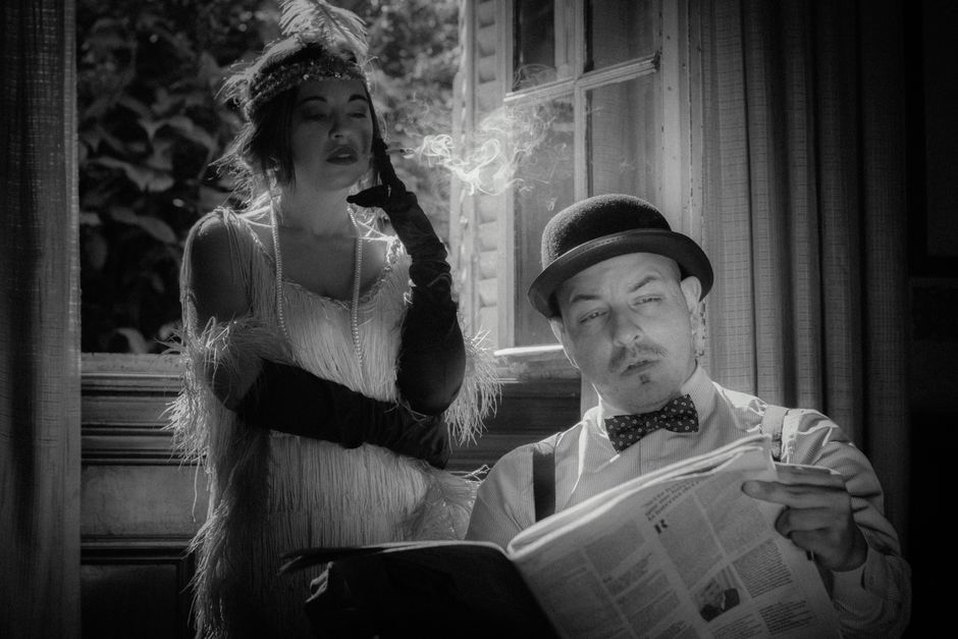
During the 1930s, bows followed the decade’s preference for soft, feminine lines. They appeared beside waved hair, beneath small hats and as accents to practical daywear. Rayon and artificial silk made lustrous ribbon effects more accessible, while velvet retained its place in winter and evening dress. A small bow might echo the colour of gloves, a collar detail or a frock’s belt without competing with the carefully waved hairstyles of the period.
Wartime Britain altered the accessory market. Clothing rationing and limited supplies encouraged make-do-and-mend habits, yet bows did not disappear. Ribbons could be reused from garments, parcels or older trimmings, and a modest bow gave a simple hairstyle a quick finish. Utility regulations affected clothing production more directly than every homemade hair tie, but economy and ingenuity were widely valued.
Period photographs often show practical arrangements: scarves, turbans, pins and neatly secured rolls. In this setting, a bow was generally smaller than a pre-war version and more likely to be functional or made from whatever material was available. When assessing a bow described as 1940s, do not date it solely by a red, navy or patriotic colour scheme. Its construction is more revealing.
Clues in a surviving mid-century bow
- Ribbon edges: Older ribbons may have woven selvedges, though this is not a precise date marker by itself.
- Attachment: Look for hand stitching, an early metal barrette, a comb, elastic or a wired mount. Replacement findings are common.
- Fabric: Rayon can feel cool and appear glossy, but silk, cotton and synthetics overlap across decades.
- Wear: Fading on exposed loops, crushed velvet pile and oxidation on metal fittings may be consistent with age, though artificial distress exists.
Post-war abundance and the 1950s bow
The 1950s brought back a more openly decorative silhouette. Christian Dior’s 1947 “New Look” had international influence, and British ready-to-wear reflected the same broad mood through defined waists, full skirts, polished accessories and coordinated details. Hair bows suited this desire for a finished appearance. They appeared on ponytails, half-up styles and short curled hair, sometimes matched to a dress, cardigan or handbag.
British schoolwear also gave the bow a lasting visual identity. Uniform rules varied considerably, but ribbons tied around ponytails or plaits became a familiar part of girls’ dress. That association later lent adult bow styling a note of nostalgia—sometimes sweet, sometimes subversive. “School bow” is not a fixed historical category: size, colour and fastening method differed by school, region and family means.
For evening, black velvet bows were especially effective against lacquered curls, upswept hair and jewel-neck dresses. A bow did not need to be oversized to look formal. The tactile contrast with smooth fabric or bare skin did much of the work. The Classic Velvet Braided Headband: A Vintage Collector’s Guide offers useful background for comparing the period appeal of velvet hair accessories beyond bows.
1960s contrast: neat bows and youth fashion
The 1960s did not abandon bows; instead, it split them into distinct visual camps. One was neat and compact, suited to graphic tailoring, shift dresses and smooth, sculpted hair. The other was more playful, linked with youthful dressing, long hair and the growing influence of boutique fashion.
London youth culture made accessories part of a faster fashion conversation. A bow could be bought cheaply, made at home or adapted from a length of ribbon, so it could follow changes in colour and hemline without requiring a new wardrobe. Bright synthetics, plastic-backed clips and novelty prints appeared alongside traditional satin and grosgrain.
Large beehives did not necessarily need bows, but a small one beneath a backcombed crown could lend an intentionally tidy finish. Placement mattered. A bow set too high could vanish into the volume, while one fixed at the nape drew attention to the silhouette from behind.
1970s to 1990s: folk romance, power dressing and revival
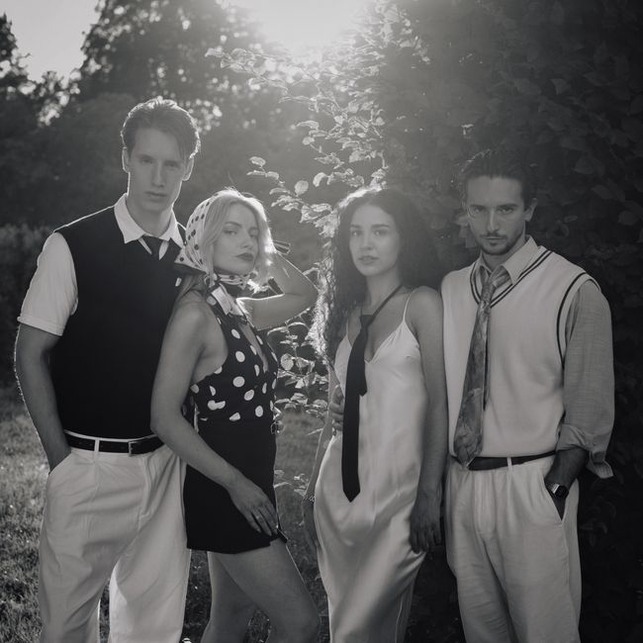
By the 1970s, the bow was no longer tied to a single mainstream look. Romantic and folk-influenced dress welcomed soft ribbons in long hair, often loosely tied rather than fixed to rigid clips. Vintage-inspired outfits borrowed from earlier periods, though a 1970s version was usually freer and less formal than its Edwardian or 1950s references.
The 1980s favoured greater scale and sharper contrast. Hair accessories appeared alongside padded shoulders, bright synthetic fabrics and highly styled hair. Satin, velvet and oversized fabric bows made an intentionally visible statement, while bow headbands offered a useful option for volume-heavy styles. The period’s appetite for shine and saturated colour is considered through a related accessory in The Neon Satin Headband: A 1980s Club Icon That Still Shines.
In the 1990s, minimalist dressing pushed some bows into the background, though they remained present in velvet scrunchies, narrow black ribbons and revival looks drawn from earlier decades. The period often favoured restraint: a thin ribbon at the end of a low ponytail could feel more characteristic than a large, perfectly symmetrical bow.
Dating, buying and wearing older bows with care
A vintage bow can be difficult to date precisely because ribbon is easily reused and clips are easily replaced. Treat sellers’ decade labels as working descriptions rather than proof. Look for a clear account of dimensions, fibre content where known, fastening type, repairs and condition. If a bow is described as designer, provenance or a legible original label matters; an unmarked accessory should not be presented as a named piece merely because it resembles one stylistically.
| Feature | More useful interpretation | Common mistake |
|---|---|---|
| Large loops | May suggest a fashion moment or intended age group | Dating an item solely by size |
| Metal clip | Can help establish a broad construction period | Assuming the clip is original |
| Frayed ribbon | May reveal use, storage damage or weak fibres | Assuming wear proves authenticity |
| Label | Can support identification when consistent with construction | Treating any label as definitive without inspection |
In a contemporary British wardrobe, one clear historical cue usually works better than full period dress. A narrow grosgrain bow at the base of a low ponytail suits a wool coat and knitwear; a small velvet bow offsets a plain dinner jacket; an oversized satin bow can be the single expressive element with a simple dress. Match the bow’s visual weight to the hairstyle: dense velvet and wide loops need enough hair volume or a firm base clip, otherwise they can appear to have slipped out of place.
Store silk and rayon bows flat in acid-free tissue, or support them loosely so the loops do not take permanent creases. Keep velvet away from pressure and damp conditions. Do not use water to spot-clean an unknown vintage ribbon: dyes, sizing and glued sections can react unpredictably. Before wearing a fragile bow, test its clasp over folded fabric. If the spring is weak or the stitching pulls, display it on a ribbon board rather than fastening it directly into your hair.