
70s Maxi Dress and Vintage Hair Accessories: A Stylist’s Guide
The Maxi Dress and the Hair Accessory Revolution
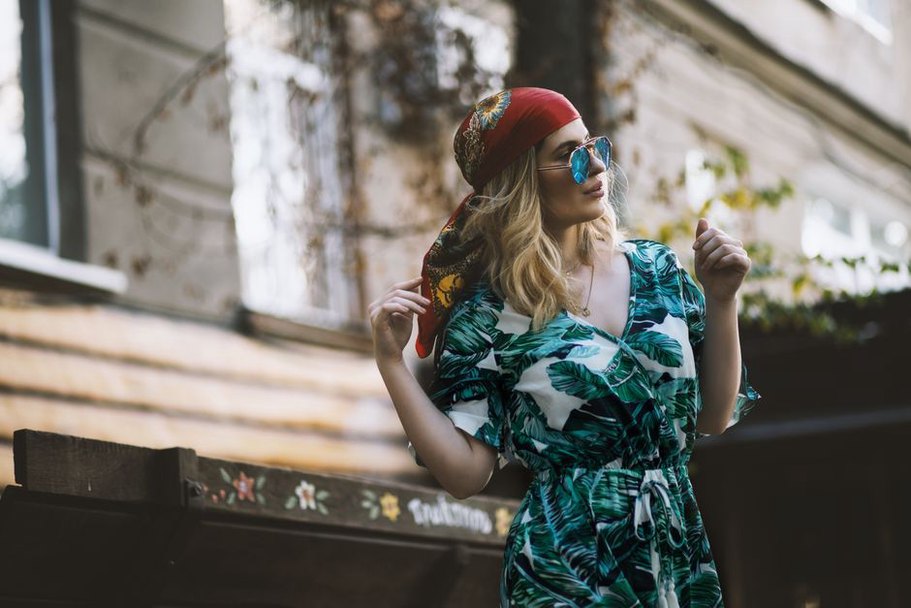
When the maxi dress swept through British fashion in the early 1970s, it brought with it a quiet revolution in hair accessories. The long, flowing silhouettes — whether in floral prints, earthy knits, or jersey — demanded a complementary hair aesthetic. Gone were the stiff, sculpted updos of the 1960s; in their place came softer, more organic shapes that celebrated movement and texture. For the vintage collector, this moment marks a golden era of hair ornaments designed not to restrain, but to enhance the natural fall of hair against a billowing dress.
The maxi dress of the 70s was not a single garment but a spectrum of styles: the prairie dress with its high neck and ruffled cuffs, the bohemian kaftan, the slinky jersey halter, the A-line denim skirt-dress. Each called for a different approach to hair. A heavy wooden bead hair slide might anchor a centre-parting on a kaftan, while a delicate plastic comb in tortoiseshell would tame a side-swept fringe for a fitted jersey dress. Understanding this relationship is the key to creating an authentic vintage look today.
Defining the 70s Silhouette: Hair Accessories That Match the Flow
The central principle of 70s hair accessories is that they should never fight the dress. A maxi dress, by its nature, draws the eye vertically. Hair ornaments that echo that vertical line — long barrettes, slender headbands, hair sticks — work harmoniously. Horizontal elements, like wide headbands or chunky clips, can create a focal point at the crown, but they must be chosen with care to avoid cutting the line of the neck and shoulders.
Materials also shifted. Plastic and resin came into their own, with marbled tortoiseshell, translucent amber, and creamy faux ivory being especially popular. Metal was often brushed gold or silver, occasionally with hammered textures that caught the light as the wearer moved. Natural materials — wood, horn, leather — appeared in the more earth-toned outfits, often paired with suede or macramé elements in the dress itself. The goal was a cohesive, tactile ensemble where the hair accessory felt like an intentional part of the outfit, not an afterthought.
The Bow Clip Revival
One of the most enduring shapes from this period is the bow clip. In the 70s, fabric bows — often velvet, grosgrain, or satin — were attached to metal alligator clips or spring clips. They appeared at the side of the head for a playful touch, or perched low at the nape to echo the soft gathering of a maxi dress neckline. To build a collection that captures this spirit, consider seeking out examples with stitched centres and hand-painted edges, signs of the artisanal quality that was prized before mass production took over. For a deeper dive into the eras and materials of bow clips, our guide on How to Build a Vintage Bow Clip Collection: Eras, Materials, and Styling Tips offers practical advice on identifying the best specimens.
The Hair Collar and Circular Headpieces
Another less obvious hairstyle enhancer for the maxi dress is the hair collar — a circular or semi-circular frame that sits around the crown or the back of the head. These were often made of flexible wire covered in thread, beads, or tiny silk flowers. When worn with a maxi dress, they create a halo effect that balances the volume of the skirt. The hair collar is especially effective with a centre-parted, loose wave (the classic 70s “wipe-out” curl). If you are new to this shape, the collector’s guide to Collections Collars: A Collector’s Guide to Vintage Hair Collars and Circular Headpieces explains how to assess condition and spot authentic 1970s examples.
Practical Tips for Pairing Maxi Dresses with Vintage Hair Accessories
- Match the weight of the fabric to the weight of the accessory. A heavy knit maxi calls for a substantial clip or slide; a sheer voile dress needs something light, like a thin plastic barrette or a single hair stick.
- Let the neckline guide placement. A high-neck prairie dress looks best with hair pulled back into a low ponytail secured by a woven leather tie, or with a small bow clip at the temple. A deep V-neck jersey dress benefits from hair swept to one side and held by a decorative comb.
- Consider colour contrast. If the dress is printed, a hair accessory in a solid colour taken from the print creates a pulled-together look. If the dress is solid, feel free to introduce a contrasting texture or metallic shine.
- Do not overcrowd. One statement piece is often enough. The maxi dress already commands attention; a second large clip or multiple small ones can read as costume rather than vintage elegance.
Care and Sourcing: Keeping 1970s Hair Accessories in the Rotation
Vintage plastic and resin can become brittle over five decades. Before wearing a 70s clip, test the spring tension gently. If it feels stiff, warm the metal slightly with a hairdryer on low heat for a few seconds — this relaxes the spring without damaging the plastic. For fabric-covered pieces, spot-clean with a damp cotton swab and air-dry away from direct sunlight. Store them in acid-free tissue paper inside a compartmentalised box to prevent scratching.
When hunting for these accessories at sales or markets, look for the subtle indicators of 70s manufacture: mould lines that are slightly rough (evidence of early injection moulding), hand-painted details that have minor irregularities, and maker marks like “Made in England” or “Regd. No.” on the metal clip. These details not only confirm authenticity but also add charm. If you prefer to shop from home, our guide on How to Shop Vintage Hair Accessories at Collection Sales includes tips on evaluating online photos and asking the right questions about age and condition.
The beauty of pairing a 70s maxi dress with a vintage hair accessory is that it creates a completely individual look — one that respects the original era without being trapped in it. Next time you pull on a printed maxi, consider a single velvet bow clip at the nape of the neck. It is a small gesture that carries decades of style history, and it asks nothing more of you than a moment of thoughtful selection.