
Vintage Floral Hairpins: History, Styling and Care
A flower hairpin can say more than its size suggests. A small enamel rose on a 1930s slide may echo the romantic motifs seen in costume jewellery of the period, while a crisp white plastic daisy on a 1960s clip belongs to a brighter, younger visual vocabulary. Flowers do not carry one fixed meaning: their associations shift with material, colour, occasion and date. That uncertainty is part of the appeal of collecting and wearing vintage floral hairpins.
Unlike a large hat ornament or formal tiara, a floral pin sits close to the face and can alter the mood of a simple hairstyle. It can soften tailoring, add a purposeful period note to knitwear, or introduce one point of colour to an otherwise restrained outfit. It works best as a considered accent rather than a last-minute addition.
Flowers as motifs: symbolism without over-reading
Floral decoration has appeared in jewellery, millinery and hair ornaments for centuries, often drawing on floriography, or the language of flowers. Still, it is unwise to read a vintage accessory as a coded message without evidence in its provenance, packaging or a period maker’s description. Decorative flowers were often chosen simply because they were attractive, fashionable and adaptable across different materials.
Common associations
| Motif | Traditional associations | How it appears in vintage hairpins |
|---|---|---|
| Rose | Love, beauty, affection | Moulded celluloid blooms, enamel sprays, fabric corsage-style clips |
| Daisy | Innocence, freshness, loyal affection | White enamel or plastic petals, often in cheerful mid-century designs |
| Violet | Modesty, remembrance, faithfulness | Small purple glass or enamel clusters with leaves |
| Lily | Purity and renewal | Less common as a pin motif; seen in elongated Art Nouveau-inspired forms |
| Cherry blossom | Ephemeral beauty and spring | Delicate painted or moulded blossoms, sometimes in Japanese-inspired designs |
Colour changes the mood, too. Red and coral flowers often feel lively and assertive, while pale pinks can seem more romantic. Black enamel flowers tend to look graphic and suited to evening wear. A flower made in clear rhinestones may have little botanical symbolism at all, serving instead as a sparkling abstract form. Context matters more than a rigid dictionary of meanings.
Recognising materials and periods
Floral hairpins cover a broad span of dates and price points. They were made by specialist jewellers, costume-jewellery firms, milliners and home dressmakers. An unmarked clip can still be historically interesting and beautifully made; a signature alone does not confirm age, condition or suitability for wear.
Early twentieth century to the 1930s
Earlier pieces often have delicate construction: stamped metal leaves, tiny glass beads, wired petals, imitation pearls or painted metal flowers. Art Nouveau influence may show in curving stems and naturalistic asymmetry, while 1920s and 1930s examples often pair flowers with more stylised lines. Celluloid was used for light, sculptural blooms and can resemble ivory, horn or tortoiseshell. It needs particular care: keep it away from heat, direct sunlight and other plastics, and never attempt to polish or repair it with solvents.
1940s and 1950s
During and after the war years, floral clips were commonly made from metal, enamel, fabric, plastic and rhinestones. Styles range from restrained sprays of leaves to generous corsage-like blooms. Look for practical fittings such as hinged bar clips, bobby-pin-style slides and comb mounts. A flower with a substantial metal back often sits well at the base of a rolled fringe or beside a low chignon, where the fastening is supported rather than on display.
1960s and 1970s
These decades brought bolder plastics, lacquered finishes, daisy chains and simplified floral silhouettes. Bright acrylic petals, novelty daisies and psychedelic colour combinations belong naturally with the geometric accessories of the period, rather than Victorian-revival styling. For collectors interested in a particular flower-clip design, the collector’s guide to the Maison Archives Daisy Chain Hair Clip offers a focused example of how a repeated floral motif can be assessed.
What to inspect before wearing a vintage floral pin
A flower can appear intact from the front while its mechanism is fragile on the reverse. Examine it in good daylight before putting it in your hair.
- Check the fastening: A clip should open and close smoothly without force. Bent teeth, a weak spring or a loose rivet can make it unreliable.
- Inspect joins and petals: Look gently for lifting enamel, loose stones, cracked plastic, fraying fabric and detached wired elements. Do not flex a brittle flower to test it.
- Look for corrosion: Verdigris, a powdery green residue, can stain fabric and may suggest that moisture has reached the metal. Keep affected pieces separate and consult a conservator for valuable examples.
- Mind sharp edges: Old wire ends, damaged prongs and rough castings can catch on clothing or hair. Choosing to display a fragile piece rather than wear it is entirely reasonable.
- Use support when needed: A discreet modern bobby pin beneath a decorative clip can take the strain, leaving the vintage piece largely ornamental.
Do not glue a loose rhinestone or broken petal without considering the object’s value and construction. Household adhesives can discolour porous materials, seep onto metalwork and make professional repair more difficult. Store any detached component in a labelled envelope with the pin.
Styling floral hairpins with a modern British wardrobe
Floral accessories do not require a fully period hairstyle. They often look most convincing in contrast with clean contemporary clothes. Let the scale of the flower, rather than an assumed rule about its age, guide its placement.
For everyday outfits
Try one small flower above the ear with a crew-neck jumper, straight-leg trousers and loafers. Set slightly behind the temple, it is easier to see than a clip hidden directly over the ear, yet still feels relaxed. If your hair is fine or slippery, secure a plain gripping pin first, then place the decorative piece over it so the original clasp does not take all the tension.
A modest enamel daisy also sits beautifully with a white shirt and dark blazer. Keep other jewellery quiet if the hairpin includes rhinestones or imitation pearls; matching every accessory too closely can feel costume-like rather than personal.
With dresses and occasionwear
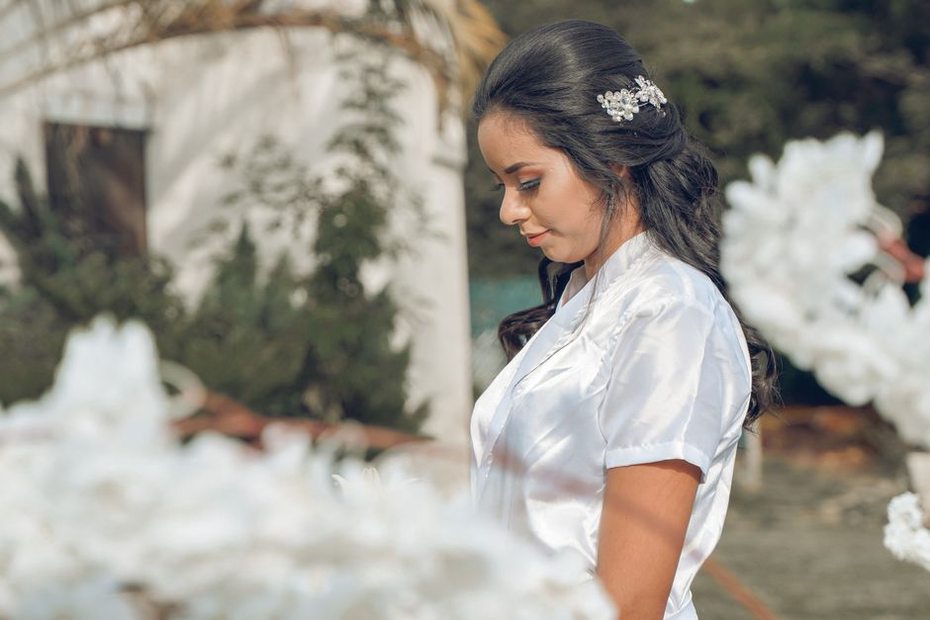
One substantial bloom can take the place of a fascinator for a lunch, garden gathering or registry-office ceremony when a smaller adornment feels more fitting. Wear it beside a low bun, at the end of a side parting, or on the outer edge of a soft twist. Check the balance from the front and side with a hand mirror.
For evening, pair a black, crystal or metallic floral clip with a sleek low knot and a simple neckline. If the pin has a visible brass-toned back, place it where the decorative face remains fully forward. Keep old glued fabric flowers away from hairspray, as aerosol residue can stiffen fibres and dull painted surfaces.
Pairing eras without imitation
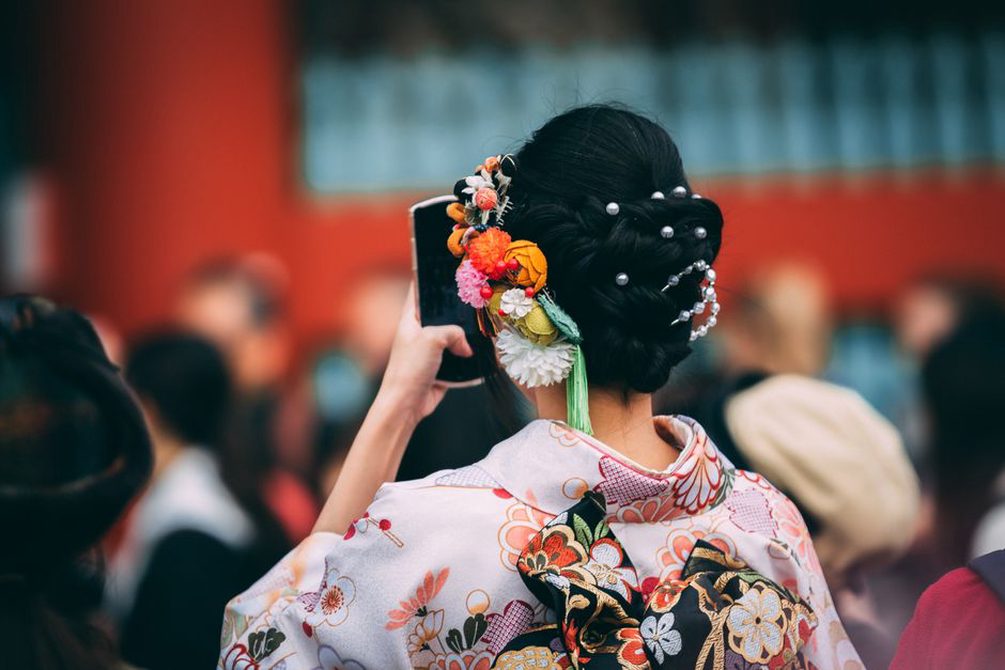
A 1950s rhinestone blossom does not call for a full-circle skirt, and a 1970s acrylic daisy does not need head-to-toe retro dressing. Choose one clear reference and keep the rest of the outfit current. A floral slide can warm up a trench coat and fine knit; a bright plastic bloom can sharpen a minimal black dress. If your clothes include florals too, vary the scale: pair a tiny flower pin with a large botanical print, or a larger clip with near-solid fabric.
Care, storage and respectful collecting
Store floral hairpins separately so petals, stones and prongs do not rub against neighbouring pieces. Acid-free tissue or a divided box with soft compartments works well for sturdier items. Delicate fabric, celluloid and wired flowers need more space and minimal handling. Keep them in a stable, dry room, away from radiators, bathrooms and sunny windowsills.
Clean selectively. A soft, dry brush can lift loose dust from metal and plastic, but painted enamel, foil-backed stones and fabric petals should not be soaked. Avoid perfume, hairspray and polishing cloths directly on the accessory. If a pin is marked, photograph the mark, fastening and front before cleaning or repair; those details form part of its history.
When buying, ask for clear photographs of the reverse, measurements, material descriptions and details of any repairs. Terms such as “vintage style” and “inspired by” describe modern pieces, not necessarily older ones, and should not be mistaken for verified vintage. A small card tied to each stored pin can record its source, estimated date, materials and flaws. For a pale enamel daisy, a useful note might read: “c. 1960s–70s, white plastic and metal clip, two tiny chips on outer petals, wear on right side of low twist.”