
How to Wear and Care for Edwardian Lace Hairpieces
A genuine Edwardian lace hairpiece is often lighter and less rigid than its elaborate appearance suggests. Lace might be gathered over a wire frame, stitched to a small comb, or used to soften a bow, aigrette-like ornament or evening bandeau. Its charm lies in the contrast: an ornamental surface transparent enough to reveal the hairstyle and fabric beneath.
For present-day dressing, Edwardian-inspired lace works best as a textural accent rather than part of a full period look. A narrow black lace comb can sharpen the line of a wool coat, while ivory cotton lace beside a simple linen dress gives a summer outfit a thoughtful finish. Scale, condition and fastening matter as much as the lace pattern.
What makes an Edwardian lace hairpiece distinctive?
The Edwardian period, broadly 1901 to 1910, favoured hairstyles with soft, built-up volume. Hair was arranged into broad pompadours and coils, creating a generous base for combs, bows, veils and ornaments. Lace suited these shapes because it could be ruched, draped and layered without adding much weight.
Period pieces may feature machine-made lace, handmade bobbin lace, needle lace, net, tulle or a combination of these. Valenciennes-style cotton lace and fine floral net were practical decorative choices, while more intricate handmade laces appeared on accessories of greater value. Colour offers clues too: cream, ecru, black, pale ivory and occasional softly tinted shades are more plausible than stark optical white.
“Lace” covers several constructions, so look at how the material is used. A lace-covered comb may have a solid backing; a lace bow may be wired around its edges; and a bandeau can be reinforced with ribbon, velvet or a concealed metal structure. That construction affects both the likely age of a piece and the gentlest way to wear it.
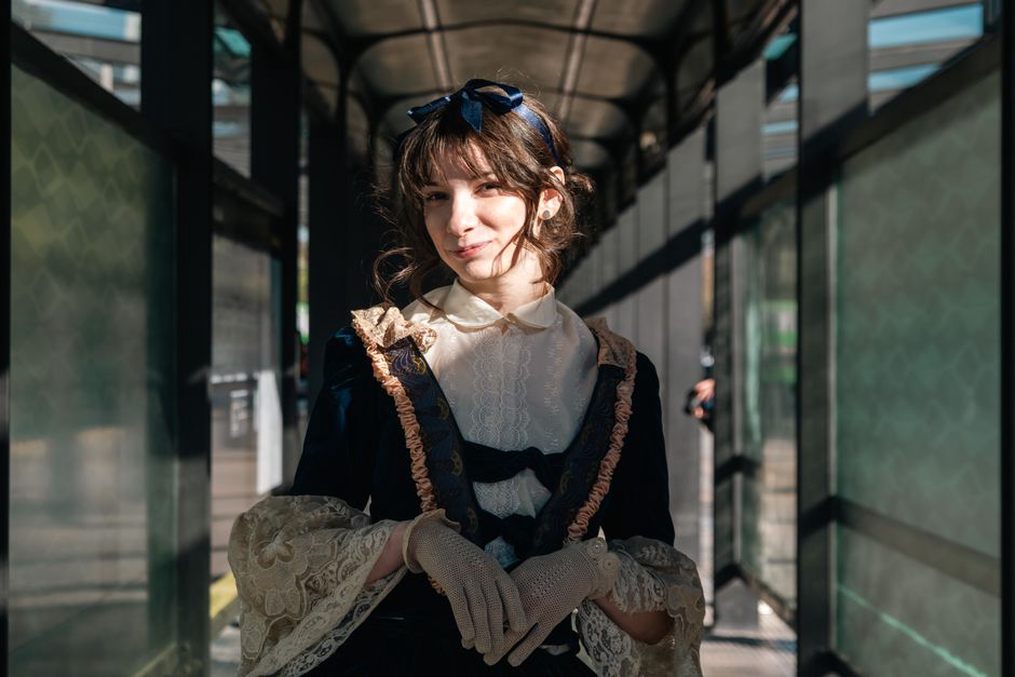
Details that can help with identification
- Fastenings: Small celluloid, horn, metal or early plastic combs may accompany lace, although a later replacement fastening is common.
- Stitching: Hand stitching is often irregular but purposeful. Machine stitching alone does not make a piece modern, since machine lace and sewing were already well established.
- Materials: Cotton and silk thread are common. Fragile silk net can split along folds, whereas cotton lace often survives in better condition.
- Shape: Crescents, bows, rosettes and softly gathered motifs suit Edwardian taste more closely than the sharp geometric arrangements associated with the 1920s.
- Signs of age: Gentle tonal variation, oxidation on metal and honest wear at stress points can be useful clues, though none is proof in isolation.
Be wary of descriptions that call an object “Edwardian” simply because it includes lace. Revival pieces appeared throughout the twentieth century, and contemporary reproductions can be beautifully made in their own right. A seller should identify a reproduction as such rather than presenting it as original. Where provenance is unavailable, “Edwardian style” or “early twentieth-century inspired” is more accurate than certainty.
Making lace feel current
Modern styling benefits from restraint. Antique lace already has visual movement in its openwork, scallops and floral motifs. A simple hairstyle and one or two clear clothing textures keep those details visible instead of letting them disappear into an overly busy outfit.
Three practical styling directions
- Structured contrast: Set a small black lace bow or comb above a low bun with a charcoal blazer, fine knit and straight trousers. The clean lines give the ornament definition without making it feel theatrical.
- Soft natural fabrics: An ecru lace slide works well with washed denim, a cotton shirt or a flax-coloured dress. Choose a low twist or half-up arrangement so the lace rests against the hair rather than floating unsupported.
- Evening simplicity: For dinner or an event, wear one lace bandeau or a matched pair of lace-covered combs with a plain dark dress. Keep jewellery spare and let the accessory provide the decoration.
Hair colour need not decide whether lace will work. Dark lace makes a crisp outline against lighter hair, while pale lace is especially visible against dark hair. If the pattern gets lost, place a small piece of smooth fabric or ribbon behind it, provided this does not pull on the antique lace. A removable ribbon lining is safer than permanently altering an original piece.
Necklines are useful guides. High collars, ruffles and printed blouses can compete with elaborate lace near the face, while a plain crew neck, open collar or simple scoop allows it to register clearly. For that reason, a modest lace comb is often easier to wear than a broad, veil-like piece: it nods to the Edwardian silhouette without reproducing it wholesale.
Choosing a piece with care
Before buying, ask for close photographs of the front, reverse, fastening and any weakened areas. Check for broken netting, frayed loops, detached trims and rust where wire or metal meets cloth. These issues do not automatically rule out a purchase, but they should affect both price and intended use. A historic lace piece may not be suitable for frequent wear.
| Type of piece | Best modern use | Common concern |
|---|---|---|
| Small lace comb | Low bun or half-up style | Loose teeth or a weakened base |
| Wired lace bow | Placed beside a chignon | Wire poking through fabric |
| Lace bandeau | Special-occasion updo | Stretched elastic or brittle net |
| Lace-covered barrette | Securing a small hair section | Later clasp replacement |
A modern reproduction can be the more sensible option for regular wear, particularly if you want a large bow or need to fasten it repeatedly. It offers the Edwardian language of gathered lace and softness without putting a fragile surviving object at risk. Reserve antique pieces for quieter occasions, display, or styling that involves little handling.
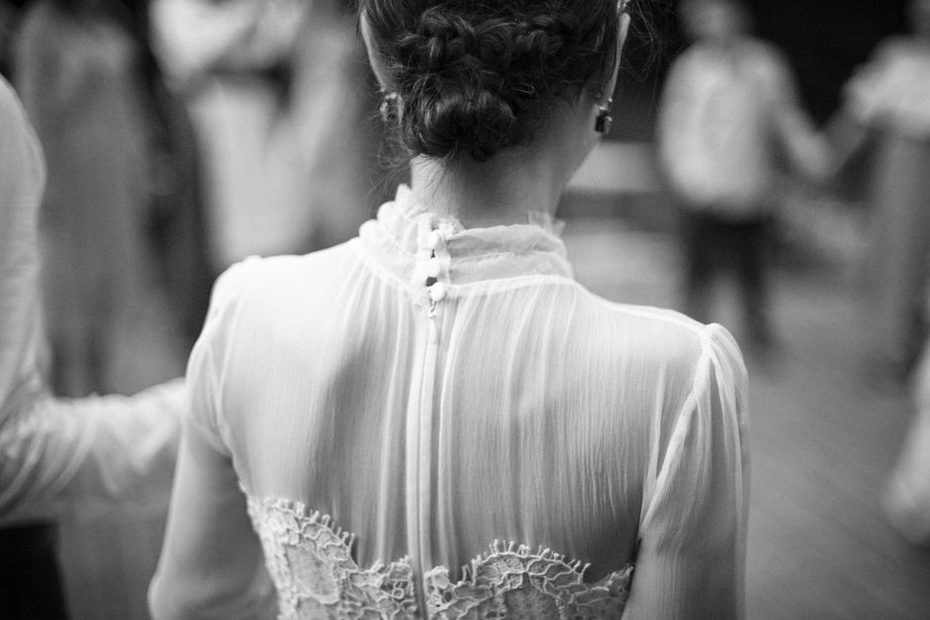
Handling, storage and small repairs
Do not spray perfume, hairspray or dry shampoo directly near antique lace. Residue can stiffen fibres, trap dirt and cause uneven discolouration. Put the hairpiece in place after styling products have settled, and remove it by holding the comb or framework rather than pulling the lace.
Store each piece flat in acid-free tissue inside a lidded box, away from daylight, damp rooms and extremes of heat. Avoid hanging lace bows by their clips: gravity can distort their shape and strain the stitches over time. Plastic bags are not ideal for long-term storage because they may hold moisture against vulnerable fibres.
It is usually best to leave loose threads alone unless they are likely to catch. A detached seam may be restitched with fine, conservation-minded sewing, but adhesive is a poor shortcut: it can darken, harden and permanently alter the textile. For an important handmade lace piece, consult a textile conservator rather than attempting a repair at home.
For a first outing, place a small lace comb just above a low twist and secure the hairstyle separately with discreet modern pins. The comb then decorates the arrangement rather than carrying its full weight, which reduces strain on both the fastening and the century-old lace.