
How to Identify and Style Vintage Ric Rac Hair Accessories
If you have ever run your fingers along the scalloped edge of a mid-century hair band or unpicked the trim from a 1950s hair comb, you have likely touched ric rac. This flat, zigzag braid—sometimes called rickrack—is one of the most recognisable trims in British dressmaking and hair accessory design. Its wave-like shape, typically made from cotton or rayon, appears on everything from childhood hairbands to elaborate evening combs. But for the vintage collector, ric rac is more than a decorative flourish. Its width, material, colour, and placement tell you exactly when an accessory was made, and often, who wore it.
What Ric Rac Is and How It Is Made
Ric rac is a flat braid woven so that the weft threads form a continuous zigzag. The structure is a simple bias weave: two sets of threads interlock at angles, creating the characteristic pointy edges. Historically, the trim was produced on narrow-fabric looms in mills across Lancashire and the Midlands. The width of ric rac is measured from point to point, and common sizes range from the delicate 3/8-inch (9 mm) trim to the bold 1-inch (25 mm) version used on mid-century felt berets and headbands.
The material matters. Cotton ric rac was standard for everyday accessories—school hairbands, summer festival combs, and playtime bows. Rayon or silk blends appeared on evening pieces and formal hair ornaments, where the trim caught the light and moved with the wearer. By the 1960s, synthetic polyester ric rac entered production, but serious collectors often prefer the earlier natural-fibre versions because they age gracefully, softening with time rather than stiffening or melting under heat.
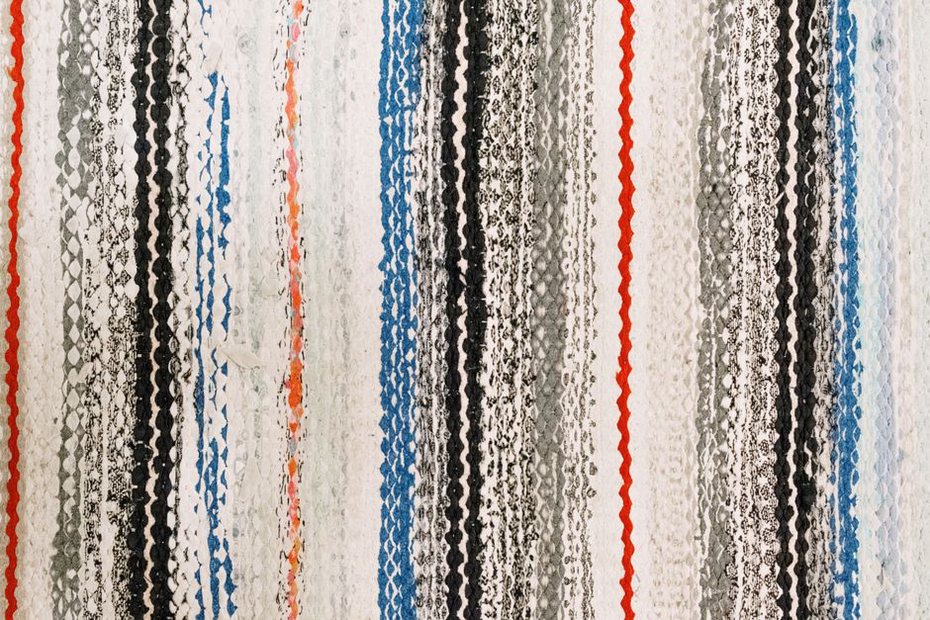
How to Identify Vintage Ric Rac by Width and Colour
Width is the first clue. Pre-war and wartime ric rac (1930s–1945) was typically narrow, around 3/8 inch, and produced in limited colours—navy, black, white, and a muted red. The rationing of dyes and cotton meant bright colours were rare. After the war, from the late 1940s through the 1950s, British mills began producing wider ric rac in pastel shades: mint green, baby pink, butter yellow, and lavender. This was the golden age of ric rac hair accessories. A 1950s hair comb or headband trimmed with wide pastel ric rac is a genuine treasure.
By the 1970s, ric rac had grown bolder. Earth tones—rust, olive, ochre, brown—appeared alongside bright orange and acid green. The width also increased; 1-inch ric rac became common on crocheted berets and braided headbands. If you find a hair accessory with wide, brightly coloured ric rac, it likely dates to the 1970s or early 1980s.
Ric Rac in British Hair Accessories: Eras and Silhouettes
Ric rac was never a standalone accessory. It was always applied to something else—a headband, a comb, a barrette, a beret. Understanding how it was used in each decade helps you date a piece and style it authentically.
1940s and 1950s: Playful Femininity
In the post-war period, ric rac appeared on girls' hairbands and women's daytime combs. The trim was sewn along the top edge of a fabric-covered headband or threaded through the teeth of a tortoiseshell comb. The effect was delicate and cheerful. A single row of narrow pastel ric rac was enough to transform a plain accessory into something special. These pieces were often homemade or produced by small millinery workshops, so no two are exactly alike.
If you collect this era, look for headbands with a wire core covered in velvet or grosgrain, with ric rac stitched along the front edge. The red crochet beret revisited in our guide shares that same mid-century sensibility—handcrafted, textured, and meant to be worn with simple elegance.
1960s: Mod and Minimal
The 1960s shifted toward cleaner lines, but ric rac survived on children's accessories and on the playful side of the Mod look. White or black ric rac on a solid-colour headband was a common sight. The trim was often narrower than in the 1950s, and the colours were stark—black on white, white on navy. These pieces are harder to find because they were worn frequently and often discarded. A 1960s headband with intact ric rac, especially in its original packaging, is a collector's item.
1970s: Bohemian and Bold
The 1970s embraced ric rac with enthusiasm. Wide ric rac in rust, mustard, and brown was sewn onto felt berets, crocheted headbands, and leather hair slides. The trim was no longer a subtle accent—it was a statement. Many of these accessories were part of the Arts and Crafts revival, made by artisans who valued visible handwork. The Georgia maxi braided headband in rust is a perfect example of this era: a chunky, textured piece that relies on bold colour and substantial trim to create its silhouette.

Materials and Techniques for Preserving Ric Rac
Ric rac is a braid, not a ribbon. That distinction matters for care. Because it is woven at an angle, it can stretch out of shape if pulled too hard. Vintage ric rac, especially cotton from the 1940s and 1950s, becomes brittle with age. The zigzag points may fray or snap if the accessory is stored under pressure.
Here is how to keep your ric rac accessories in good condition:
- Store flat, not folded. Folding creases the zigzag points permanently. Lay the accessory in a drawer or on a padded hanger.
- Avoid direct sunlight. Ric rac dyes, especially the bright 1970s colours, fade quickly in UV light. Store in a dark box or drawer.
- Clean only when necessary. Spot-clean with a damp cloth and mild soap. Do not soak the trim, as water weakens the bias weave. For headbands with a wire core, never submerge them—the wire will rust.
- Reinforce loose threads. If a point is fraying, use a fine needle and matching thread to stitch it down. Do not glue it; glue stiffens the braid and ruins the drape.
If you are restoring a piece with missing ric rac, finding a period-appropriate replacement is challenging. Original 1950s pastel ric rac is rare. Look for deadstock (new old stock) from vintage haberdashery shops or estate sales. Modern ric rac is often too stiff or too shiny to match the original.
Styling Ric Rac Hair Accessories with a Contemporary Wardrobe
The appeal of ric rac lies in its texture. The zigzag creates a visual rhythm that contrasts with smooth hair and clean clothing lines. To wear a ric rac headband today, pair it with a simple outfit—a white blouse and dark trousers, or a neutral knit. Let the accessory be the focal point.
For evening, a 1950s comb with narrow pastel ric rac works beautifully with a low chignon or a side sweep. The trim catches the light and adds a handmade detail that feels personal and intentional. If the comb is too delicate to hold thick hair, use it as a decorative accent on a braided crown.
Wide 1970s ric rac on a felt beret or braided headband suits a relaxed, bohemian look. Wear it with a long cardigan, straight-leg jeans, and leather boots. The key is balance: the trim is loud, so keep the rest of the outfit quiet.
What to Look for When Buying Vintage Ric Rac Accessories
Not all ric rac is created equal. When you examine a piece at a market or online listing, check these details:
- Evenness of the zigzag. Handwoven or early machine-made ric rac has slight irregularities. Perfectly uniform zigzags usually indicate modern production.
- Colourfastness. Gently rub the trim with a white cloth. If colour transfers, the dye is unstable and the piece will bleed if it gets damp.
- Attachment method. Ric rac should be sewn, not glued. Glued trim looks stiff and often lifts at the points. Hand-stitching is a sign of quality; machine-stitching is acceptable but should be neat and hidden.
- Condition of the points. Missing or frayed points are common. A few missing points on a 70-year-old piece is normal, but if more than 20% of the points are damaged, the trim will look ragged when worn.
For those who enjoy the hunt, ric rac accessories are still undervalued compared to other vintage hair ornaments. A well-preserved 1950s headband with original pastel ric rac can often be found for under £30, while a rare 1970s artisan piece with wide trim might fetch £50–£80. The price depends on the condition of the trim more than the base accessory itself.
Next time you spot a zigzag trim at a flea market, check the width and colour first—those two details alone can tell you the decade. A 1950s pastel headband in good condition is a rare find, but with patience and a sharp eye, you might add one to your collection for under £30. That small zigzag holds a piece of British domestic history, stitched into an accessory that was meant to be worn, not just stored away.