
Vintage Hair Gems: How to Choose, Wear and Care for Them
A missing rhinestone at the edge of a hair comb can tell you more than its glittering front. Look into the empty setting: tiny metal claws suggest the stone was held in place mechanically, while a flat recess may mean it was glued. That difference matters if you want to replace it without disturbing the stones beside it. Vintage hair gems reward a closer look. Their sparkle may come from cut glass, polished metal, imitation pearls or, occasionally, precious materials; much of their character lies in the setting and silhouette.
Here, “hair gems” means ornaments designed to catch the light: jewelled combs, sparkling slides, decorative pins and gem-set headbands. The name describes an effect, not a promise of gemstones. A flea-market find might be paste—the long-used name for cut glass made to imitate gems—or a later plastic imitation. Neither needs to be precious to be interesting.
What made hair ornaments sparkle?
Before judging an ornament by its stones, notice how its surfaces work together. Faceted glass reflects light differently from a smooth cabochon. A dark backing adds contrast; closely spaced settings can look like a continuous band of brilliance from a few steps away. Makers could get a striking evening effect from relatively modest materials.
Glass, paste and rhinestones
Cut glass appears in hair ornaments from several eras. Paste often refers to glass made to imitate gemstones, particularly in antique jewellery. Rhinestone commonly describes a glass or other imitation stone with a reflective backing. Vintage listings do not always use these terms consistently, so inspect the piece rather than relying on the seller’s wording. Are the stones faceted or smooth? Are their backs foiled? Do they sit in claws, closed cups or glued recesses?
Old foil can darken or develop patchy reflections. It may give a piece depth, but it does not prove its age; later ornaments age too. And clear stones are only part of the story. Coloured or jet-black glass, especially arranged in repeating tones, can make a small accessory expressive without making it particularly bright.
Pearls, metals and moulded materials
Most pearls on accessible vintage hair accessories are imitation. Some are glass beads with a pearlescent coating; others are plastic. Check around drill holes and contact points for peeling. A few missing beads may be replaceable, though matching their size, tone and lustre is harder than matching a clear stone.
Settings are often base metal, sometimes plated or silvered; other pieces contain silver or gold. A hallmark can help identify precious metal, but its absence tells you little about a piece’s precise age or material. Early twentieth-century ornaments also used carved horn, celluloid and other plastics, sometimes beneath applied decoration. Celluloid is especially vulnerable to heat, so keep uncertain plastics away from radiators and heated styling tools.
A short history told through silhouettes
Hairstyles shaped where an ornament could sit. A tall comb made to crown a substantial updo works differently from a small slide intended to hold a section of hair. The dates below describe broad tendencies, not a way to date a piece with certainty: popular shapes were copied, revived and sold long after they first appeared.
Late Victorian and Edwardian ornament
In the late nineteenth and early twentieth centuries, hairstyles could support tall combs and decorative pins. Jewelled designs might feature openwork metal, floral motifs or dark, dramatic surfaces. Edwardian ornaments could look airier: pale stones and fine settings gave an impression of lightness even when the structure beneath was substantial. Surviving pieces range from practical decorative combs to elaborate occasion wear.
At this age, condition matters as much as appearance. A jewelled crest may look sound while the teeth beneath it have grown brittle or a joint has weakened. Surviving decades in a drawer does not necessarily make a comb safe to wear.
The 1920s and 1930s: line, contrast and movement
Shorter hairstyles in the 1920s gave ornaments a new position. A small clip beside a wave or parting could make an impression without a large updo to support it. Geometric arrangements, fan shapes and strong contrasts suited the look often associated with Art Deco. But not every piece from the period was geometric, and geometry alone cannot establish a 1920s date.
Curved forms and graceful sprays also appeared in the 1930s, sometimes with stones arranged as leaves or trailing stems. When handling one, ask whether it was built to hold hair or chiefly to decorate it. A pretty hinged clip with a weak spring may have worked best over an already arranged style; using it as an everyday fastening can strain the hinge.
Mid-century shine and later revivals
Mid-century glamour often came in small forms: clustered imitation pearls, clear stones on metal slides or bright accents beside sculpted hair. From the 1960s onward, headbands and bolder plastic shapes could frame the face rather than disappear into a hairstyle. The [collector’s guide to the p413 Velvet Twist Headband] considers one particular 1960s British mod accessory; its appeal lies in shape and texture rather than a field of stones.
Later decades returned to earlier styles again and again. A newer-looking back need not make an ornament less interesting, but describe a Deco-style motif or pearl cluster as style unless there is evidence for its age beyond appearance. Revivals have their own place in the story of vintage fashion.
How to read a sparkling find
At a market stall, the front catches your eye. Turn the piece over. The fastening, settings and joins between materials usually tell you more. If an online listing shows only the front, ask for clear photographs of the back before putting much faith in its description.
- Check the framework. Look for bent comb teeth, warped metal, hairline cracks and repairs that leave the crest sitting unevenly. Gentle surface wear is different from structural damage.
- Count the stones. Missing stones along an outer edge are easy to miss. Compare neighbouring settings for different cuts, heights or colours that might indicate replacements.
- Test the fastening gently. Open a clasp only as far as intended. A spring that resists, wobbles or fails to close securely may need specialist attention. Forcing it can break an old joint.
- Study the reverse. Mounting methods, visible glue and replacement hardware can reveal alterations, though none dates a piece reliably on its own.
- Read labels carefully. Claims such as “antique”, “Victorian” or “genuine gemstone” need evidence. When provenance is unknown, a frank account of materials and condition is more useful than a romantic attribution.
Uniformity deserves a second look. A row of identical stones might be original, replaced all at once or newly made in an older style. Conversely, small differences between handmade components do not prove great age. If the distinction changes the price, ask what supports it. A confident guess about style is not a documented history.
Choosing sparkle that works with a modern wardrobe
Jewelled accessories need not wait for formal clothes. Scale and placement matter more than the word “vintage”. A narrow clear-stone slide gives a plain wool jumper a point of light; a larger comb adds structure to a simple black dress. Keep other accessories quiet enough to let the piece be seen.
Contrast helps. Imitation pearls soften a crisp shirt, while dark glass or oxidised-looking metal sits comfortably beside denim or a tailored jacket. If a piece feels too ceremonious, try a different position: a small cluster beside a low fastening may feel less formal than the same cluster centred high on the head. You do not have to recreate an era; you need to find a secure place for the ornament.
Fit sets the limit. Thick comb teeth may need a firm base of hair, while a delicate slide might hold only a light section. If a prized old piece is mostly decorative, secure the hair separately with an unobtrusive fastening and let the ornament rest where it carries little weight. Do not bend old metal to make it grip. For an occasion with plenty of movement, a sturdy contemporary accessory may be kinder to a fragile find.
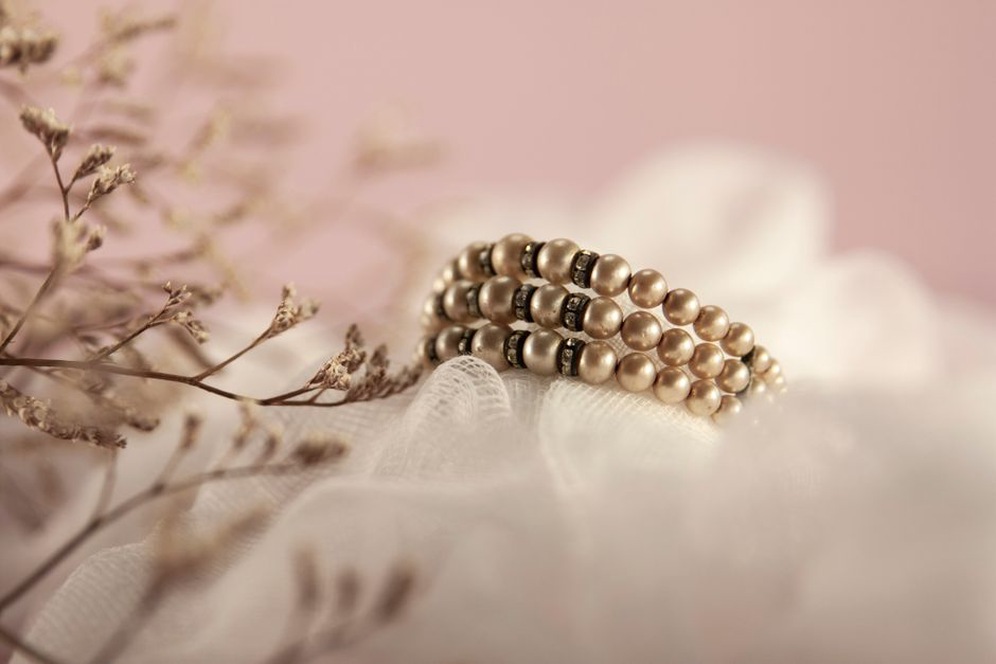
Colour can guide a pairing without demanding an exact match. Warm-toned imitation pearls sit well with cream, brown or muted pink; cool clear stones give navy and charcoal a crisp contrast. Compare pieces in daylight before wearing them together: two finishes that look white indoors may have quite different undertones. Sometimes a single ornament gives you a better view of its workmanship than a group.
Buying without mistaking romance for evidence
Second-hand shops, vintage fairs and inherited jewellery boxes can all yield worthwhile finds. Start with “What is here, and what condition is it in?” rather than “Which decade is it?” Ask whether the clasp works, the teeth are intact and the stones have been replaced. A seller may not know every answer; honest uncertainty beats an unsupported date.
With potentially precious materials, keep appearance separate from identification. Yellow metal is not necessarily gold, and a bright clear stone is not necessarily a diamond. A hallmark may be worth investigating; a costly purchase may justify specialist assessment. Be wary of paying extra for an unverified designer name or supposed historical owner. If a piece is sold as a reproduction, assess its stated materials and construction—and do not later pass it off as an original.
Factor in repairs before buying. A skilled repairer might replace a standard clear stone fairly easily, while recreating an unusual clasp or matching an aged pearl coating can be difficult. A broken comb may still be worth collecting as a study piece. Price and store it as one, rather than assuming it is ready for daily wear.
Keeping the finish intact
Remove an ornament by its sturdy base or fastening, not by pulling on a jewelled crest. After wear, lift fingerprints from accessible metal and smooth stones with a soft, dry cloth. Do not soak the piece: water can reach foil-backed stones, loosen old adhesives or damage imitation-pearl coatings. Before using any polish or solvent, establish what each component is made of.
Store ornaments separately so metal edges cannot scratch pearl coatings or snag another piece’s settings. A lined compartment or soft wrapping leaves room for comb teeth and keeps a projecting jewel from bearing weight. Choose a dry spot away from strong heat, particularly if an ornament may contain an early plastic.
Before wearing a jewelled comb, set it on a flat surface and look along its teeth. If one touches the surface while the others do not, the comb may be warped. Return it to its padded compartment until its structure has been assessed; pressing it into place could damage the crest that caught your eye.