
How to Wear Vintage Hair Accessories with a Minimalist Wardrobe
A vintage accessory needs space to register. A small 1930s celluloid comb above one ear may vanish against a busy print, yet become the focal point with a charcoal crew-neck knit, straight-leg trousers and plain leather shoes. The idea is not to recreate a period outfit, but to let one object bring texture, colour or line to a restrained contemporary look.
Minimalist dressing lends itself to this because it relies on proportion, repetition and well-chosen materials rather than ornament. A vintage hair accessory offers a welcome interruption: the curve of a hand-carved comb, a grosgrain bow, a polished metal clasp or the slight irregularity of early plastic. The pairing is strongest when the accessory and clothing share one visual cue, such as a repeated colour, a similar finish or a comparable level of formality.
Start with scale, not era
The usual mistake is to treat “vintage” as one category. A large 1940s floral spray, a narrow 1960s patent headband and a delicate 1920s paste clip have very different visual weight. Before deciding if a piece suits a minimalist wardrobe, consider its scale against the neckline, shoulders and overall silhouette.
- Small pieces—single slides, narrow combs, petite bows and discreet grips—work well with fine knits, poplin shirts, close-cut blazers and simple column dresses.
- Medium-scale pieces—arched combs, moderate-width headbands and structured ribbon bows—sit comfortably with a trench coat, relaxed tailoring, midi skirts and substantial knitwear.
- Statement pieces—oversized bows, tall combs, embellished clips and wide turban-style bands—need broad, uncluttered surfaces around them. A long black dress, ivory shirt dress or oversized wool coat can provide that frame.
One prominent accessory is usually enough. If a comb has glittering paste stones or a headband has a strong sculptural profile, skip equally decorative earrings, brooches and patterned scarves. It is not a rule about what anyone may wear; it simply gives a well-made older piece room to retain its character.
Build a bridge through material and finish
Minimalist wardrobes often rely on matte wool, crisp cotton, smooth leather, washed denim and fine jersey. A vintage accessory does not need to match these materials exactly, but it should either echo them or contrast with them in a deliberate way.
Matte clothing and lustrous accessories
Black crepe, grey flannel and brushed wool make effective backgrounds for polished horn, faux tortoiseshell, mother-of-pearl and metal. The shine of the accessory becomes visible without feeling theatrical. For the office, a plain dark suit and a shell-toned barrette can have more impact than a heavily embellished clip competing with lapels and buttons.
Clean cotton and softer vintage details
A white or pale-blue cotton shirt can temper romantic details: a narrow velvet ribbon, modest bow, small enamelled flower or lace-trimmed piece. Keep the rest spare—straight jeans, trousers or a simple skirt—so the contrast feels considered rather than costume-like. If the accessory is fragile, place it where it will not rub against a coat collar or bag strap.
Texture with texture, but not clutter
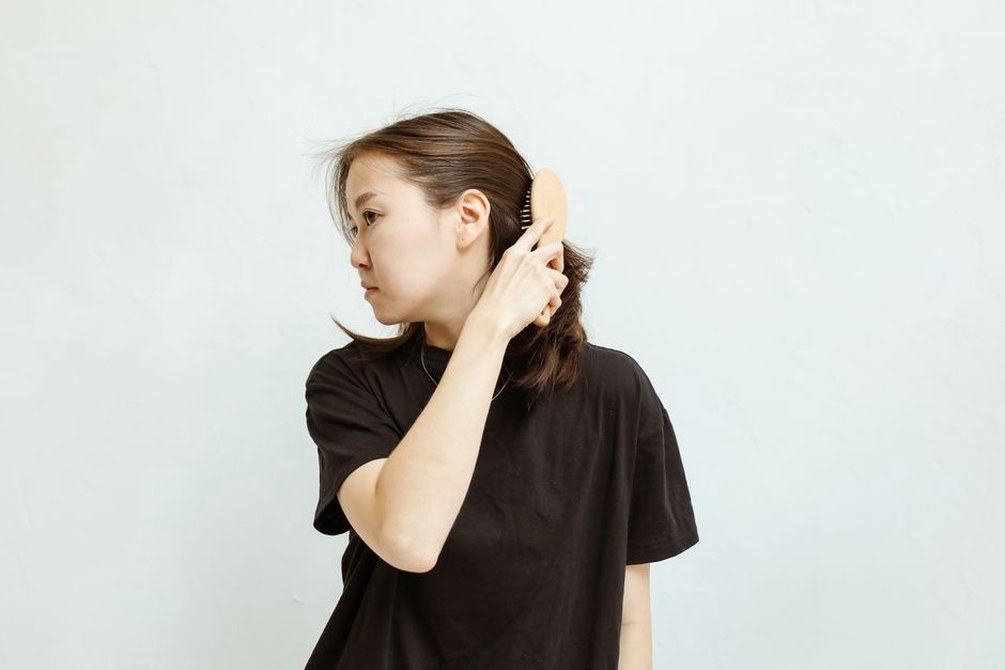
Raffia, velvet, grosgrain and carved wood pair beautifully with linen, denim or chunky wool. Rather than piling on competing textures, use one tactile accessory as the accent. A brown carved comb in a low twist works with a natural-linen suit because both have warmth and visible surface character. Rhinestone clips, by contrast, tend to suit silk, fine-gauge knits or smooth evening fabrics.
Choose a silhouette that answers the outfit
Minimalism is often discussed in terms of colour, but silhouette matters more when older accessories meet modern clothes. The shape of the accessory can echo the garment’s structure or offer a gentle counterpoint.
| Modern outfit shape | Vintage accessory shape | Why it works |
|---|---|---|
| Sharp blazer and straight trousers | Slim geometric clip or narrow metal barrette | Repeats the outfit’s clean horizontal and vertical lines |
| Soft oversized knit and wide trousers | Rounded comb or softly padded headband | Adds definition without introducing a hard visual break |
| Long slip dress or column skirt | Small curved slide or low-set bow | Keeps the vertical line intact and avoids top-heavy styling |
| Boxy shirt dress or trench coat | Structured medium-width headband | Balances the garment’s architectural outline |
| Plain T-shirt and denim | Decorative clip worn asymmetrically | Gives an ordinary base a considered focal point |
Geometric accessories from the interwar and mid-century years often fit easily into minimalist wardrobes because their forms are concise: arcs, rectangles, fans and stepped shapes. Still, an angular clip is not automatically Art Deco, and a neat design does not prove its age. When buying, look at construction and provenance rather than relying on a seller’s label.
Use colour as an anchor, not a demand for matching
An exact colour match can make an outfit feel over-coordinated. A more current approach is to connect an accessory with one secondary note: the warmth of a tan belt, the coolness of a silver watch, or the burgundy undertone in a dark-brown shoe. This gives the piece a relationship with the outfit without making it part of a set.
Three approaches are especially dependable:
- Tonal dressing: Pair amber, tortoiseshell or warm brown accessories with camel, tobacco, ecru and chocolate. Differences in depth are usually more interesting than exact sameness.
- Monochrome contrast: Wear a black accessory against ivory, stone or dove grey, or choose a pale shell comb with a black dress. The accessory becomes a clear graphic element.
- One historic colour note: Introduce a single deep emerald, oxblood, cobalt or coral accessory against navy, grey, cream or black. Let it be the only saturated colour.
Age changes colour. Celluloid can mellow, clear plastics may take on warmth, and silk can fade unevenly. These shifts are often appealing, but they are best treated as part of the object rather than a reason to force a colour story. Check tones in strong daylight before wearing or buying.
Placement makes a vintage piece feel current
The same accessory can read as formal, playful or pared back depending on where it sits. It often helps to use a piece functionally rather than ceremonially: a comb holding a twist, a slide controlling a side part, a bow finishing a low ponytail. That practical role keeps the result from feeling like period costume.
Low and close to the head
Low buns, napes of neck, side parts and half-up styles work well with minimalist clothing because they preserve a clean profile. Place a comb near the base of a low twist, or wear two matching small clips in an intentionally balanced arrangement. Do not force a fragile antique comb into tightly secured hair; it should sit under minimal tension, with discreet modern pins supporting it if needed.
One-sided asymmetry
A single clip above one ear suits a crew neck, minimal blouse or simple coat. Position it where it can be seen from the front rather than hidden behind the ear. This works particularly well with directional motifs such as leaves, fans, birds or ribbons.
Centred structure
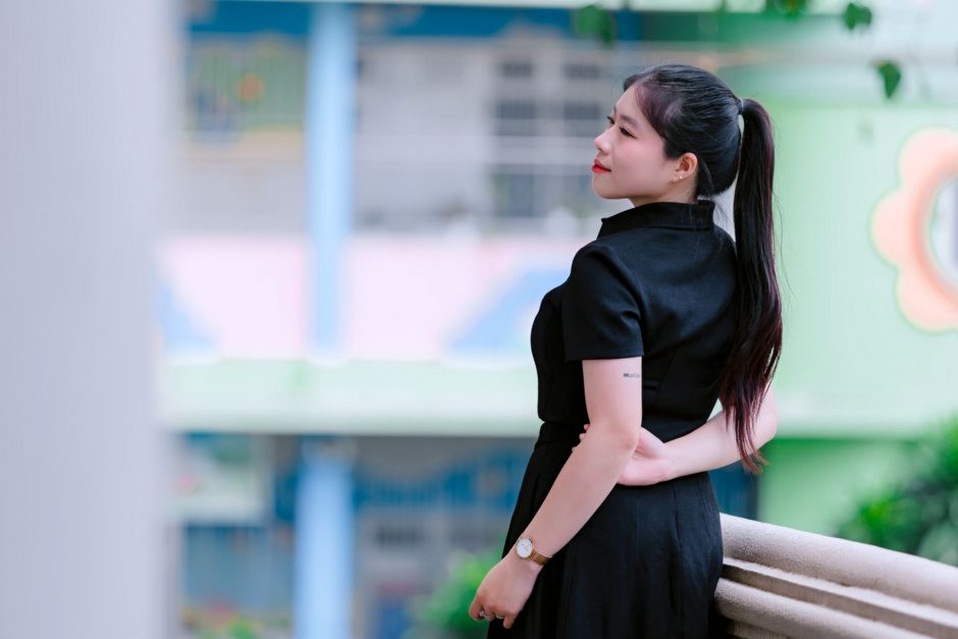
Headbands and narrow ribbons create a deliberate central line. Wear them with pulled-back hair, a low ponytail, or loose hair tucked behind the ears. Match the band’s width to the garment: a fine ribbon can disappear beneath a bulky roll-neck, while a broader band can balance it.
A sculptural headband can be the only expressive element in an otherwise plain winter outfit. The Frida Rosecrown vintage turban headband collector’s guide is useful for understanding a more dramatic headband form and its place as a collectible accessory rather than a generic trend item.
Let the occasion set the level of ornament
Minimalist fashion does not require accessories to be plain; it asks for clarity. During the day, favour pieces that are secure, low-profile and comfortable for ordinary movement. A small polished barrette, plain comb or narrow ribbon will usually be more useful than an elaborate piece with loose stones or protruding details.
For dinner, a gallery opening or a celebration, a rhinestone clip or ornate comb can look striking against a simple black trouser suit, satin skirt or unadorned dress. Keep the hair shape straightforward. A low chignon, soft side part or tucked-back length provides a calm setting. Pairing elaborate hair, detailed clothes and a highly decorative accessory can obscure the design that made the vintage find appealing in the first place.
British weather matters too. Rain and wind can damage silk bows, glued embellishments and delicate early plastics. Carry a small protective pouch if an accessory needs to come off while travelling, and do not leave it loose in a coat pocket with keys or coins. For a wet commute, a resilient metal slide or sturdy later-plastic barrette may be the wiser choice.
Assess condition before making an accessory part of regular rotation
Older accessories often survive because they were worn carefully, or hardly worn at all. They can still be used regularly, but begin with a condition check. Examine spring mechanisms, teeth, hinges, stitching, glued details and any signs of cracking. A clasp that needs excessive force can harm the object and catch hair; a comb with missing teeth may snag or break under tension.
- Hold metal clips to the light and look for corrosion, bent arms or sharp edges.
- Check celluloid and early plastics for warping, crazing, a strong chemical smell or sticky surfaces. Do not store potentially unstable celluloid in a sealed container with other items.
- Look at bows and textile pieces for weakened stitching, fraying at fold points and fading caused by earlier light exposure.
- Inspect decorative stones and pearls individually. Pieces with loose settings are better kept for occasional wear until repaired by an appropriate specialist.
- Ask for clear images of the reverse, fastening and maker’s marks when buying remotely.
A modest repair can make sense when it preserves function without hiding the object’s history. Replacing an unsuitable modern adhesive with conservation-minded work, or reinforcing a failing thread attachment, differs from adding false hallmarks, artificial ageing or copied branding. Honest condition descriptions and visible repairs support informed collecting and help prevent reproductions being presented as period originals.
Make space for reproductions—clearly labelled
A modern reproduction can be an excellent everyday option, particularly when a historic original is brittle, rare or uncomfortable to wear. Transparency is the important point. Buy and describe a new piece as new, even if it borrows a 1920s fan shape or a 1950s bow silhouette. Be wary of seller language that uses “vintage style” to suggest an undocumented age or maker.
There is no need for every item to be old. An authentic vintage comb can be paired with a contemporary metal grip hidden beneath it, reducing strain on the original. A modern plain black ribbon worn with a vintage dress is equally valid. What matters is the conversation between the pieces, not assembling a head-to-toe look from one decade.
A compact outfit formula for a first attempt
Start with a plain navy, black, cream or grey base: a fine knit and trousers, a shirt dress, or a T-shirt with good denim. Add one vintage accessory with a secure fastening, in a material that relates to the outfit—shell with cream, dark wood with brown, silver metal with cool grey, or velvet with matte black. Keep jewellery to one small item, or leave it out. Then check a side view in daylight: if the accessory disappears, move it slightly forward; if it dominates the face, lower it or choose a smaller piece.
For a low ponytail with a black merino jumper and trousers, tie a narrow vintage velvet bow over an ordinary elastic rather than relying on the original ribbon to hold the hair. The bow stays visible, the ponytail remains secure, and the older textile is spared the repeated pulling that can shorten its life.