
The p428 Straw Turban Headband: History, Identification, and Styling Tips
The listing 'store p428 strawheadband straw headband turbanstrawheadband html' points to a specific vintage piece: a straw turban headband worn by British women in the mid-20th century. The repeated keywords in the code reveal its identity: a structured headband of woven straw, shaped into a turban-like silhouette. These accessories were sculptural statements, blending practicality with the season's millinery trends.
Straw has been a beloved material in British hat-making since the 18th century, but the turban headband emerged as a distinct style in the 1920s. The cloche hat dominated, yet for warmer months or less formal occasions, women turned to lighter headpieces. The straw turban emerged as a close-fitting band that wrapped around the head, often with a knot or twist at the front or side. By the 1930s, Hollywood stars like Greta Garbo popularised the turban, and British manufacturers adapted it into a more accessible headband form. The p428 likely dates from the 1950s, when post-war fashion revived bold accessories and straw was once again celebrated for its natural elegance.

What Makes a Straw Turban Headband Distinctive?
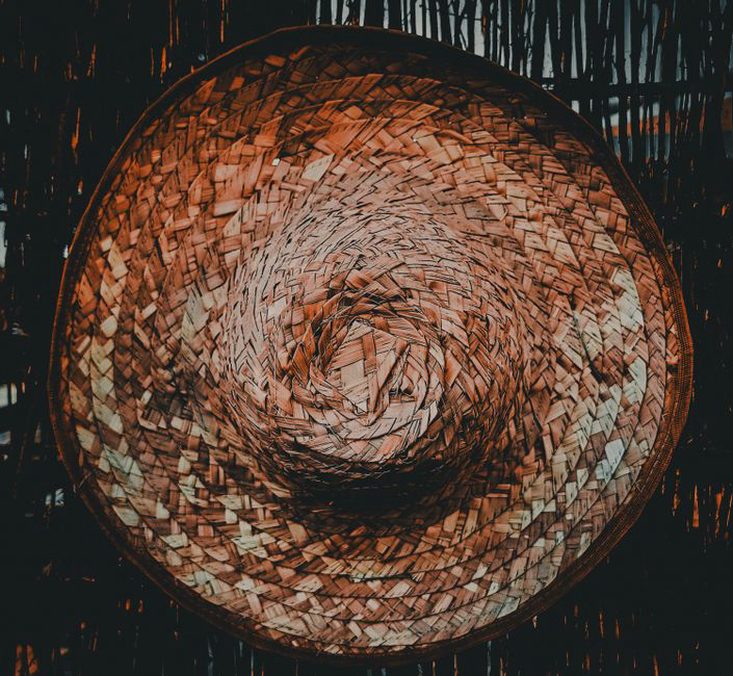
Unlike a simple woven headband, the turban style incorporates volume and structure. The straw is often braided or woven into a thick band, then shaped with internal wiring or a fabric lining to hold its form. Some examples feature a decorative knot or rosette at the centre front, while others have a gathered 'pouf' reminiscent of a full turban hat. The p428 seems to be a mid-century British piece – possibly from a department store like Selfridges or a specialist milliner in Luton, the centre of straw hat production in England.
Key characteristics to look for:
- Material: Natural wheat straw, sometimes blended with synthetic fibres for durability. The straw should feel smooth but pliable, with a slight sheen from the weaving process.
- Construction: A sewn-in wire or buckram frame inside the band to maintain the turban shape. The lining is often silk or rayon, stamped with a maker's mark or size.
- Closure: Many vintage headbands use a hidden elastic or a small hook-and-eye at the back. The p428 may have a simple elastic loop – check for deterioration.
- Decoration: Some include a small velvet bow, a cluster of artificial flowers, or a glittering clip. If your p428 has a diamante accent, it might pair beautifully with the Decoding the 'Store p150 Love Diamante' Vintage Hair Clip – A Collector's Guide for a coordinated vintage look.
Straw Headbands in British Fashion History
Straw headwear was a staple in British fashion between the 1920s and 1960s. In the 1920s, 'sunbonnet' styles gave way to more streamlined bands. The 1930s saw the rise of the 'turban headband' as a practical solution for women who wanted to keep their hair tidy while still looking fashionable. By the 1950s, the New Look silhouette encouraged softer, more romantic accessories – straw headbands with floral appliqués became popular for garden parties and summer weddings.
The p428 likely belongs to this later period. Its design is compact but sculptural, perfect for holding back a Victory roll or a sleek chignon. Straw offered breathability, which was crucial for the British summer (unpredictable as it is). Unlike felt, straw could withstand a light drizzle without losing its shape – a practical advantage that manufacturers highlighted in their catalogues.
How to Identify a Genuine Vintage Straw Headband
When you encounter a listing like 'store p428 strawheadband straw headband turbanstrawheadband html', it may be a modern reproduction or an original. Here are tell-tale signs of authenticity:
- Smell: Vintage straw has a distinct, slightly sweet odour from aging natural fibres. If it smells strongly of chemicals, it may be modern.
- Stitching: Hand-sewn details, uneven but sturdy, indicate pre-1960s manufacture. Machine stitching is uniform but can still be vintage if the thread is cotton or silk.
- Labels: Look for a small fabric label inside – 'Made in England', 'Straw by [maker]', or a retailer's name. The absence of a label does not rule out authenticity; many unbranded pieces were sold at markets.
- Flexibility: Gently bend the band. Natural straw will have a little give but should not crack. If it feels brittle, it may be too fragile to wear – better to display.
Caring for Your Vintage Straw Headband
Once you have acquired a piece like the p428, proper care ensures it remains a treasured part of your wardrobe for years. Straw is resilient but can be damaged by moisture and sunlight.
Cleaning
Never submerge a straw headband in water. Instead, use a soft brush (a clean makeup brush works well) to gently remove dust. For stubborn marks, dab with a barely damp cloth – test on an inconspicuous area first. Avoid rubbing, which can loosen the weave.
Storage
Store your straw headband in a cool, dry place away from direct sunlight. A hat box or a drawer lined with acid-free tissue paper is ideal. If the band has an elastic closure, release the tension by storing it flat – prolonged stretching can weaken the elastic.
Reshaping
If the turban shape has flattened over time, you can gently steam it. Hold the headband over a kettle spout (steam only, not boiling water) for a few seconds, then mould it by hand. Let it dry completely before wearing. For severe misshaping, consult a professional milliner.
Styling a Vintage Straw Turban Today
The beauty of the straw turban headband lies in its versatility. It can elevate a modern outfit without looking costumey. Here are three ways to wear your p428:
- With a crisp white shirt and tailored trousers: The natural texture of straw adds a touch of British summer garden-party charm. Keep the rest of the outfit minimal – let the headband be the focal point.
- With a floral sundress: A 1950s-inspired dress pairs perfectly with a matching straw headband. If your headband has a bow or flower, echo that colour in your shoes or bag.
- With a modern blazer and jeans: For a more casual look, the headband can tame loose waves or a low ponytail. It adds a vintage accent that feels intentional, not nostalgic.
When choosing a hairstyle, consider the headband's width. A narrow band (about 2 cm) works well with short hair or a high ponytail. A wider turban style (4–5 cm) suits updos or half-up styles. The p428 appears to be a medium width – ideal for anchoring a side-swept fringe or a sleek bun.
Where to Find Similar Pieces
Vintage straw headbands turn up at estate sales, charity shops in affluent areas, and online marketplaces. Look for keywords like 'vintage straw headband', '1950s turban headpiece', or 'British millinery straw band'. The code 'p428' might be an inventory number from a specific seller – keep it as a reference for future searches. If you are drawn to the sculptural quality of the turban, also explore velvet twist headbands from the same era; they share a similar structured silhouette but in a different material.
When you receive your p428, inspect the inside for any maker's mark or handwritten note. Some vintage pieces come with original price tags or store labels that add to their history. If the elastic is worn, a local tailor can replace it without damaging the straw. That way, you can wear it for years to come.