
The Store P272 Velvet Scrunchy: A Maison Archives Guide
The p272 entry in the Maison Archives is a narrow strip of velvet folded around a piece of elastic, yet it explains more about late-twentieth-century British accessories than a whole drawer of novelty hair clips. The fabric is cut on the bias, the seam is pressed open, and the elastic casing is wide enough to hold a heavy ponytail without folding over. That combination of details is what separates a useful archive piece from a disposable hair tie.
What the p272 Archive Entry Actually Shows
Scrunchies are easy to dismiss as a 1990s joke, but the velvet versions that appear in British archives from the late 1980s belong to a different category. The Maison Archives p272 page describes a scrunchie with a silk-blend velvet face, a cotton lining, and a hand-finished opening. That is not a throwaway accessory; it is a small piece of dressmaking.
The scrunchie was patented in 1987 by Rommy Revson, a New York hairdresser, after she saw her daughter wrap a fabric tube around a plain elastic. British accessories counters picked up the idea quickly, and by 1990 every high street had a version in velvet, satin, or printed cotton. The p272 stands out because it was designed as a sample rather than a production run. Its proportions are closer to a modern hair accessory than to a nostalgic novelty: not too wide, not too tight, with a dark velvet face that catches light instead of shouting for attention.
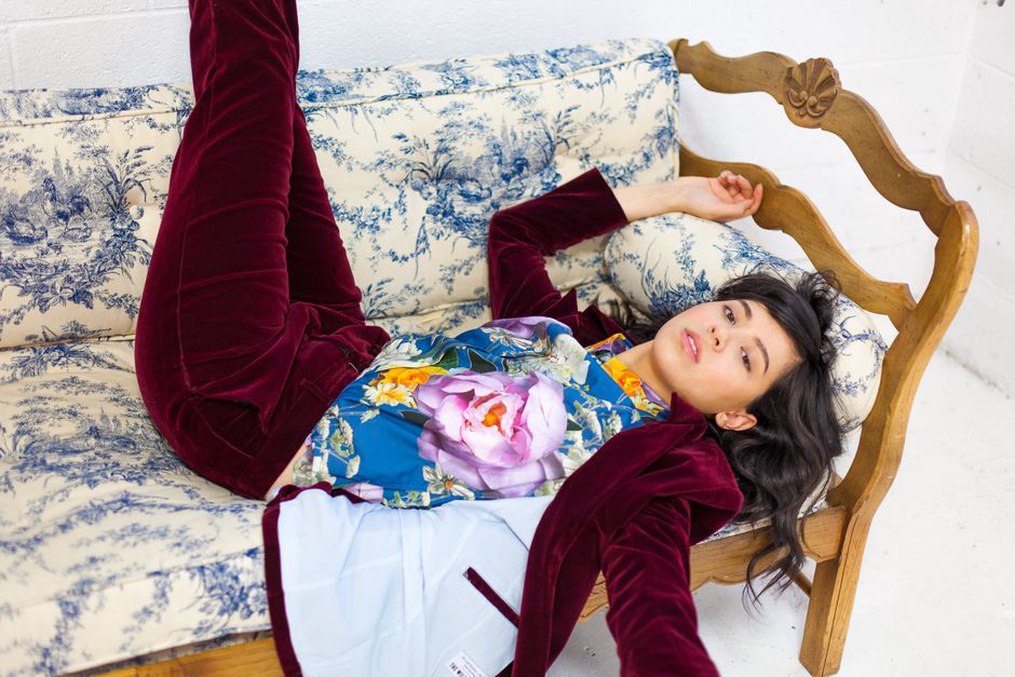
Archive references like p272 are useful because they show how a small accessory was designed in relation to the clothing of its time. In the late 1980s, British women were wearing oversized blazers, velvet jackets, and high-waisted trousers; a scrunchie was not meant to be the focal point. It was meant to hold hair away from the face while echoing the softness of the fabric in the rest of the outfit. The p272 sample does that by using a dark velvet that blends with a coat collar rather than competing with it.
The p272 record also notes the original colour as deep oxblood. That matters because oxblood is one of those shades that reads as both neutral and rich; it works with black, grey, navy, and cream. Many vintage scrunchies were produced in bright or pastel colours that date them immediately. A dark, muted colour is much easier to wear now.
Velvet: The Material That Makes a Scrunchie Feel Serious
Velvet is a pile fabric, which means its surface is made of upright fibres that catch light and create depth. In the p272, the velvet is cut on the bias, allowing it to stretch slightly and wrap around the elastic without pulling. Bias cutting also gives the scrunchie its characteristic soft gathers. Cheaper versions use straight-grain velvet, which tends to twist and sit unevenly on the head.
Two types of velvet dominate vintage scrunchies. Silk velvet is light, fine, and slightly irregular; rayon velvet is heavier and more lustrous. The p272 uses a silk-blend face with a cotton backing, a common construction in late-1980s British accessories because it keeps the pile from crushing against the elastic. When you handle a good velvet scrunchie, the fabric should feel dense but not stiff, and the gathers should move as one piece rather than bunching in separate folds.
Colour is another clue to age. Early velvet scrunchies were often dyed in jewel tones – burgundy, forest green, midnight blue – because velvet takes dye unevenly and darker shades hide that variation. Pastel scrunchies came later, in the mid-1990s, when the accessory had become cheaper and the fabric was often a synthetic velvet with a flat, shiny surface. If you find a dark silk-blend velvet scrunchie with a cotton backing, it is probably from the earlier wave.
The construction of the p272 is simple, but the details matter. The fabric tube is sewn with a narrow French seam, so no raw edge touches the hair. The elastic is threaded through after the tube is sewn, which means it can be replaced without unpicking the whole scrunchie. That might sound technical, but it is the difference between a piece that lasts for decades and one that falls apart after a few washes.
How to Wear a Velvet Scrunchie with a Modern Wardrobe
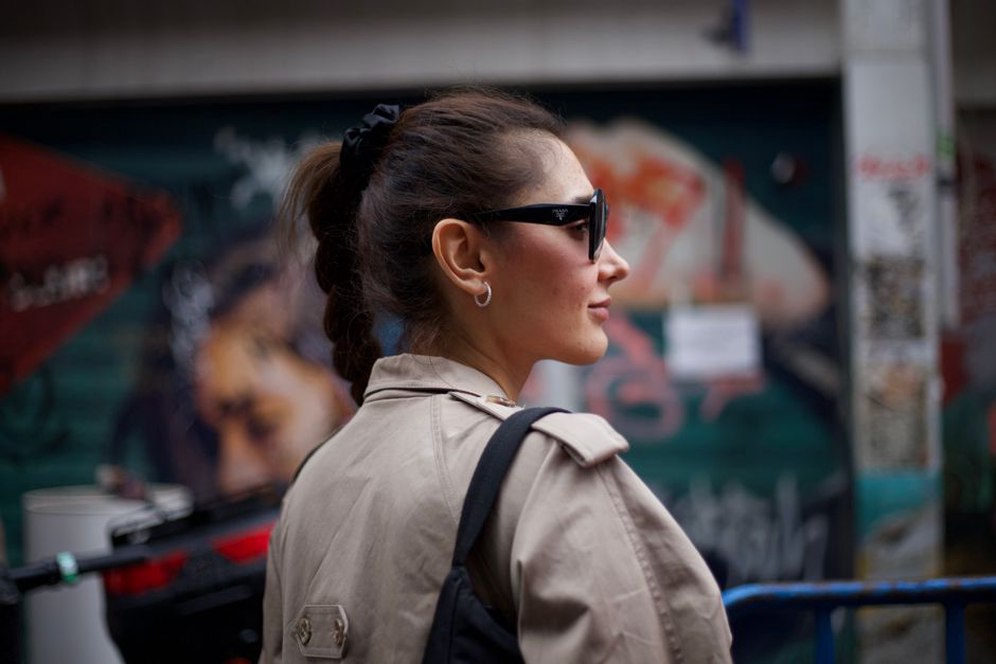
Velvet scrunchies read as evening accessories, but they work best when the rest of the outfit is relaxed. A low ponytail with a black velvet scrunchie, a crisp white shirt, and a wool blazer looks like a modern styling choice rather than a period costume. The key is to keep the rest of the silhouette simple and let the pile texture do the work.
- Low ponytail: wrap the scrunchie twice around a small elastic base; the velvet gathers should cover the elastic completely.
- Loose braid: choose a scrunchie in dark green or burgundy and pair it with a chunky knit and tailored trousers.
- Topknot: use a wide velvet scrunchie as the final wrap; it holds the bun without pulling the hair tight.
- Half-up style: a small velvet scrunchie works better than a clip for fine hair because it distributes pressure across a wider area.
The p272 is particularly good for low ponytails because its wide casing gives the hair enough support to stay neat without needing a second elastic. If you want a softer finish, wrap the scrunchie around the base of a ponytail and pull a few face-framing strands out before tightening it.
Texture contrast is the easiest way to make a velvet scrunchie feel current. Wear it with a linen shirt, a cotton poplin blouse, or a chunky wool cardigan. The velvet adds a soft, slightly formal note without making the whole outfit look dressed-up. If you want a more polished effect, match the scrunchie to a velvet collar or a velvet handbag in the same colour family.
British weather also plays a part. A velvet scrunchie works well with a wool coat in autumn because it does not create static the way a synthetic elastic can. It sits comfortably under a collar or a hood, and the soft pile means it will not leave a crease in the hair after a few hours. For winter, choose a wider scrunchie and wrap it around a low bun; it will hold fine hair more securely than a thin elastic.
Buying and Checking Vintage Velvet Scrunchies
Because scrunchies are small and often sold in mixed lots, they are easy to overlook. Check the elastic first: if it is dry, cracked, or stretched, the scrunchie will not sit properly. The fabric may be fine, but replacing the elastic is fiddly and not always worth the effort for a low-cost find. Look at the seam where the tube closes; a good vintage piece will have a neatly turned opening, not a raw edge. Examine the pile for crushed areas. Velvet can be steamed, but a permanently crushed patch in a high-stress area is hard to repair.
Warning signs to avoid:
- Elastic that has gone brittle or lost its snap.
- Fabric faded on one side, which suggests sun damage.
- A seam that has opened and left the inner elastic exposed.
- Pile crushed flat at the centre, where it rubbed against a previous owner's hair tie.
Charity shops and vintage fairs in Britain still turn up velvet scrunchies from the 1990s, often in bags of mixed hair accessories. They are less expensive than the tortoiseshell clips and pearl combs that get most of the attention, which makes them a good starting point for someone new to vintage hair accessories. The trick is to look for dark colours and simple shapes; those are the ones that age well.
To test a scrunchie without damaging it, hold it by the seam and give it a gentle tug. The elastic should return quickly and evenly. If it stays stretched or feels flat in the middle, it has reached the end of its life. You can also hold the scrunchie up to the light; worn elastic often shows through the fabric as a thin, shiny line.
Caring for Velvet and Elastic
Velvet needs gentle handling. Hand wash a velvet scrunchie in cool water with a drop of pH-neutral detergent. Do not rub the pile; squeeze the water through the fabric instead. Rinse, press it in a towel, and dry it flat away from radiators. Never hang a wet velvet scrunchie, because the weight of the water can stretch the elastic. When it is dry, store it flat in a drawer or a small box, with tissue paper between the scrunchie and any metal hair clips. Velvet needs air, not plastic.
If a velvet scrunchie has lost a little of its surface softness, hold it briefly in the steam from a kettle or a handheld steamer, keeping the elastic dry. The pile will lift, and the colour will look richer. Do not rub the fabric while it is damp, and do not iron it. Once the pile is crushed by an iron, it stays crushed.
Storage is where most velvet scrunchies are damaged. Many people leave them on a bathroom shelf or loop them around a doorknob, where they collect dust and lose their shape. A drawer with a soft lining is better. If you store them with metal hair clips, wrap the clips in tissue paper first; the metal can catch the pile and leave a permanent mark.
For a broader look at protecting silk, velvet, and hair accessories in the same wardrobe, the guide to storing C13 vintage garments covers the practical side of humidity, tissue paper, and moth-proof boxes.
Check the elastic once a year. If the scrunchie still sits evenly and the gathers still hold, it will serve as a quiet alternative to a plain elastic. Keep the p272 flat, away from direct sunlight, and it will probably outlast the trends that try to replace it.