
Regency Hair Accessories: How to Read and Wear the Look
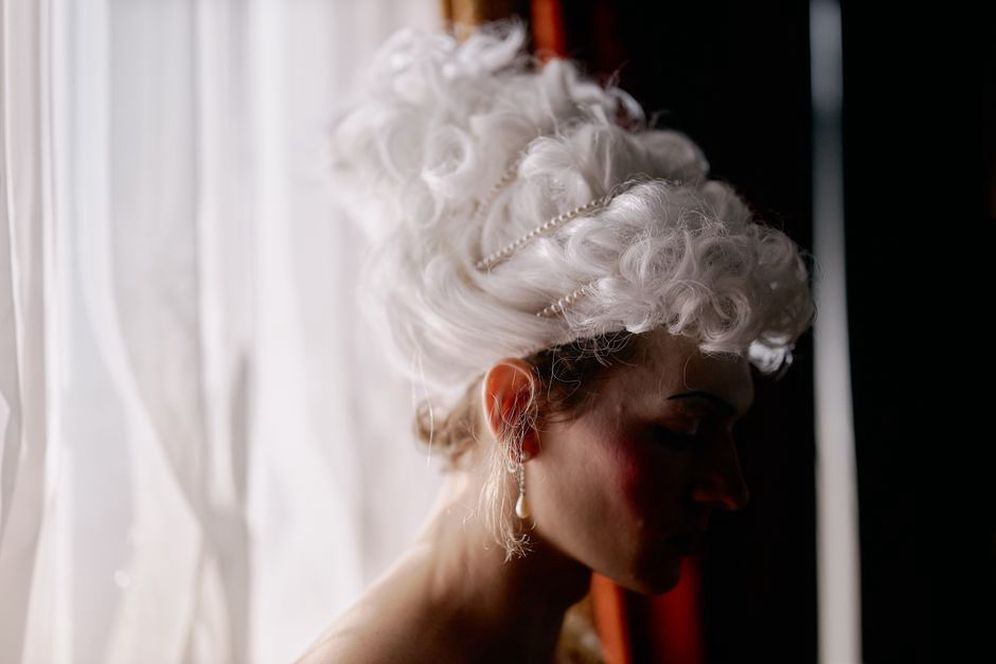
A Regency hair comb did not always face the viewer. Its teeth might sit in a knot at the back of the head, with the decorated top peeping above the curls. In a portrait, the ornament makes sense only alongside the hairstyle and the angle from which it is shown.
Britain’s Regency formally lasted from 1811 to 1820, though the hairstyles we call Regency span a broader period. With high-waisted dresses and lighter-looking fabrics, fashionable hair might feature curls at the temples or forehead, while longer lengths were gathered into a knot or plaits behind. Accessories helped create that outline, but occasion mattered: a ribbon and a jewelled evening ornament had different roles.
The shapes behind the ornament
Portraits and fashion plates offer possibilities, not a record of what everyone wore each day. Some arrangements drew on classical antiquity, with a close-fitting shape, curled front sections and a raised knot. Others used more elaborate curls, plaits or ornaments. A fashion print might exaggerate a fashionable flourish; a painted portrait might show a family’s prized jewellery. Neither tells us what its subject wore to breakfast.
Placement offers a better clue. A comb could rise behind a knot, while small flowers sat among curls. A narrow ribbon might circle the head or tie a gathered section; a wreath or bandeau drew a line across the hair. An ornament at the back changed the outline most clearly in profile. Move the accessory, and the same hairstyle can look quite different.
Ribbons, combs and evening finery
Ribbons and fabric ornaments
Ribbons brought colour without the need for jewellery. They could be tied around the head, threaded through a plait or used to secure a knot. Silk and other fine textiles appear in surviving dress and fashion imagery, although a portrait seldom reveals a ribbon’s fibre with certainty. Small fabric bows were possible; the oversized bow familiar from later fashions is not a dependable Regency cue.
Combs, pins and bandeaux
Combs and pins could hold arranged hair as well as decorate it. Some were fairly plain; others featured metalwork, stones, paste or carved details. In period descriptions, a bandeau generally meant a band worn around the head, made or decorated in various ways—not necessarily a rigid headband of the sort sold today.
When looking at a comb, consider what holds the hair and what is there to be seen. The teeth of a tall ornamental comb may have been designed to slip into an existing knot, not gather loose hair on their own. A decorative pin, too, could rely on other pins or ties to keep the arrangement in place.
Flowers, feathers and jewels
Flowers could be fresh or artificial, a modest sprig or a fuller evening arrangement. Feathers and sparkling ornaments appear in dressier images, where candlelight could catch a moving plume or reflective surface. That does not mean elaborate headpieces were everyday wear.
Each form brings something different to a hairstyle:
- Ribbon: a line of colour that can also tie or wrap an arrangement.
- Comb: teeth set into dressed hair, often with decoration rising above a knot.
- Pin: a smaller point of support or ornament among curls and plaits.
- Bandeau or wreath: a line across or around the head, made from textile, metalwork or applied decoration.
- Flowers or feathers: accents whose scale and placement alter how formal the look feels.
What surviving pieces can—and cannot—tell us
An object labelled “Regency style” is not necessarily Regency in date. Metal ornaments might have gilt finishes; fashionable jewellery could include gemstones, pearls or paste. Combs were also made from materials such as horn and tortoiseshell. None of these details establishes a precise date on its own. Styles persisted, older pieces were altered, and later makers returned to classical motifs.
Look at the structure before accepting a dealer’s date. Are the teeth in proportion to the decorated top? Do joins or fittings suggest a repair or later alteration? Is there a documented history, an old photograph or a comparable dated object? A late-Victorian or twentieth-century comb may evoke the Regency without having been worn during it. If the evidence is uncertain, “Regency-inspired” is more honest than a date assigned on silhouette alone.
Original animal-derived materials deserve particular care. Genuine tortoiseshell differs from modern imitation, and trade in it can be restricted. If the material or provenance is unclear, seek specialist advice before buying, selling or travelling with the piece. You need not own a period original to enjoy the shape.
Making the silhouette wearable now
For a modern interpretation, one well-placed detail often works better than a full costume. A slim ribbon above a low knot suggests the period’s neat outline with an ordinary blouse or dress. A modest comb behind a loose twist draws the eye to the back of the hair. In the evening, a few small flowers can hint at a wreath without copying its full scale.
Fit matters more than exact historical likeness. Try a comb’s weight and tooth spacing with the hairstyle you plan to wear. If it pulls or tips, choose a lighter piece or add concealed support. Do not force fragile antique teeth into tightly packed hair; for an original comb, an occasional, carefully supported display may be kinder than regular wear.
Keep the occasion in mind, too. A flat band across the hair and a towering feather suggest different degrees of dress, even though both appear in Regency imagery. For a quiet daytime reference, choose a narrow ribbon in a colour already in your outfit. Tie it around a gathered section at the back, leaving the front curls—or whatever front shape you prefer—free.