
The Granny Square Beanie: Vintage Crochet, Style and Care
The granny square beanie is one of those rare accessories that feels both deeply nostalgic and entirely of the moment. You may have spotted one at a vintage fair in Brighton, inherited a handmade example from a relative, or found a single square peeking from a charity shop basket. Unlike mass-produced hats, each granny square beanie carries the unmistakable fingerprint of its maker — the tension of the yarn, the choice of colour sequence, the way the squares are joined. Understanding what makes these beanies special, how to identify authentic vintage pieces, and how to wear them without looking like you are in costume is a skill worth developing.
What Exactly Is a Granny Square Beanie?
A granny square beanie is a crocheted hat constructed from individual granny squares — small, typically four-round motifs worked in the round — that are sewn or crocheted together to form a dome. The classic granny square consists of clusters of double crochet stitches separated by chain spaces, creating a distinctive openwork pattern. When assembled into a beanie, the squares are usually arranged in a crown, with a brim added in a contrasting stitch, such as single crochet or ribbing. The result is a hat that is structured yet flexible, warm but breathable, and endlessly customisable.
Origins of the Granny Square
The granny square as we know it emerged in the early twentieth century, though its roots lie in nineteenth-century Irish crochet and American patchwork traditions. By the 1930s, women’s magazines on both sides of the Atlantic were publishing patterns for granny square blankets, shawls, and, occasionally, hats. The technique became a staple of wartime and postwar home crafting, when yarn was rationed and every scrap was precious. The beanie version gained particular traction in the 1960s and 1970s, when the hippie movement embraced handmade clothing as an expression of individuality and resistance to mass production. British teenagers of that era would crochet their own beanies in bright acrylics or leftover wool, often matching them with fringed scarves or patchwork bags.
Materials and Construction: What to Look For
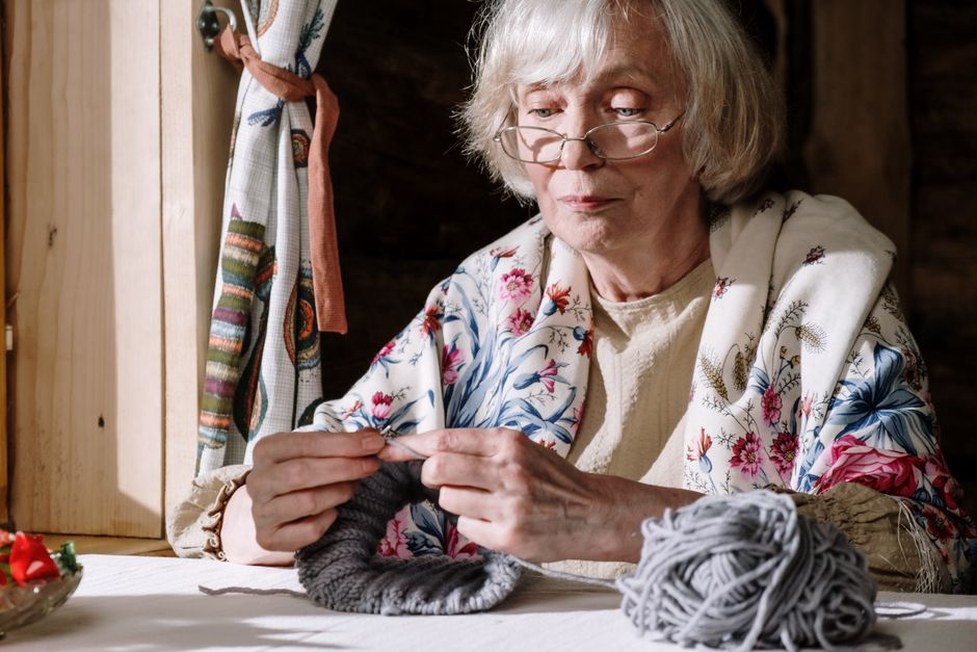
When evaluating a vintage granny square beanie, the material tells the first story. Pre-1960 examples are often made from pure wool or cotton, which gives them a softer drape and better breathability than later synthetic versions. Wool beanies from the 1940s and 1950s tend to be finer in gauge, with smaller squares and tighter joins. From the 1960s onward, acrylic yarn became dominant. Acrylic is lightweight, colourfast, and easy to wash, but it can pill over time and lacks the insulating properties of wool. A well-preserved acrylic beanie from the 1970s, however, is a legitimate vintage piece with its own charm — especially if the colours are those characteristic burnt orange, avocado green, or mustard yellow.
Square Count and Assembly
Most adult-sized beanies use between six and nine squares. A common layout is a crown of four squares, with a fifth square forming the top centre, and a band of two or three squares around the base. The way the squares are joined matters for both durability and aesthetics. Look for whip-stitch joins (visible on the inside) or single-crochet joins (which create a raised ridge on the outside). The best vintage examples have neatly woven-in ends and consistent tension — no loose loops or puckered seams. If you are considering a beanie with missing squares or frayed joins, know that repairing a granny square beanie is possible but time-consuming; you will need to match the yarn weight and dye lot, which can be nearly impossible for vintage acrylics.
How to Wear a Granny Square Beanie Today
The granny square beanie can easily tip into fancy dress if styled carelessly. The key is to treat it as a neutral accent, not the centrepiece of your outfit. Pair a multicolour beanie with a solid-colour coat or jumper in a tone pulled from one of the squares. A beanie in earthy browns and creams works beautifully with a camel trench coat and wide-leg trousers. A bright 1970s beanie in pink and orange can be worn with a simple white turtleneck and denim — let the hat do the talking. Avoid adding other vintage accessories that compete for attention. If you are wearing a granny square beanie, skip the statement earrings and keep your bag minimal.
Seasonal Considerations
Because of the openwork structure, granny square beanies are not the warmest winter hats. They are ideal for autumn and early spring, or for indoor events where you want a touch of personality without overheating. For colder days, look for beanies lined with fleece or silk — some vintage examples have a fabric lining sewn in, which also protects the crochet from hair oils and friction. If you find an unlined beanie that you love, you can have a seamstress add a simple cotton lining in a complementary colour.
Caring for Your Vintage Granny Square Beanie
Vintage yarn, especially acrylic, can be surprisingly resilient if handled correctly. Always check the fibre content before cleaning. For wool or cotton beanies, hand wash in lukewarm water with a gentle wool detergent. Do not wring or twist — press the water out gently between two towels, then reshape the hat on a flat surface away from direct heat. For acrylic beanies, you can use a very gentle machine cycle in a mesh laundry bag, but hand washing is safer. Never use fabric softener, as it coats the fibres and reduces breathability.
Storage Tips
Store your beanie flat, not hung, to prevent stretching. Acid-free tissue paper stuffed inside will help it hold its shape. Keep it away from moth-prone areas; cedar blocks or lavender sachets are a natural deterrent. If the beanie has any loose ends, secure them with a small dab of fabric glue rather than cutting them short, which can cause the crochet to unravel.
Where to Find Authentic Vintage Granny Square Beanies
Charity shops in smaller British towns are still a reliable hunting ground, especially those in areas with an older demographic. Look in the accessories basket, not just the hat rail — beanies are often folded and tucked away. Vintage fairs and car boot sales are another excellent source; dealers who specialise in textiles often have a box of crochet items priced between five and fifteen pounds. Online marketplaces are convenient, but the description matters. Look for sellers who mention the fibre content, the number of squares, and whether there are any repairs. A beanie with a small darn or a replaced square is not necessarily a bad buy — it shows the hat was loved and worn, and the repair itself can be a point of interest.
Granny Square Beanie Versus Other Vintage Crochet Hats
It is easy to confuse a granny square beanie with other crochet hats from the same period. A continuous crochet beanie, worked in rounds without joining motifs, has a different texture and usually a smoother surface. A pineapple-stitch beanie features a repeating openwork pattern that looks like pineapple scales. A granny square beanie is unique in its modular construction — you can literally see the seams between the squares. This modularity is part of its appeal; each square can be a different colour or yarn, making every hat a one-of-a-kind composition. For collectors, this also means that a beanie with a particularly unusual colour palette — say, a 1940s example in muted wartime shades of navy, grey, and rust — can be a significant find.
Spotting a Reproduction
Modern reproductions of granny square beanies are widely available, and they are not necessarily inferior. The difference lies in the feel of the yarn and the precision of the stitches. New acrylic yarns are often softer and more uniformly dyed than vintage ones. A reproduction might also use larger squares or a simplified assembly method. If you want a genuine vintage piece, look for signs of age: slight yellowing of white yarn, a faint musty smell (which will air out), or a label from a defunct British department store. If the beanie looks brand new but the seller claims it is from the 1970s, ask about the provenance.
One Practical Step for the Curious Reader
If you have never worn a granny square beanie before, start by trying one on with a single outfit — a simple wool coat, dark jeans, and leather boots. Stand in front of a mirror and notice how the hat changes the line of your silhouette. Does it sit comfortably on your ears? Does the colour lift your complexion? If it feels right, you have found a new accessory for your wardrobe. If it feels off, it may be the size or the shape of the crown. A beanie that is too deep will bunch at the back; one that is too shallow will perch awkwardly. Vintage beanies vary widely in size because they were handmade. Do not be discouraged if the first one does not fit — the second or third might be perfect.