
British Royal Hair Ornaments: Tiaras, Combs and Vintage Style
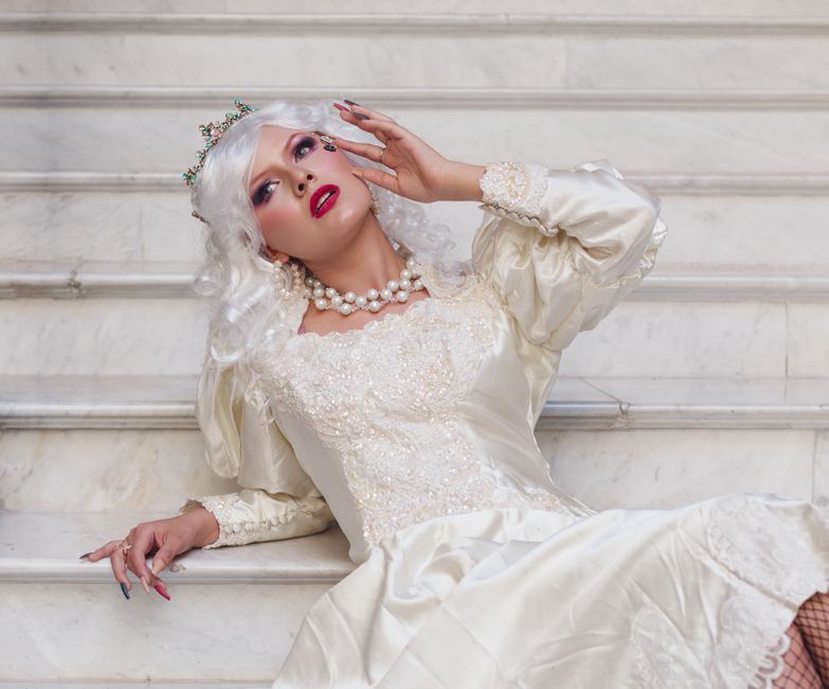
A jewelled ornament above a queen’s brow is not necessarily a crown. In British royal dress, a tiara is generally worn in the hair for formal occasions, often in the evening; a crown belongs to the regalia of sovereignty. In a portrait, that distinction helps us read the occasion. The headwear might belong to an accession, a court ceremony or an evening engagement, depending on its form and how it is worn.
Royal hair ornaments tell a story beyond gemstones, too. Combs held elaborate hairstyles in place, while flowers and feathers softened court dress. Even a modest bow could become part of a recognisable royal image. As hairdressing, etiquette and photography changed, so did the way these pieces looked and were worn.
Before the tiara became familiar
In portraits of Tudor and Stuart royalty, hair is often seen through the structures placed over or around it: French hoods, jewelled bands, veils and pearl-trimmed headwear. They were nothing like modern hair clips. Textile foundations and dressmaking did much of the work, with jewels stitched or pinned into an arrangement meant to be seen as a whole.
By the eighteenth century, elaborate dressed hair gave ornament another setting. Feathers, flowers, ribbons and jewels could be worked into a coiffure built up with padding and pins. A surviving jewel is often easier to identify than the arrangement that supported it. Portraits show how the finished style appeared, but may tell us little about exactly how it fastened.
At the nineteenth-century British court, ornament was still bound to rules of presentation. Court dress could call for feathers and veils alongside jewellery. But a royal portrait was never a general instruction for everyday wear: a formal presentation, a wedding portrait and an informal family photograph each followed different conventions.
Queen Victoria and the language of jewellery
Queen Victoria’s portraits show how much personal and public meaning a hair ornament could hold. Albert designed the sapphire and diamond coronet associated with her, made in the 1840s. Its compact outline is quite unlike the tall tiaras many people imagine when they think of Victorian royalty. In a portrait, its coloured stones could pick up the tones of other jewellery, rather than simply add sparkle above her hair.
Victoria also used jewellery to express mourning and remembrance. That does not make every dark accessory in a period photograph a mourning piece, still less a royal one. Black materials, including jet and its imitations, appeared throughout wider nineteenth-century fashion. Material, dress and occasion tell us more than colour alone.
What makes a tiara adaptable?
Some royal jewels were made to change form. Sections might detach to be worn as brooches, or a jeweller might provide fittings that allowed a necklace to sit on a frame above the hair. Such changes relied on purpose-made metalwork. A loose vintage necklace does not become a tiara simply because it curves attractively; for a historical jewel, look for documented fittings before assuming a change of shape was improvised by its wearer.
Edwardian height and twentieth-century restraint
Late Victorian and Edwardian hairstyles often had the volume to carry ornaments rising above the head. Diamond tiaras sat on fitted frames, while smaller jewelled combs and pins added points of light within the hair. Their mounts and settings mattered as much as their stones: the outline needed to read at a distance, against both hair and formal clothing.
Shorter hairstyles in the 1920s changed the setting, though royal jewels did not simply shrink to match. Existing tiaras could be placed differently, and bandeaux offered a lower line across the forehead or hair. Look closely at period photographs: a change in placement can alter the silhouette without any alteration to the jewel itself.
The mid-twentieth century offers a striking contrast. Elizabeth II wore substantial inherited and family tiaras for state occasions, yet her public image also included carefully chosen hats and, away from formal dress, practical headscarves. In Princess Margaret’s celebrated 1960 wedding photographs, the Poltimore Tiara rises high above her hairstyle. That outline belonged to a particular bridal look; it was not the pattern for every royal bride.
What royal dress tells us about ordinary accessories
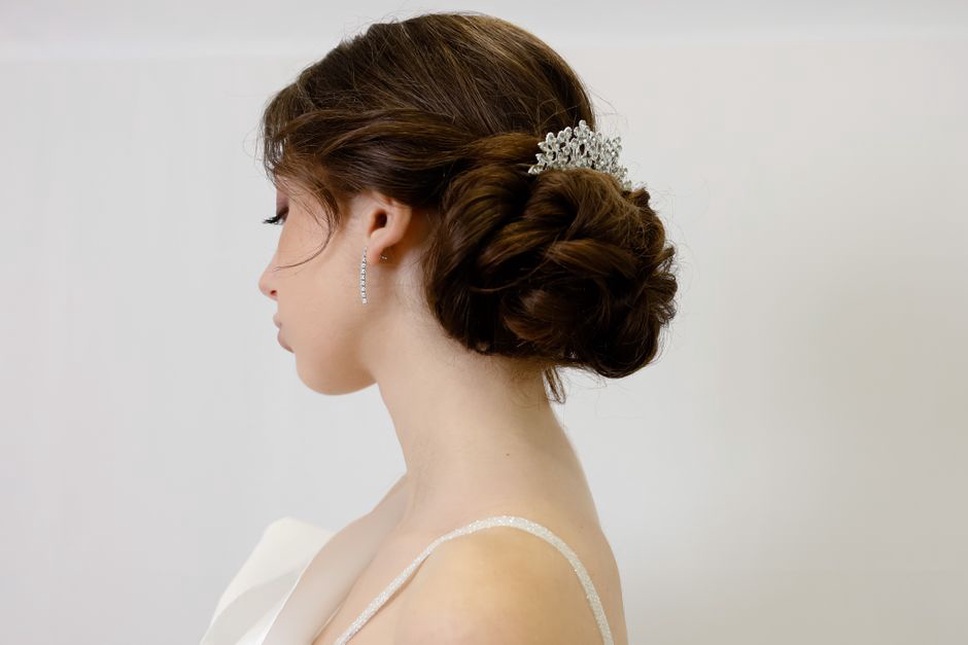
A royal jewel and a vintage high-street hair slide come from very different worlds. Still, court photographs make certain design choices easier to understand. An ornament needs an outline visible against the hair, a fixing strong enough for its weight and proportions that work with the hairstyle beneath it. Those questions apply to diamond tiaras, celluloid combs and fabric bows alike, however different their materials and meanings.
Royal influence is harder to pin down. A widely circulated photograph can make a shape familiar, but it cannot prove that every later bow or comb copied a particular wearer. Dated catalogues, advertisements and photographs give firmer evidence of when a style reached the public. A pearl-coloured bow barrette, for instance, can recall the formality of court jewellery without reproducing a royal piece; the blog’s guide to the pearl bow French barrette considers that accessory on its own terms.
Reading a royal-inspired vintage find
- Identify the form first. A bandeau makes a low, continuous line; a comb has teeth that enter the hair; a slide or barrette closes over a section of it. A similar decorative shape does not mean the fixings work alike.
- Examine the fixing. Look for bent teeth, a loose hinge, missing screws or a frame that no longer sits evenly. A heavy ornament needs more support than a small bow.
- Ask what can be dated. An old photograph, maker’s mark or documented provenance tells you more than a seller’s claim of ‘royal style’. Avoid descriptions that suggest a link to a named royal without proof.
- Check the materials carefully. Pearls may be cultured, imitation or mother-of-pearl; sparkling stones may be glass or gemstones. Appearance alone rarely settles the question.
When wearing a vintage find, proportion often makes a better reference than direct imitation. A small comb at one side of a simple twist can suggest the composed line of a court portrait without calling for a period hairstyle. A crisp bow can work just as well with a modern jacket. If an older piece feels too heavy or its fastening is unstable, display it instead of forcing it into service.
Store ornaments so their teeth and raised stones cannot press against other pieces. Before putting a comb away, ease out any caught strands by hand and check that its decorative top has not shifted on the frame. On an heirloom-style piece, the detail you most want to protect may be attached at its most vulnerable point.