
Fashion HTML: Decoding the Language of Vintage Hair Accessories
The term 'fashion HTML' might sound like a contradiction—a marriage of catwalk glamour with the cold logic of web code. Yet every vintage hair accessory you hold in your hands is built on a structural language as precise as any markup language. A 1920s bandeau, a 1950s French roll comb, a 1970s velvet bow—each follows a set of rules that determines how it sits, how it moves, and how it survives decades in a drawer. Understanding this invisible code transforms you from a casual admirer into a confident collector.
Think of the materials as your tags. Celluloid, tortoiseshell, German silver, bakelite, horn, and early plastics each have their own syntax. A comb carved from real tortoiseshell (CITES-regulated and rarely found in post-1950s pieces) has a warm, translucent amber glow that no synthetic can replicate. Celluloid, invented in the 1860s, was the first semi-synthetic plastic and behaves like a living material—it can warp, yellow, and even self-combust if stored near heat. Knowing these material 'tags' helps you date a piece within a decade. A clip stamped 'Made in England' with a patinated brass spring is likely interwar; a glittery acrylic barrette with a metal snap closure screams 1980s high street.
The construction techniques form the core of fashion HTML. A hand-wired bow, for instance, uses fine brass wire twisted around a central clip—the tension must be just right to hold thick hair without snapping. Machine-stamped combs from the 1930s often have visible mold lines and slightly rough edges, while hand-carved Victorian examples show smooth, flowing curves that follow the grain of the material. The difference is tactile. Run your thumb along the spine of a vintage hairpin: a sharp, uniform ridge suggests mass production; a gentle, uneven taper speaks to hand-finishing. These details are the error codes and validation checks of the accessory world.
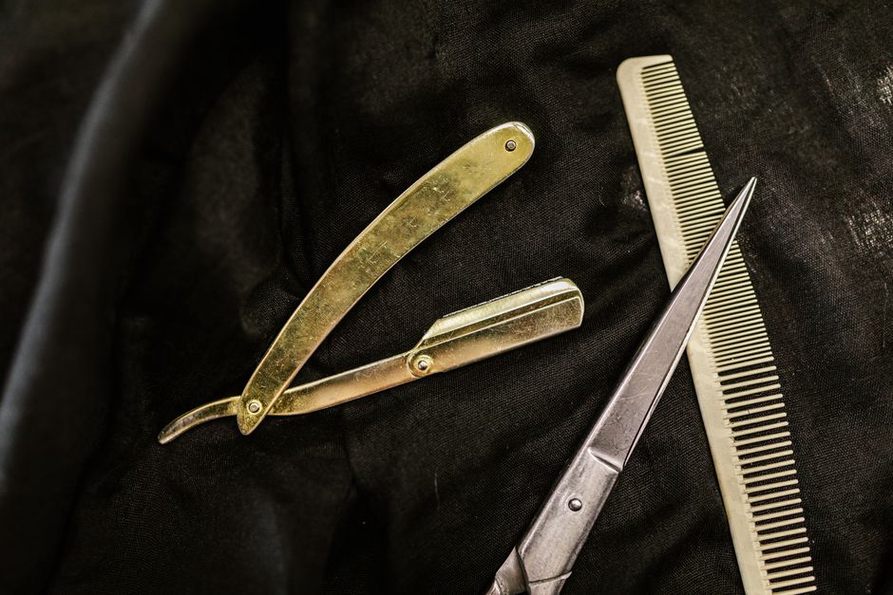
The Structural Grammar of Silhouette
Every era has its own silhouette vocabulary, and the hair accessory must obey it. The 1920s cloche hat demanded a sleek, ear-covering shape, so hair accessories of that decade—crystal-studded bandeaus, low-set side combs—were designed to sit flat against the head. The 1940s utility look, with its victory rolls and snoods, required substantial grip; hence the rise of the alligator clip and the heavy metal barrette. The 1950s beehive and French roll needed long, sturdy prongs that could anchor into teased hair—enter the 'rat-tail' comb and the wide-toothed backcombing brush.
When you pick up a vintage hair accessory, ask yourself: what hairstyle was it built for? A delicate Art Nouveau silver slide with a single prong was never meant to hold a full updo—it was a decorative accent for a low chignon. A chunky 1960s plastic banana clip, on the other hand, was engineered to secure an entire bouffant. Matching the accessory to its intended silhouette not only makes styling easier but preserves the piece. Forcing a fragile Edwardian side comb into a tight modern bun can snap the teeth. Respect the original code.
Reading the Wear Patterns
Vintage accessories carry a history of use, and that history is written in wear. Look at the underside of a metal clip: if the plating is rubbed away in a crescent shape, it was worn repeatedly in the same spot. A comb with polished tips but a dull spine has been slid in and out of hair hundreds of times. These marks are not flaws—they are the log files of a life well-lived. A piece that shows no wear at all might have sat in a box for seventy years, which is wonderful for a collector, but it also means the accessory has never been tested for real-world use. The spring might be stiff, the prongs brittle. Know the difference between patina and damage.
Patina is a soft, even darkening of silver or brass that adds depth. Damage is a crack that runs through a bakelite bangle or a missing tooth on a comb. Repairs are a grey area. A cleanly re-soldered joint on a Victorian hairpin can actually strengthen the piece, but a sloppy glue repair on a celluloid slide will yellow and weaken over time. If you are buying, ask for photos of the underside and the hinge mechanism. If you are selling, be honest about repairs—they are part of the accessory's story.
Modern Styling Without Breaking the Code
The beauty of fashion HTML is that it can be reinterpreted. A 1940s metal barrette with a geometric enamel design pairs beautifully with a modern silk slip dress and minimalist jewellery. The contrast between the sharp, utilitarian clip and the soft fabric creates a tension that feels current. A Victorian jet hairpin, originally worn with a high-necked mourning gown, looks unexpectedly fresh when used to secure a low ponytail in a chunky knit sweater. The key is to let the vintage piece be the focal point—keep the rest of your outfit simple in silhouette and neutral in colour.
For readers building a wardrobe around vintage finds, consider the 'one accent rule': choose one vintage hair accessory per look, and let it anchor your hairstyle. A single 1950s tortoiseshell comb tucked into a side-swept bun is more striking than three mismatched clips competing for attention. If you are layering pieces—say, a velvet bow over a metal slide—ensure they share a common material or era. A 1920s paste buckle worn with a 1980s plastic claw clip will look confused, not curated.

Care as Code Maintenance
Vintage materials demand specific care. Celluloid and early plastics are sensitive to heat and light—store them in a cool, dark drawer, ideally in a soft pouch or a compartmentalised box. Metal accessories with plated finishes (gold, silver, nickel) should be wiped with a dry microfiber cloth after each wear to remove oils and hairspray. Never soak a vintage hair accessory in water; it can loosen prongs, rust springs, and cloud shell or bone. Instead, use a barely damp cloth and dry immediately.
For stubborn grime on bakelite or catalin, a tiny drop of non-abrasive polish on a cotton bud can work wonders, but test on an inconspicuous area first. Combs with natural materials like horn or bone benefit from occasional conditioning with a neutral wax (beeswax-based, not petroleum). And always, always remove accessories before sleeping or swimming—the most common cause of damage is accidental stress during movement.
If you are unsure about a piece, consult a specialist. The community of vintage hair accessory enthusiasts in Britain is small but passionate. Many dealers and collectors are happy to share their knowledge—a quick email with a photograph can often yield a date, a material identification, or a care tip. Treat your collection as a living archive, and maintain it with the same attention a programmer gives to legacy code.
Building Your Own Fashion HTML
Once you understand the language, you can start writing your own. Mix a 1970s velvet bow with a crisp white shirt and tailored trousers for a look that references the past without copying it. Use a 1950s side comb to sweep hair behind one ear, revealing a pair of vintage earrings. Choose a single piece that speaks to you—its colour, its weight, its history—and let it tell its story through your styling. The best vintage accessories are not museum pieces; they are tools for self-expression, worn and loved and passed down.
To begin your journey, start with one well-chosen piece. A classic tortoiseshell comb from the 1940s is a versatile anchor that works with almost any hair length and texture. Learn to read its material, its construction, its wear. Then add a second piece from a different era, and see how they speak to each other. Over time, you will develop an intuition for what works—a personal fashion HTML that is uniquely yours.
For those who wish to see how other collectors approach this language, a visit to How to Build a Vintage Hair Accessory Collection That Tells a Story offers a practical framework for selecting and organising pieces by era, material, and narrative. And for a deeper dive into one of the most overlooked yet structurally brilliant accessories, The Humble Cart: Britain’s Unsung Hairpin reveals the quiet genius of a design that has remained unchanged for over a century.