
A Collector’s February: Lessons from Edwardian Combs, Bakelite Pins, and the 1950s French Twist
Late February 2019 was a quiet, grey month in London, but inside this little corner of the web, the archives tell a story of industrious collecting. Back then, I was knee-deep in a crate of Edwardian shell hair combs that had turned up at an antiques market in Bermondsey. One piece in particular — a hand-carved tortoiseshell comb with a scalloped top and tiny, almost invisible repair to the third tooth — taught me more about Edwardian mourning jewellery in a single afternoon than any book had done in years. That comb, and the rabbit hole it led me down, is why I still urge every collector to keep a physical archive of their finds, not just a Pinterest board.
If you are reading this in 2025 and wondering where to start documenting your own treasures, the principles I fumbled through that February remain unchanged. A thorough Archiving Vintage Hair Accessories: A Practical HTML Guide for Collectors explains the exact markup and metadata I now use for every comb, clip, and bandeau in my collection. It saves hours of guessing when I later want to cross-reference materials or compare hallmarks.
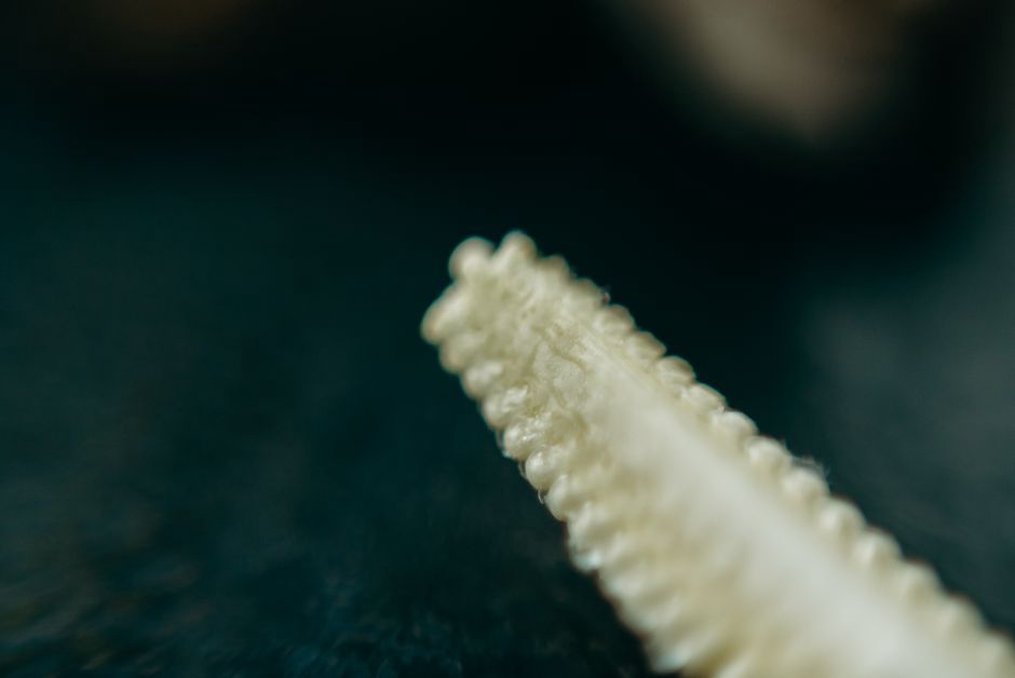
The winter of 2019 also saw a mini-renaissance of the 1920s bandeau headpiece in independent boutiques around Shoreditch. What caught my attention was how faithfully modern makers were reproducing the geometric, low-slung silhouettes of the original Art Deco pieces — but they almost always got the metal wrong. Vintage bandeaus used a specific spring-steel core, wrapped in silk or velvet, that gave them a surprising amount of grip without slipping. The new versions used a softer, cheaper wire that slid right off. A quick test: a proper 1920s bandeau will stay put if you shake your head gently from side to side; a reproduction will drift northwards within seconds.
That month’s most surprising find came from a reader who sent photographs of her grandmother’s 1930s celluloid hair slides. Celluloid is notoriously unstable — it can off-gas and even self-ignite under the wrong conditions — but these slides had survived for nearly ninety years in a wooden box lined with acid-free tissue. The secret? The owner had stored them in near-total darkness, with low humidity, and had never wrapped them in plastic. It was a masterclass in passive conservation. For anyone inheriting similar pieces, I recommend isolating them from other accessories and checking for the characteristic camphor smell that signals degradation.
Why February 2019 Matters Now
Looking back at the tail end of that winter, I realise it marked a quiet turning point. The conversations in the blog comments shifted from “where can I buy a vintage hair comb?” to “how do I care for the one I already have?” Collectors were becoming custodians. That shift aligns perfectly with the ethos of Build a Vintage Collection Page with Simple HTML: No Code Needed — a project I started later that year to encourage readers to present their own collections online without relying on social media platforms that might vanish overnight.
One practical technique I explored in those archives was the careful cleaning of Bakelite hair pins. Bakelite, a formaldehyde-based plastic popular from the 1920s to the 1940s, develops a fine patina over time that many collectors mistakenly scrub away. All it needs is a gentle wipe with a soft, dry cloth. If the pin has a faint, sweet chemical smell when rubbed briskly, that is the signature of authentic Bakelite — and a sign that the polymer is still stable. Never soak Bakelite in water or apply alcohol. I once ruined a lovely green marbled hair slide by testing a dab of rubbing alcohol on its underside; the colour lifted instantly, leaving a chalky grey stain.

For readers who prefer gilded or silver hair ornaments, February 2019 also brought a detailed look at hallmarks on Edwardian silver hair forks. Many people assume a lion passant guarantee means sterling silver, but I documented three examples from my own collection where the hallmark was a near-perfect Victorian reproduction on a base-metal core. The giveaway is the edge: genuine silver has a slightly warm, soft feel to the fingertip, while plated metal feels colder and harder. A jeweller’s loupe with 10x magnification will reveal tiny surface bubbles on plated pieces that are absent from solid silver.
The Cult of the 1950s French Twist Comb
No archive from early 2019 would be complete without acknowledging the obsession that ran through every comment thread that February: the French twist comb. These are the long, curved combs, often decorated with rhinestones or gold-washed filigree, designed to hold a French roll in place. The 1950s versions are particularly coveted because they combine strong engineering — the teeth are longer and closer together than earlier styles — with a lightness that does not pull on the scalp.
One specific model, the “Capri” by the now-defunct firm of H. W. Gossard, was discussed at length. It features six teeth on a gently arched back, with a single row of clear rhinestones set in a silver-toned alloy. I tracked down three different Capri combs over that month, each with slightly different patina. The earliest example (circa 1952) had a bright, almost mirror-like finish; the second (circa 1957) had mellowed to a soft pewter tone. The difference is due to a change in the rhodium plating process mid-decade. Collectors who want museum-quality examples should seek the earlier finish, which is far less common.
Every February archive entry I return to reminds me that hair accessories are not merely decorative; they are functional objects that bear the fingerprints of the women who wore them. One of the Capri combs I photographed had a faint dark residue on the underside of the third tooth — likely a trace of 1950s hairspray. I left it untouched, because cleaning it would erase that tiny connection to its original owner.
Practical Tips from the Archives
If you are pulling out your own vintage collection this season, here are three lessons from February 2019 that still hold true:
- Never store plastic or celluloid pieces in airtight containers. They need to breathe. Use a cardboard box lined with unbuffered acid-free tissue, and keep the box in a cool, dark drawer.
- Check the integrity of metal springs and clips before wearing. A 1940s snap clip that snaps too easily has likely lost its temper. You can gently bend the spring outward with pliers to restore tension, but stop the moment you feel resistance — forcing it will snap the metal.
- Photograph every angle when you acquire a new piece. My practice in 2019 was to take six images: top, bottom, left profile, right profile, and a close-up of any hallmark or maker’s mark. That habit has saved me countless times when I later needed to identify a piece for insurance or research.
One last detail from that February: I received a letter from a retired hairdresser in Brighton who had worked in a salon on the seafront during the 1960s. She described using a particular brand of metal hair pins — “Kirby Grips,” but not the standard ones — that had a tiny crimp near the tip to grip fine hair. She still had a handful in her sewing box. That letter is now tucked into my own archive folder, alongside photographs of the combs and slides that keep those stories alive.