
All the Love in the World: Collecting Vintage Hair Accessories with Heart
The most cherished vintage hair accessories carry not just the patina of age but the invisible thread of someone else's daily joy. A French hair comb worn to a wedding in 1937, a tortoiseshell clasp held by a housewife during rationing, a velvet bow pinned for a first dance in 1968 — these objects survive because they were loved. The phrase "all the love in the world" isn't hyperbole; it's the quiet currency of a collector. Let's look at how to find, authenticate, and wear pieces that embody that sentiment, without ever losing sight of their fragile, human origins.
The Material Vocabulary of Affection: What to Look For
Before the age of injection-moulded plastic, hair accessories were crafted from materials that required skill and reverence. Understanding these materials grounds your collection in history and helps you spot enduring quality.
Celluloid and Early Plastics (1870s–1930s)
Often mistaken for tortoiseshell or ivory, celluloid was the first semi-synthetic plastic. It has a warm, marbled glow when held to light. Vintage combs and barrettes in mottled amber, deep oxblood, or cream hues are very collectible. The trick: celluloid smells faintly of camphor when rubbed briskly, and it is highly flammable — store them away from heat sources.
Sterling Silver and Filigree (Edwardian era, 1901–1910)
Edwardian hair pins and slides often feature intricate silver filigree set with seed pearls or paste stones. These pieces are delicate, so check for bent prongs or missing stones. A silver hairpin with a maker's mark on the back tells you it was made by a specific jeweller — that provenance adds a layer of story.
Gutta-Percha and Jet (Victorian mourning, 1850s–1890s)
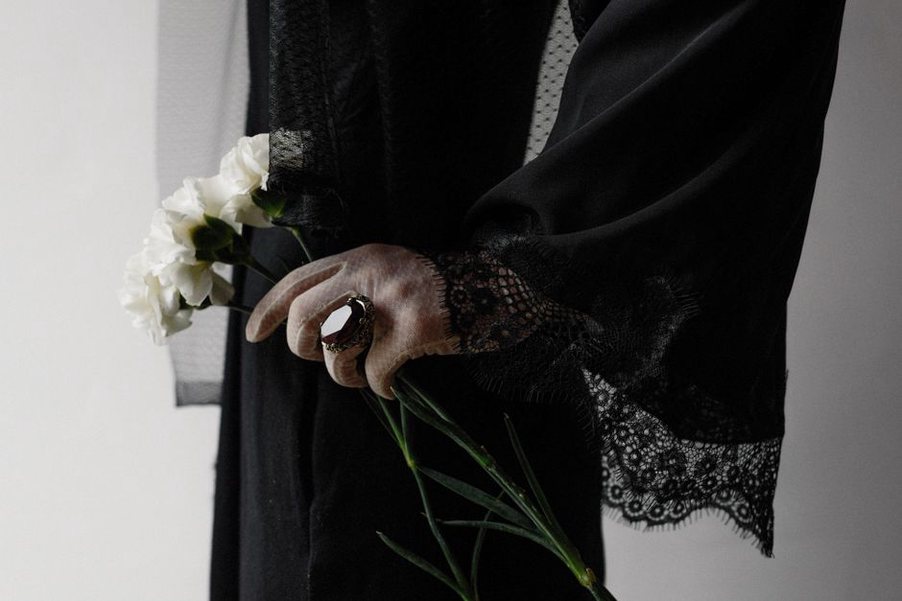
Black hair ornaments for mourning have a deep, almost glassy finish. Real jet is lightweight and warm to the touch; synthetic imitations feel cold and heavy. Hair combs and slides in this black palette were often worn by widows and are surprisingly versatile alongside a crisp white shirt today.
Decade by Decade: Silhouettes That Tell Stories
Each decade of the 20th century produced a distinct hair accessory silhouette. Knowing these helps you date a find at a glance.
| Decade | Signature Accessory | Typical Material | Wear Tip |
|---|---|---|---|
| 1910s | "Gibson Girl" tortoiseshell combs | Tortoiseshell or celluloid | Wear low at the nape for a swept-up chignon |
| 1920s | Art Deco bandeaux and headband clips | Paste stones on silver-toned metal | Let two small side clips frame a sleek bob |
| 1930s | Large, ornamental back combs | Gold-plated brass, rhinestones | Use to anchor a rolled half-up style |
| 1940s | Snoods and fabric-covered hair hoops | Crochet rayon, felt, or net with ribbon | Pair with a utility dress for an authentic land-girl look |
| 1950s | "Banana" clips and small bow-shaped barrettes | Enamelled metal or gilt | Place just above the ear for a casual '50s feel |
| 1960s | Large velvet bows on alligator clips | Velvet, grosgrain ribbon, metal spring | Wear high on a ponytail to echo Twiggy |
| 1970s | Floral enamel slides and leather-wrapped grips | Enamel, brass, leather | Scatter two or three slides along a side-part |
Finding Pieces That Feel Like Love
A truly curated collection doesn't chase rarity alone — it chases connection. I find my best pieces at small British charity shops in market towns, at bootsales where the seller remembers the aunt who owned the hairpiece, or from online marketplaces where the listing photo shows the item on a vintage dresser. Look for listings where the seller includes a note about previous owners; that humanity suggests the piece has been handled with care.
When inspecting an item, turn it over. The back of a hair clip tells you its age through the hinge mechanism, the shape of the spring, and any residue of old hairspray or lacquer. A light residue is normal, but heavy stickiness often means the finishing lacquer is degrading — it can be cleaned with a dab of isopropyl alcohol on a cotton bud (test on an inconspicuous area first).
Wearing History With Your Modern Wardrobe
The magic of vintage hair accessories is that they don't demand a period costume. A jet black Victorian mourning slide fastens a modern silk scarf at the nape of the neck. A pair of 1940s crocodile-effect slides secures a messy bun on a linen dress. A single Edwardian silver hairpin gleams against a plain grey roll-neck jumper in winter.
The principle is tension: let the modern garment be simple, neutral, or textured, so the small vintage piece becomes the focal point. Avoid pairing a very ornate historical accessory with an equally ornate modern dress — the eyes won't know where to rest. Instead, treat the vintage item as you would a fine piece of jewellery: a deliberate gesture.
Gentle Care for Tender Pieces
Vintage materials require non-standard cleaning and storage.
- Metal (silver, brass, gilt): Polish only with a soft lint-free cloth. Never soak metal hair accessories — water entrapped in hinges causes rust. A silver cloth is ideal.
- Celluloid and early plastic: Wipe with a barely-damp cloth and dry immediately. Do not store in plastic bags; celluloid off-gasses over time and can become sticky. Keep in a box lined with acid-free tissue.
- Velvet and ribbon: Lightly brush with a dry toothbrush. For a bow that has lost its shape, hold it over steaming water (from a safe distance) and reshape with your fingers.
- Stone inlays and paste: Avoid any alcohol or solvent. Use a soft brush (a makeup brush works beautifully) to remove dust from around the stones.
When you are not wearing your pieces, store each one individually in a fabric pouch or a compartmented box. This prevents the metal of one comb from scratching the celluloid of another. If you are managing a growing collection, you may find it helpful to follow an Archiving Vintage Hair Accessories: A Practical HTML Guide for Collectors to document each piece's material, provenance, and condition — a small diary that will be treasured by whoever inherits your collection.
The Quiet Ethics of Loving Old Things
Choosing vintage is inherently a gentle act. No new resources were mined or moulded for that hair comb; no factory energy was spent. But honest appreciation means being transparent about condition. If a piece has a repaired crack, a replaced stone, or a modern clip added by a previous owner, that's not a flaw — it's a new chapter. Describe it exactly as you find it, and honour the same truth when you sell or gift.
Some collectors worry about the ethics of wearing pieces that originally belonged to unknown women. My own view is that the love embedded in the object is amplified when it is worn again — it returns to its purpose. A hair slide that spent forty years in a drawer is revived when it catches afternoon light on a walk through a London park. That is the truest form of conservation.
Next time you hold a vintage barrette or a fondant-smooth celluloid comb, run your thumb over its surface. Consider the fingers that once fastened it before a mirror — perhaps with a bit of hurry, perhaps with care. And then give it the same attention, because small, beautiful objects deserve nothing less than all the love in the world.