
Celluloid Hair Combs: How to Identify, Wear and Care for Vintage Finds
An amber-coloured comb with a dark, mottled crest might pass for tortoiseshell at a glance, then feel surprisingly light in your hand. Celluloid made that effect possible. Makers shaped it into translucent curves and intricate cut-outs, often in imitation of costlier materials. For a vintage buyer, the resemblance is only a starting point: material, construction and condition all merit a closer look.
What makes a comb celluloid?
Celluloid is a family of early plastics made principally from cellulose nitrate and camphor. It became commercially important in the late nineteenth century, when manufacturers wanted materials they could shape, colour and produce in greater quantities than natural horn, ivory or tortoiseshell. As Britannica’s account of celluloid explains, that versatility came with a serious drawback: celluloid is highly flammable.
Hair ornaments put the material to work in ways that went beyond imitation. Makers cut openwork crests from sheets, pressed surfaces into relief, and painted, tinted or laminated pieces for depth. One comb might suggest amber or shell; another might make a feature of vivid colour and geometric pattern. But not every old plastic comb is celluloid. Later cellulose acetate and other plastics can look remarkably similar, particularly in photographs.
The word comb covers different objects, too. A dressing comb arranges the hair; an ornamental hair comb stays in place. The latter might have long, widely spaced teeth beneath a decorative crest, or a smaller row meant to tuck into a twist. Tooth spacing and silhouette are better clues to its purpose than a seller’s label.
How a new material entered fashionable hair
Natural decorative materials were fashionable when celluloid appeared, but they could be expensive, variable and difficult to work. Celluloid’s resemblance to tortoiseshell brought elaborate-looking ornaments within reach of a broader market. Makers also took advantage of its translucency and the ease with which they could repeat a pattern. An imitation-shell comb is worth appreciating for its design without mistaking it for shell.
Late Victorian and Edwardian hairstyles left plenty of room for tall backcombs, side combs and decorative pairs. Some had plain, swept shapes; others carried pierced scrolling or floral crests. Shorter cuts changed the role of large combs in the 1920s, though ornamental examples continued to appear for evening dress and styles with enough hair to hold them. Other plastics and manufacturing methods arrived in later decades, so a period-looking pattern cannot establish a comb’s age on its own.
That uncertainty is part of looking at British vintage finds. A comb from a family dressing-table drawer could have been worn every day, or bought for a dance or wedding. Its appearance rarely tells us which. Treat a claimed occasion or precise date as provenance only if credible evidence supports it. Construction and material may suggest a broad period; they seldom reveal a personal history.
Why the surface holds the eye
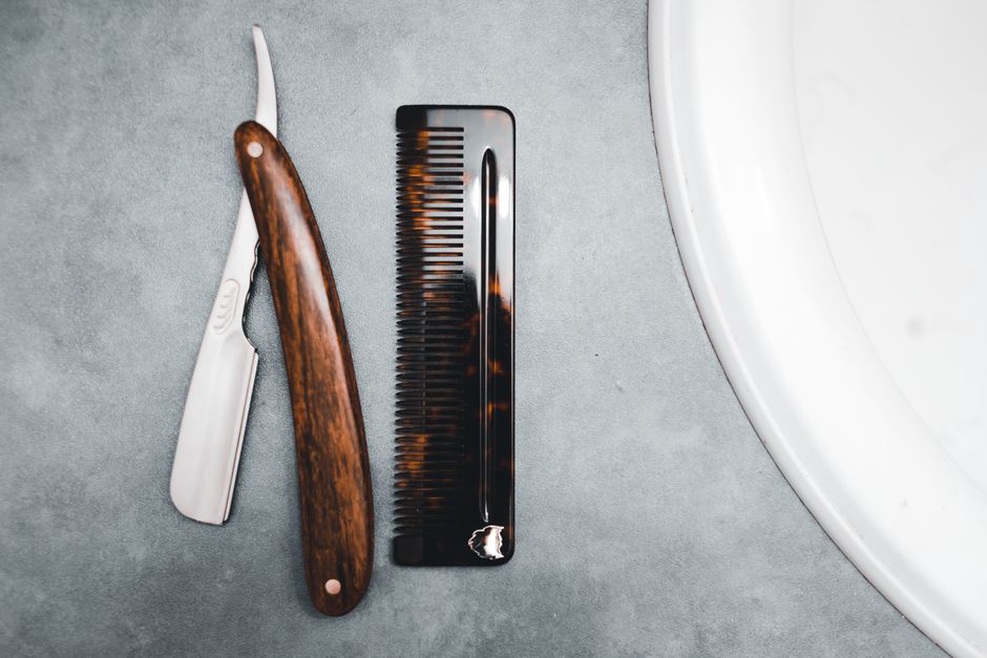
Imitation tortoiseshell is perhaps the best-known celluloid finish. In convincing examples, light passes through honey-coloured areas while darker patches seem to sit at different depths. Other combs have softly marbled cream, deep red or black surfaces, or a clear ground with applied decoration. Even a restrained design can catch the light along a polished edge.
Look at the crest as closely as the colour. A fan-shaped top adds height; a low arch sits nearer the head. Pierced motifs let the hair show through, while solid panels leave space for moulded detail or paint. If the comb has inset pieces or attached ornament, check how they are secured. A loose piece is a condition concern, and a conspicuously bright replacement can alter the look of an older comb.
Manufacturing marks offer clues. A comb may have been cut from a sheet, shaped with heat, assembled from separate parts or finished by hand. Small variations along a pierced edge may tell you more than a sweeping period label. No single feature proves its age or material, but each gives you something useful to examine.
Identifying a vintage example without risky tests
Begin with what you can see. Examine the comb in diffuse daylight, turning it gently to check the back, edges and teeth. Compare those details with the seller’s description, and leave room for doubt if the material has not been verified.
- Check the whole silhouette. The crest, tooth length and spacing should work together. Very short teeth beneath a heavy crest may make the comb difficult to wear, whatever its age.
- Study the edges and joins. Look for layers in the sheet material, mould lines, attached sections, repairs or a change of colour at a cut edge.
- Read the surface closely. Fine scratches and softened high points may reflect wear, but they do not prove age. Heavy polishing can erase older surface detail.
- Inspect every tooth. Tips chip easily, and cracks can start where a tooth joins the body. Avoid running a fingernail or tool over a suspected split.
- Ask for clear photographs. Front and back views, a side profile and close-ups of the teeth are more helpful than one styled image.
People sometimes cite a camphor-like smell as a clue, but scent can fade or be masked by storage conditions. Never heat, burn or apply solvents to a comb to identify it: celluloid is flammable, and these tests can damage the object or create a hazard. A seller should distinguish “confirmed celluloid” from “celluloid-style” or “early plastic, untested”. If certainty matters, consult an experienced conservator or specialist rather than relying on an online photograph.
Be cautious when every tortoiseshell-patterned comb is labelled celluloid, or every celluloid comb is called Edwardian. Later pieces can deliberately echo earlier shapes. A reproduction can be a lovely accessory when described honestly; the issue is passing a modern comb off as an authenticated antique.
Condition is more important than a perfect shine
An attractive comb is not necessarily a wearable one. Fine scratches or slight rubbing to painted detail are one thing; structural cracks, missing teeth and a crest that flexes at a join are another. See whether it rests evenly on a flat surface without pressing it down. Pronounced warping can make it hard to secure, and trying to bend it back risks breaking it.
Celluloid can also deteriorate chemically. Unusual stickiness, distortion, crumbling, a persistent sharp odour or new discolouration affecting nearby objects are warning signs. They are not a home diagnosis, but they are reason enough to stop wearing the comb and separate it from other accessories. A damaged example may still hold historical interest, though it needs gentler handling than a sound one.
Pay particular attention to missing or repaired teeth: they hold the ornament in place. A tidy repair to a decorative edge may matter less in use than a hairline crack at the root of a central tooth. Ask about repairs, and judge the comb in light of what has been disclosed rather than assuming it is untouched.

Wearing one with a modern wardrobe
Celluloid’s colour can do plenty without a period hairstyle to go with it. A low tortoiseshell-effect crest looks at home above a simple twist, white shirt and tailored jacket. A taller pierced comb could work with an evening outfit with clean lines. Give its outline space rather than building a costume around it.
Choose a comb that suits both its condition and the hairstyle it needs to grip. Short or closely spaced teeth may work better as an accent beside a secure twist than as the twist’s only support. Insert the teeth gently in the direction of the hair; do not use the crest as a lever against your head. If you meet strong resistance, take the comb out and adjust the hair instead of pushing on old teeth.
A softer accessory can make a pleasing contrast, as long as the two do not crowd each other. You might place a restrained comb near a low knot and add a narrow velvet band; our guide to the velvet twist headband looks at that accessory’s shape and vintage appeal. Keep bulky fabric away from the comb’s teeth so they grip hair rather than catch on the band.
Some finds are better admired than worn. A fragile comb can still be a reference for colour, pattern or workmanship, while a sound, simpler one earns a place in regular use.
Cleaning and storing a delicate plastic
Pick up a comb by its body, not a single tooth or a projecting part of the crest. Remove routine dust with a soft, dry cloth or a clean, soft brush around openwork. Avoid soaking it or using hot water, alcohol, acetone or household polish. Liquids and solvents may harm old finishes or attached parts, while heat is especially risky with celluloid. If dirt is embedded or the surface seems unstable, ask a conservator before doing more.
Store it away from direct sunlight, heat and naked flames. A separate compartment or a loose wrap of soft, clean, unprinted tissue will help keep the teeth from catching on other jewellery. Do not seal a suspect, deteriorating comb in a tight bag or let it touch other plastics; isolate it and seek professional advice. Check stored pieces now and then for fresh warping, tackiness or odour, particularly if several share a drawer.
Before putting a new find away, photograph both sides, note its measurements and record any chips or repairs. That small record will help you tell an old scratch from a new one at the next check. Keep it beside the comb’s compartment, not beneath its teeth.