
Victorian Hair Keepsakes: Reading the Story Behind the Jewel
A small plait behind glass does not, on its own, make a Victorian brooch a mourning jewel. Hair was kept after a death, but it could also mark an engagement, a friendship or a parting. At a British antiques fair, a dark-framed locket may hint at grief; an inscription, photograph or family record might tell a different, more particular story.
For its owner, a lock of hair offered something a portrait could not: a physical piece of someone, light enough to send in a letter and durable enough to keep for decades. It might remain tied with thread inside an envelope or become part of an elaborate jewel. The evidence needed to understand it is often tucked away on the reverse, or in the paper that came with it.
What did a lock of hair mean?
Cut hair keeps its form, making it well suited to the nineteenth-century habit of exchanging keepsakes. A parent might save a child’s curl; sweethearts might exchange locks before marriage or a long absence. Relatives also preserved hair after a death, when no further keepsake could be taken. The practice was older than the Victorian era, but many examples survive from that period, ranging from folded-paper packets to finely worked jewellery.
Memento simply means an object that prompts remembrance; it need not commemorate a death. A lock gathered on an ordinary day might become precious years later. Black enamel, likewise, is a clue to investigate, not proof of mourning.
Inscriptions can help. A name, date of death and the words “In Memory Of” support a mourning interpretation, while initials and a single date leave more room for doubt. That date might mark a birth, marriage, gift or haircut. If a lock still has its note or envelope, keep them together. The paper may explain more than the jewel.
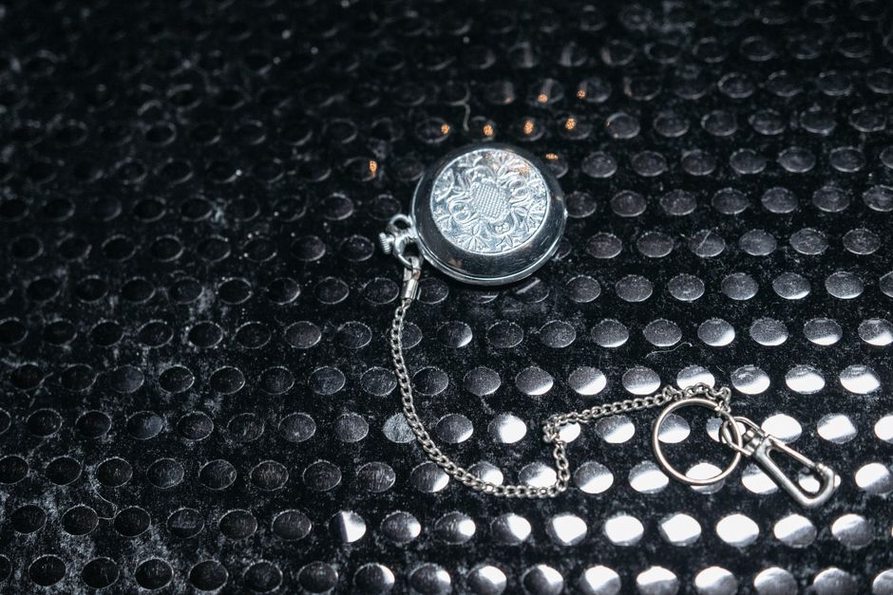
From loose curl to worked jewel
Hair kept under glass
Some of the simplest arrangements are the most affecting. A curl might be looped or laid flat under glass in a locket, brooch or ring, perhaps beside a miniature portrait or tiny inscription. Strands could also be set in a flat plait, a spray of leaves or a fine pattern on a prepared ground. The glass let the work be seen without exposing it to touch. Where the cover is missing, the hair may be surprisingly fragile.
Woven, braided and sculpted hairwork
Other nineteenth-century pieces called for more elaborate work. Hair could be braided into chains, bracelets and watch guards, finished with metal clasps or fittings for pendants. It could also form a raised floral design or wreath inside a frame. Sorting the strands and keeping an even tension took patience; flyaway hairs, breaks and uneven joins show how vulnerable the work can be now.
Not every strand in a commercial piece necessarily came from the person it commemorated. Hairworkers could work with hair supplied to them, while some manufactured pieces used other hair to achieve a particular length or design. Without a reliable account of its making, be wary of a seller’s claim that every strand belonged to a named Victorian individual. What the piece meant to its owner and where all its material came from are separate questions.
Jewellery that held a secret
Sometimes the hair was hidden behind an otherwise conventional ornament. Turn over a brooch and you may find a glazed compartment beneath its decorative front; a ring may have a small locket setting rather than a visible hairwork motif. Hair also appears in pendants and lockets worn near the neckline, private keepsakes whose contents were known only to the wearer. A photograph of the front alone can miss the point of the jewel.
Reading a surviving piece without overclaiming
Victorian hair keepsakes vary in materials and finish. Gold, silver, gilt metal, enamel and glass may appear, sometimes alongside later alterations. Start with what you can see: how the hair is arranged, how it is set, any words or dates, and signs that the compartment has been opened. Keep those observations separate from the story you think they tell.
- Check the enclosure. A fitted glass cover and undisturbed backing may suggest the contents have stayed in place, but cannot establish when the hair was inserted.
- Read every surface. Look at the reverse, clasp and inner rim, as well as any accompanying paper. Initials alone rarely identify someone with confidence.
- Look beyond colour. A dark setting may suit mourning, but does not date a jewel or prove its purpose.
- Ask what has changed. Replaced clasps, fresh adhesive or a loose panel may point to repair. An old setting can hold hair added much later.
- Match the description to the evidence. Without provenance, “nineteenth-century-style hairwork brooch” is safer than a precise date or personal history.
If you are considering a purchase, ask for clear photographs of the back, edges and fastening, not just a polished view of the front. Is the hair beneath glass? Does the compartment close securely? Has any repair been documented? If a family attribution is offered, ask what supports it: a contemporary note is different from a story passed between sellers. Hallmarks may help identify a marked metal component, but they do not automatically date the hair or establish its owner.
Modern imitations and later revival pieces can be appealing in their own right when described honestly. A recently assembled lock in an old locket is not an intact Victorian keepsake. That distinction matters to a buyer and to any attempt to understand whose hair the object may contain.
The connection to Victorian dress
Hair locks belong to the history of accessories as much as to mourning. A brooch could fasten a collar or sit at the throat; a locket hung from a chain; a hairwork bracelet dressed the wrist. Many were meant to be seen up close. Across a room, a jewel might appear to be a neat gold frame or dark oval, while its wearer knew what lay beneath the glass.
That privacy sets these pieces apart from a comb or bow designed to shape a hairstyle. A Victorian hair-lock jewel contains hair, but may never have been worn in the hair. Before styling one today, check its fastening and intended position. A secure brooch can sit on a jacket lapel or scarf; a locket works over a plain blouse. Neither calls for a period hairstyle.
A loose lock is not styling material. Taking it out of its packet, or opening a locket to work it into a hairstyle, risks losing the context that gives it meaning. For a nod to Victorian texture, choose a newly made plaited ribbon or hair accessory instead.
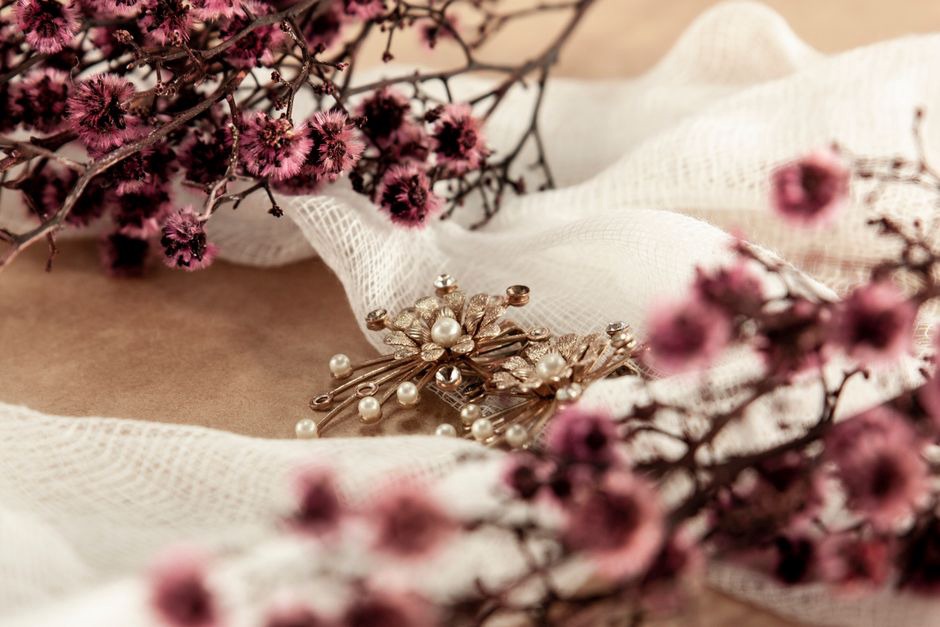
Handling and storing a personal object
Hair may survive for decades, but the assembly around it can fail. Bindings loosen, glass cracks and old settings can open unexpectedly. Handle a jewel over a clear, padded surface rather than a sink or hard floor, and hold the frame rather than the glass or worked strands. If the enclosure is loose, do not wear it until someone qualified to assess antique jewellery has examined the setting.
Store each piece in a suitably padded box, away from direct sunlight, damp and abrupt temperature changes. Keep loose hair with its original envelope inside a protective enclosure; do not glue the strands to a display card. Brittle paper, especially if written in pencil, may suffer from repeated unfolding. Photograph both sides so you can check the details without handling the original each time.
Be restrained with cleaning. Do not immerse a hairwork jewel, apply household polish near an opening or lift the glass to clear dust. Moisture can reach the hair or paper beneath it, while cleaning products may affect old finishes and adhesives. A soft, dry cloth may be suitable for an intact exterior metal frame, kept well clear of vulnerable surfaces. If you are unsure, leave the piece untouched and seek specialist advice. Repairs should preserve original components and be recorded, not quietly erase evidence of how the keepsake was made.
When the name has been lost
An unidentified lock is still a historical object; it does not need an invented biography. Record where and when you acquired it, photograph its condition and transcribe any lettering exactly, including characters you cannot quite read. Keep the seller’s account separate from what you can verify. That distinction may help someone understand the piece later.
Suppose a locket bears only the initials “E. M.” Record them as an inscription, not as the identity of the person whose hair it holds. Note the strands’ colour and arrangement, the frame material if known, and whether the glass is secure. Put that record beside the locket in its storage box, so the next person who opens it finds the paper trail too.