
How to Wear Vintage Hair Scarves Without Dressing in Period Costume
Fold a small silk square into a narrow band and it will hold back a fringe without making the rest of your outfit look like a period photograph. The same scarf can sit quietly beside a blazer, keep hair in place on a windy day or provide the strongest colour in an otherwise plain outfit. That freedom helps explain its appeal: you can borrow an older silhouette without dressing head to toe in its era.
What is returning—and what is new
‘Vintage hair scarf’ can mean an older scarf worn in the hair or a new piece designed to evoke one. Nor must an older scarf have been sold as a hair accessory: a printed neck square may work beautifully if its size, weight and condition suit the fold. Keep the distinction in mind when browsing vintage rails. Paisley and polka dots are not proof of age, and ‘vintage-inspired’ does not mean vintage.
Hair scarves have never belonged to just one decade or community. In twentieth-century Britain, cloth tied over or around the hair served work, weather, travel and dress. Wartime head coverings often appear in carefully styled images, though they had practical purposes too. Later, a scarf knotted beneath the chin or around a ponytail suggested quite different fashions. Those familiar shapes still carry their associations, but there is no need to recreate a complete period look. A scarf can sit beside modern tailoring, a second-hand coat or everyday knitwear.
There are practical reasons to reach for one, too. It takes little room to store, changes an outfit without altering it and can be tied several ways. Vintage rails may offer prints and borders unlike those in current ranges. An old scarf is not automatically the more sustainable choice, though; condition, care needs and dimensions all matter if you want to wear it regularly.
The shapes behind the look
Choose the outline you want before choosing a decade. A knot over the crown feels different from a long tail behind the ear, even when both begin with the same square. Its proportions decide which shapes will work.
The folded band
Fold a square diagonally, then bring the long edge towards the point in successive folds until you have a band. Place it across the top of the head and tie it beneath the hair. The clean line suits loose hair, a short cut or an updo. A small square makes a neat knot with little fabric left over; a larger one leaves visible ends. If the band bunches near the ears, unfold it and make each fold a little wider instead of tightening the knot.
The covered crown
For more coverage, lay a triangle over the crown with its point towards the back, then tie the two outer corners beneath the hair or at the nape. It is a recognisable vintage shape, but a plain scarf with contemporary clothes need not look like costume. Check the triangle’s depth before going out: a shallow square may slip backwards, while a much larger one can leave a bulky knot under a coat collar.
The ponytail tie
Tie a narrow scarf around an existing hair elastic; don’t ask delicate fabric to hold the hair on its own. The elastic does the fastening, leaving the scarf to provide colour and movement. This is especially useful for an older silk square whose fine edges should not take repeated pulling. Let the ends hang, or tuck them in if they might catch on a bag strap.
You can also wrap a scarf around the base of a bun, as long as the bun is secure underneath. Keep the ends clear of its fastening so removal does not pull the cloth. These are starting shapes, not rules about hair length or who may wear them.
Choosing a scarf that behaves well in the hair
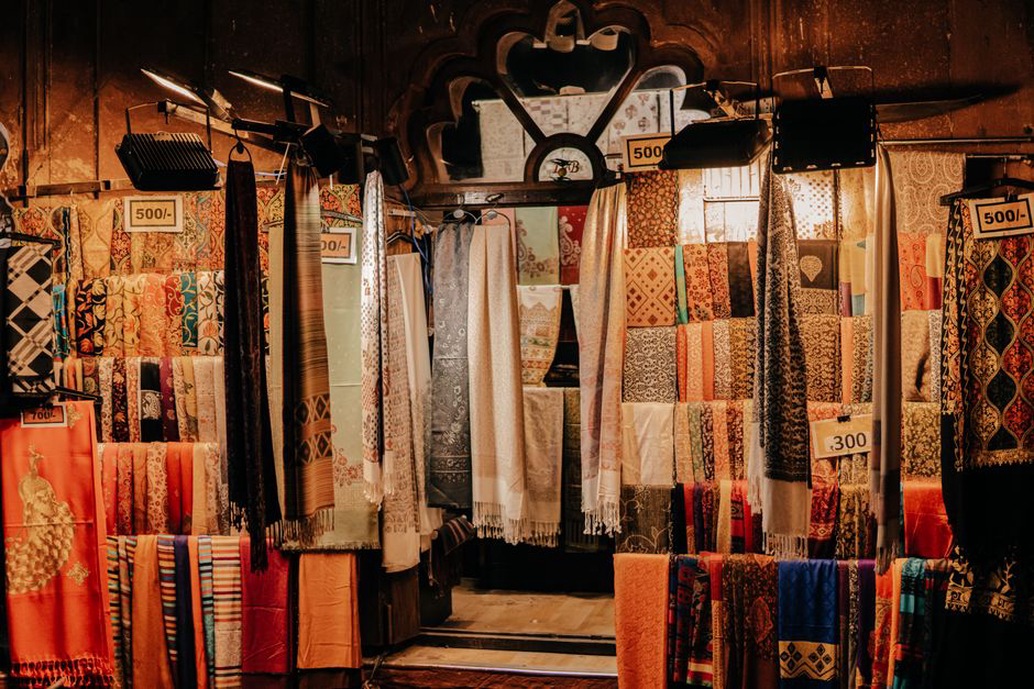
At a vintage fair or charity shop, the most striking print may not be the easiest to wear. Hold the scarf by two corners and see how it falls. A supple, lightweight square folds into a narrow band more readily than a stiff one. A slippery weave may drape beautifully but need a firm fastening beneath it. Fabric content affects both drape and care; if the label is missing, appearance alone is not enough to identify the fibre with confidence.
- Size: Try folding it before buying. A small square may suit a band or bun but leave too little cloth for a covered crown and secure knot. A large square gives coverage but makes thicker folds.
- Border: A contrasting edge remains visible when the centre print disappears into a fold. Look at the scarf in the shape you intend to wear, not just laid flat.
- Surface: Look along likely fold lines for thinning, pulls and faded creases. Tying can put those weak areas under further strain.
- Edges: Check hems and corners for loose stitching. Tiny holes near a knotting point matter more than a mark that will be hidden in the centre.
- Comfort: See how the folded cloth sits around your ears and at the nape. If it needs constant adjustment, it may not become an everyday favourite.
Printed borders, hems that look hand-rolled and old labels offer clues, but none proves a precise decade or luxury origin by itself. Labels can be removed, hems imitated and prints repeated. If a seller names a maker or date, ask what supports the claim. When certainty is impossible, judge the price against the scarf itself rather than an elaborate provenance story.
Why the styling feels current
In older fashion photographs, a scarf is often part of a closely coordinated outfit, with matching colours, a particular hairstyle and period clothing. Now the contrast can be more interesting. A softly printed square adds detail to a crisp shirt without demanding vintage dress from collar to shoes. A bright geometric print can break up dark outerwear; a muted one brings pattern to a plain jumper.
Cloth is also more adjustable than many rigid accessories. A comb or structured headband has a fixed shape and placement; a scarf can be folded narrower, tied lower or worn with the ends hidden. If it competes with prominent earrings or a patterned collar, try a different fold before changing the outfit. A braided headband creates a firmer, fixed line by comparison; the vintage gingham braided headband offers an example of that different silhouette.
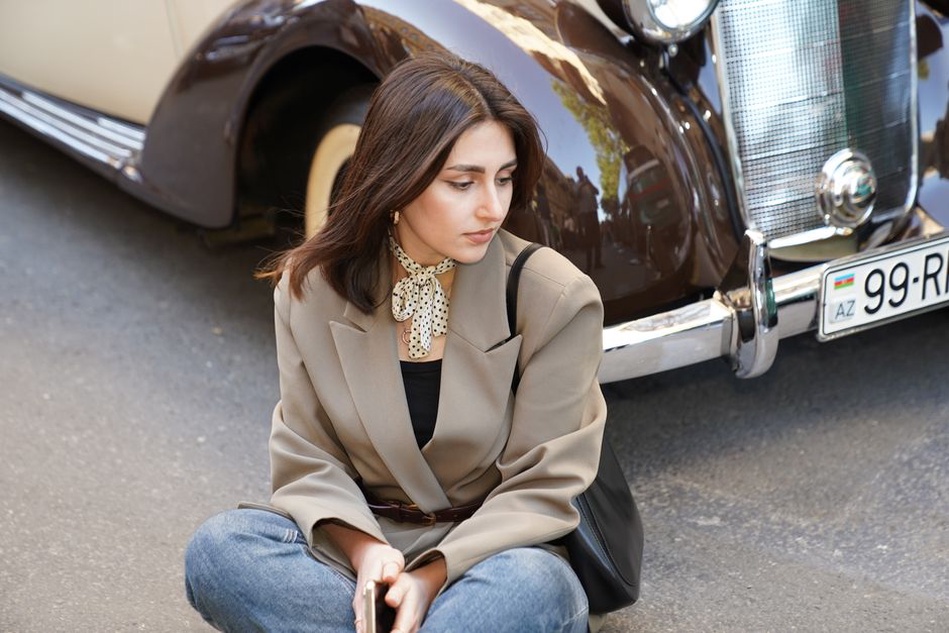
For a deliberate pairing, echo just one colour rather than matching everything. A blue detail in the print might pick up a shirt; a warm border could sit well against a brown coat. Or let the scarf be the only pattern. If its tails are visible, think about coat collars and shoulder bags: a knot above the nape usually sits more neatly than one caught beneath a heavy collar.
Putting one on without sacrificing the cloth
A good tie stays put through ordinary movement without being pulled tight. Arrange your hair first, then fold the scarf on a clean, smooth surface so its edges lie evenly. For a band, position the centre before bringing the ends together. You can then correct an uneven fit before making a simple, gently tightened knot. If it loosens, adjust the placement or add a discreet fastening underneath rather than tugging harder on delicate corners.
Sharp slides, exposed metal teeth and pins pushed through fragile fabric can snag a fine weave or leave permanent holes. If you want to wear a scarf with a vintage clip, fasten the clip to the hair separately instead of using it to grip the cloth. A soft elastic beneath a ponytail tie or a secure bun beneath a wrap lets the scarf remain decorative rather than doing the structural work.
British weather calls for a quick check. A lightweight square may lift in a gust, and rain can mark a fragile piece or one with unstable dye. Give an uncertain vintage scarf its first outing on a dry day, when it will not matter if you need to adjust it. For wet weather, choose a less vulnerable scarf rather than testing a cherished one in the rain.
Care that respects age and uncertainty
Loosen the knot before removing a scarf; don’t drag it over your hair. Let it air after wear, then keep it away from jewellery and accessories with exposed catches. Store it loosely folded or rolled in a clean, dry place. Change a long-held fold now and then so wear does not settle along a single crease.
Older textiles do not all respond to cleaning alike. Fibre, dye, finishes and past treatment may be unknown, particularly when a label is missing. Follow any surviving care instructions, but don’t assume that an unlabelled vintage square can be washed like a modern silk scarf. For staining, dye transfer or a fragile seam, ask a textile professional rather than trying vigorous rubbing or heat. A small mark hidden inside a fold may be better left alone than risked in cleaning.
Before wearing it again, lay the square flat in good light. Find its strongest edge and fold any weak patch away from the knot, then tie it once without strain. Check that the border shows as you want it to and that the knot sits clear of your collar.