
Storing the P264 Maison Archives Phoebe’s Scrunchy: A Collector’s Guide
When a Phoebe's scrunchy from the Maison Archives P264 collection arrives at your door, the first instinct is to wear it immediately. The silk feels substantial, the gathering sits perfectly, and the colour—often a deep claret or a muted sage—carries that unmistakable 1990s British nonchalance. But after the first outing, a question arises: how do you keep this piece from turning into a sad, stretched loop at the bottom of a drawer? The answer is more specific than you might think.
The P264 is not a standard scrunchie. It belongs to a lineage of Maison Archives pieces that prioritise structure and material integrity over mere trend. The fabric is usually a high-twist silk charmeuse or a tightly woven velvet, and the elastic inside is a custom flat-band that resists perishing longer than commercial equivalents. Treat it like a delicate garment, not a hair tie.
Why the P264 Demands Different Storage
Most scrunchies fail because of two enemies: tension and light. The P264's elastic band is robust, but constant stretching—especially when wrapped around a thick ponytail or bun—will fatigue the fibres unevenly. Worse, many collectors store scrunchies by looping them around a hook or a doorknob. That single point of pressure creates a permanent dent in the silk and stretches the band into an oval shape that never recovers.
Light is the second culprit. The dyes used in the P264 series are often natural or low-impact pigments that respond beautifully to the eye but fade quickly under direct sunlight. A scrunchie left on a windowsill for a week can lose its depth of colour, turning a rich plum into a washed-out mauve.
The Flat-Lay Method
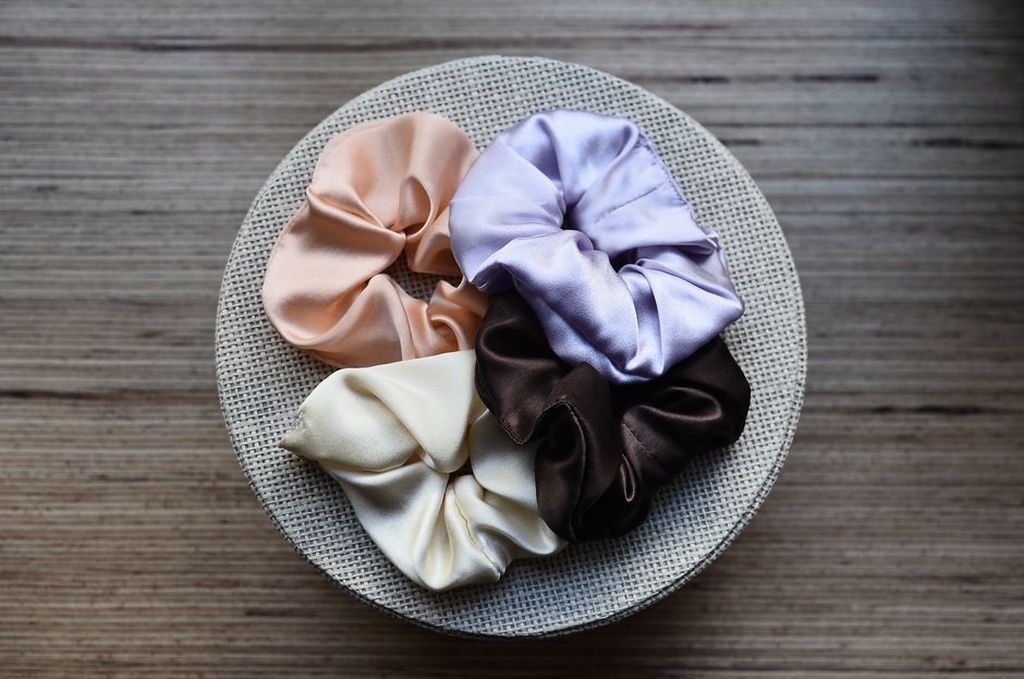
The simplest and most effective storage for the P264 is the flat-lay method. Place the scrunchie on a padded surface—a velvet-lined tray or a piece of acid-free felt works wonderfully—and arrange it in a loose circle, as if it were resting naturally on a table. Do not fold it, twist it, or stack anything on top of it. The goal is to keep the elastic in its relaxed state and the fabric free from creases.
If you have multiple P264 scrunchies in your collection, consider using a shallow divided box. Each scrunchie gets its own compartment, so they do not tangle or press against one another. Archival-quality cardboard boxes with pH-neutral liners are available from specialist suppliers and cost far less than replacing a faded or misshapen piece.
Rolling, Not Folding
For those who travel or need to pack scrunchies in a handbag, rolling is superior to folding. Lay the scrunchie flat, then roll it gently from one side into a tight cylinder. Secure it with a loose ribbon or place it inside a small silk pouch. This method distributes stress evenly across the elastic and prevents the fabric from developing sharp creases. Never use a rubber band or a plastic clip to hold the roll—those will leave permanent marks.
Climate and the P264 Fabric
Silk and velvet are hygroscopic materials—they absorb moisture from the air. In the British climate, that means a scrunchie stored in a damp drawer can develop water spots, mildew, or a musty odour. A silica gel packet placed inside the storage box helps, but the real solution is to keep the box in a room with stable humidity, ideally between 40% and 55%. Avoid attics, basements, and bathrooms.
Heat is equally problematic. Radiators, direct heaters, and even the boot of a car in summer can cause the elastic to become brittle. The P264's band is designed for moderate temperatures; prolonged exposure above 30°C will accelerate its breakdown.
Cleaning Before Storage
Never store a P264 scrunchie that has been worn without cleaning it first. Oils from the scalp, hairspray residue, and environmental pollutants will gradually discolour the fabric and attract dust mites. Hand-wash the scrunchie in cool water with a drop of gentle silk shampoo. Do not wring it—press the water out between two clean towels, then reshape it flat to dry away from direct heat. Once fully dry, it is ready for storage.
For velvet pieces, avoid water altogether. Instead, use a soft brush (a clean mascara wand works well) to lift dust from the pile, and spot-clean only if absolutely necessary. Velvet that gets wet often loses its nap and becomes patchy.
Displaying Without Damaging
Many collectors want to show off their P264 scrunchies—and rightly so, because they are beautiful objects. The safest way to display them is inside a glass-fronted shadow box with a fabric backing. Pin the scrunchie loosely to the backing using stainless steel entomology pins (the kind used for butterfly collections) placed through the elastic channel, not through the visible fabric. This keeps the piece visible without subjecting it to dust or curious hands.
Avoid acrylic risers or plastic mannequin heads that claim to hold scrunchies. The plastic can off-gas over time, and the friction of sliding the scrunchie on and off will wear the silk. If you must use a mannequin head for a photograph, line it with a muslin cap first.
Integrating the P264 into a Rotation
A scrunchie that sits untouched for years is not being enjoyed. The P264 is meant to be worn, but a thoughtful rotation extends its life. Rotate your scrunchies every few days, and after each wear, give the elastic a day to rest in its relaxed flat state. This simple habit doubles the lifespan of the band.
Pairing the P264 with a modern outfit—say, a crisp white shirt and tailored trousers—creates the kind of understated contrast that defines British vintage styling. The scrunchie becomes a quiet anchor, referencing the 1990s without shouting. For more ideas on combining classic accessories with contemporary wardrobes, you might enjoy our guide on How I Store My Vintage Hair Accessories with C14 Maison Archives, which covers similar principles for baskets and bags that complement the P264 aesthetic.
What to Avoid at All Costs
- Metal hair clips near the scrunchie: Sharp edges can snag the silk. Store them separately.
- Plastic containers: Many plastics emit volatile compounds that yellow silk over time. Use glass, wood, or archival cardboard.
- Hanging the scrunchie on a hook: As mentioned, this distorts the elastic permanently.
- Stacking heavy objects on top: A book or another accessory can crush the velvet pile and leave an imprint.
- Leaving it in direct sunlight for more than a few minutes: Even indirect light through a window can fade the dye over weeks.
A Final Practical Note on the Elastic
If you notice that the elastic in your P264 scrunchie has started to slacken, do not despair. Many Maison Archives pieces allow for elastic replacement. A skilled seamstress can open the seam at the gathering point, remove the old band, and insert a fresh one of the same width and tension. The original silk fabric remains intact. This is a sustainable approach that aligns with the principles of conscious fashion—repair rather than replace.
Keep a small notebook with the purchase date and any repairs made to each scrunchie. Over time, this record becomes invaluable for understanding how different colours and fabrics age. The P264 in claret may behave differently from the P264 in charcoal, and your notes will help you predict which pieces need more careful handling.
Storing the P264 Maison Archives Phoebe's scrunchy is not about sealing it away in a museum case. It is about respecting the craftsmanship that went into its construction while allowing it to live in your wardrobe. A flat surface, a stable climate, and a little patience are all it takes to keep that silk loop looking as effortless as the day it was made.