
The Business of Fashion: How Vintage Hair Accessories Shaped an Industry
When the British millinery trade peaked in the early 1950s, London's Wardour Street housed more than forty workshops dedicated solely to ornamental combs and hair slides. These were not side projects of dressmakers or jewellers—they were standalone businesses, each employing skilled workers who understood the precise curve of a tortoiseshell comb and the tensile strength of a steel spring clip. The business of fashion has always been, at its core, a business of small, specialised trades. Vintage hair accessories offer a remarkable lens through which to examine that history, because unlike garments, which wear out or are cut down, a well-made hair ornament survives decades with its story intact.
The Workshop Economy: Combs, Slides, and the British Trade
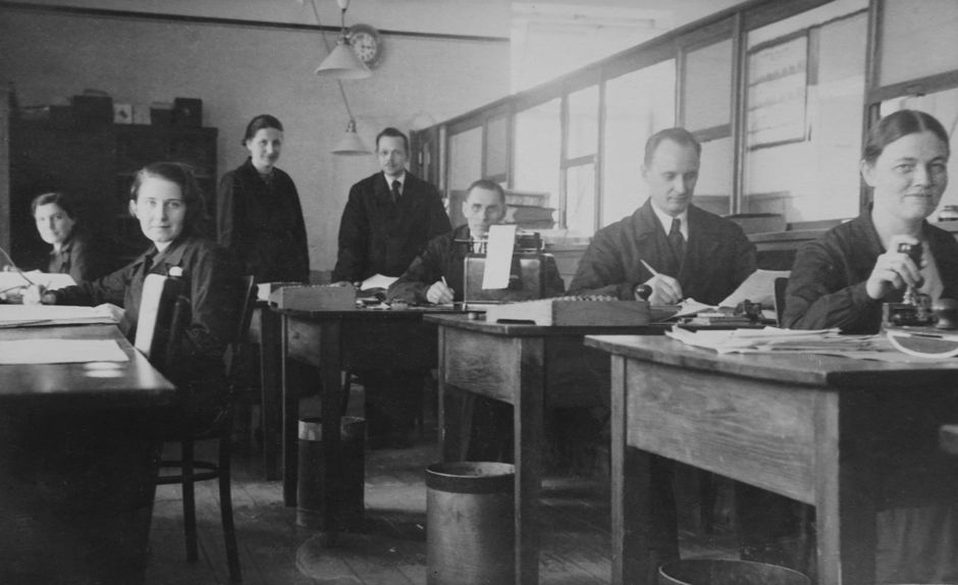
Between 1880 and 1910, the comb-making industry in England employed over ten thousand people, concentrated in manufacturing centres such as Manchester, Birmingham, and the East End of London. The raw materials—horn, tortoiseshell, ivory, and later celluloid—arrived at factories where they were steamed, pressed, cut, and polished in a sequence of steps that required both physical strength and fine motor control. A single horn comb might pass through eight pairs of hands before it reached a shop counter. The business model was one of volume and precision: a factory could produce hundreds of identical combs per day, yet each one had to be free of cracks and smooth to the touch, because a rough edge would snag hair and ruin the customer's trust.
This manufacturing discipline carried directly into the retail side of the trade. Department stores such as Harrods, Liberty, and Selfridges dedicated entire counters to hair accessories, often staffed by women who had trained in the millinery departments and could advise customers on which comb best suited a particular hairstyle. The relationship between maker and seller was close; buyers from the stores visited factories twice a year to place orders for the coming season, selecting colours and finishes that would complement the ready-to-wear collections being shown on the runways of Paris and London. For a small manufacturer, a single large order from a department store could secure the business for six months.
The Rise of the Hair Accessory Brand
The concept of a brand in hair accessories is relatively recent. In the Victorian and Edwardian eras, most combs and slides were sold unbranded, identified only by the material and the retailer's name. The shift began in the 1920s, when French houses such as Maison Gripoix and Lalique began producing signed glass and metal hair ornaments that were sold as luxury goods. In Britain, the firm of S. J. Phillips & Co. started stamping its silver hairpins with a maker's mark, a practice that quickly spread to other high-end manufacturers. By the 1930s, a woman who bought a comb stamped with a recognised name was not just buying an accessory—she was buying a guarantee of quality and a piece of the brand's reputation.
This branding revolution had a practical consequence: it encouraged collectors to hold onto pieces, knowing that a signed item could be resold or passed down with its provenance intact. Today, when a vintage hair accessory carries a maker's stamp, it often commands a higher price at auction, and the name itself tells a story about the business conditions of its era. For example, the firm of G. H. French & Co., based in Birmingham, produced metal hair slides from the 1890s through the 1960s, and its pieces are now prized for their consistent craftsmanship. Understanding these brand histories helps the modern collector distinguish between a factory-made piece and a truly artisanal one.
Materials and Margins: The Economics of Choice
The business of fashion is also the business of material sourcing, and hair accessories reveal this dynamic with unusual clarity. Tortoiseshell, sourced from the hawksbill turtle, was the premier material for luxury combs until international trade restrictions began in the 1970s. A single high-quality tortoiseshell comb could retail for the equivalent of several hundred pounds today, and makers guarded their supplies jealously. Celluloid, invented in the 1860s as a substitute for ivory and tortoiseshell, was cheaper to produce and could be moulded into intricate shapes that natural materials could not achieve. The business decision to use celluloid was not merely a cost-saving measure—it opened up new design possibilities, including translucent pastel colours and elaborate floral motifs that became signatures of the 1920s and 1930s.
Bakelite, introduced in 1907, offered yet another economic path. It was durable, heat-resistant, and could be produced in bold colours that appealed to the Art Deco sensibility. British manufacturers such as the Bakelite Corporation (later part of Union Carbide) supplied raw material to comb makers who then carved, polished, and assembled the finished products. The profit margins on Bakelite accessories were higher than on celluloid because the material was easier to work with and required less finishing time. Yet Bakelite pieces from the 1930s are now among the most sought-after by collectors, precisely because the material allowed for such distinctive designs.
Retail Evolution: From Counter to Catalogue
The business of selling hair accessories underwent a quiet revolution in the post-war decades. Until the 1950s, most transactions happened in person, with the customer touching the comb, testing its weight, and checking the fit against her hair. The rise of mail-order catalogues changed that. Companies such as Kay's, Littlewoods, and Freemans began including hair accessories in their seasonal books, offering them alongside clothing and home goods. The catalogue photograph became a crucial selling tool, and manufacturers learned to design accessories that photographed well—pieces with high contrast, visible texture, and a clear silhouette. This shift also democratised access: a woman in rural Yorkshire could order the same comb that a London society figure wore, provided she had the catalogue and a postal order.
This period also saw the emergence of the hair accessory as a seasonal fashion item rather than a durable good. Catalogues offered new colours and shapes each spring and autumn, encouraging repeat purchases. The business model moved from "buy one comb that lasts a lifetime" to "buy a new comb each season to match your wardrobe." This is the foundation of the modern fashion accessory industry, and vintage enthusiasts today benefit from the abundance of pieces produced during those decades—there are simply more 1950s and 1960s accessories in circulation than earlier ones.
The Collector as Business Historian
For the vintage hair accessory collector, understanding the business context transforms the act of acquisition. A comb is not merely an object; it is a document of manufacturing decisions, retail strategies, and consumer behaviour. When you hold a late-Victorian horn comb, you are holding evidence of a trade that employed thousands and supplied a market that stretched from London to the colonies. When you find a 1950s plastic slide with a patent number stamped on the back, you can look up that patent and learn exactly when and where the design was registered, giving you a precise date for your piece.
The business of fashion, when examined through hair accessories, becomes a story of adaptation. Manufacturers responded to material shortages, changing tastes, and new retail channels with remarkable flexibility. They switched from horn to celluloid, from tortoiseshell to Bakelite, from counter sales to catalogue orders, always finding a way to keep the trade alive. That same adaptability now informs how we care for and wear these pieces today. A vintage comb that survived seventy years of use and storage is a testament to the sound business practices that produced it—and a reminder that quality, in fashion, is never an accident.
Those who collect vintage hair accessories often find themselves drawn into this deeper narrative. The September 2016 Archive: A Foundation for Vintage Hair Accessory Collecting offers a starting point for understanding how specific pieces fit into the broader timeline of British manufacturing. Similarly, the What the August 2016 Archives Reveal About Vintage Hair Accessories provides practical insight into identifying the hallmarks of different production eras. Each archive entry adds another layer to the story of an industry that, though small in scale, shaped the way British women adorned themselves for more than a century.
Practical Advice for the Vintage Buyer
When you shop for vintage hair accessories today—at fairs, online marketplaces, or estate sales—you are participating in the tail end of that long business history. A few practical considerations can help you make informed choices:
- Check for maker's marks. A stamped name or patent number adds provenance and often indicates higher original quality. Use a jeweller's loupe or a magnifying glass to examine the back of metal slides and the base of combs.
- Assess the material honestly. Horn and tortoiseshell feel warm to the touch and have a subtle grain. Celluloid may smell faintly of camphor when rubbed. Bakelite is heavier than plastic and will not float in salt water. Knowing the material helps you date the piece and understand its care requirements.
- Examine the construction. A well-made vintage comb has smooth, rounded teeth with no sharp edges. The spring on a metal slide should close firmly and not wobble. Repairs are acceptable if done professionally, but amateur glue jobs or bent prongs will shorten the accessory's lifespan.
- Consider the original retail price. If you find a 1920s celluloid comb that was sold for a few pence, it was likely a mass-market item. If it came from a high-end jeweller, it was made with greater care. Auction records and old catalogues can help you gauge this, but even a general sense of the brand's reputation is useful.
None of this requires a formal education in fashion history. It simply asks that you look at each piece with curiosity about the hands that made it and the shop that sold it. That curiosity is the thread that connects the modern wearer to the Victorian factory worker, the 1930s department store buyer, and the 1950s catalogue customer. The business of fashion, after all, is ultimately about people—and vintage hair accessories carry their stories with extraordinary fidelity.