
The Star Motif in British Hair Accessories: A Collector’s Guide
In a small London antiques shop, I once turned over a tarnished silver barrette and found a tiny five-pointed star stamped into the metal, its points softened by decades of wear. That modest piece – likely from the 1930s – was neither precious nor rare, but it carried a quiet story of how the star motif became a recurring emblem in British hair accessories. Unlike the seasonal snowflake or the naturalistic snake, the star belongs to no single era. It appears in Art Deco geometries, in post-war Hollywood glamour, and again in the 1990s minimalism. Understanding its journey through colours and materials helps you recognise the authentic pieces and wear them with confidence today.
The Star in British Hair Fashion: A Brief Timeline
The star first gained prominence in the 1920s, when Art Deco designers borrowed celestial motifs from Cubism and Egyptian revival. Small star-shaped hair clips in platinum-toned metal or white gold were worn low on the nape, often paired with finger-waved bob cuts. By the 1950s, the star had grown bolder: rhinestone-studded star barrettes appeared in Hollywood-inspired styles, while British manufacturers like Deanna and Marvella produced enamel stars in red, blue, and green. The 1970s saw a return to naturalistic forms, with wooden and resin stars in earthy browns and amber. Finally, the 1990s brought minimalist silver stars on claw clips, a look that has recently cycled back into high-street fashion.

Materials and Techniques Behind the Motif
British makers prized durability and precision. Common materials include:
- Celluloid and early plastics – used from the 1920s to 1950s for lightweight, moulded stars in tortoiseshell, ivory, and pastel shades. Look for the distinctive marbled texture; celluloid can become brittle, so handle gently.
- Metal stamping – silver, silver plate, or brass stars were cut and then hand-finished. The back often bears a maker's mark or patent number, which helps date the piece.
- Enamel – cloisonné or champlevé techniques added colour to metal stars. British brands such as Sphinx and Finesse used vibrant enamels in royal blue, cherry red, and emerald green.
- Rhinestones and paste – for evening wear, stars were set with clear or coloured glass stones. The best examples have closed-back settings (pre-1950s) or foil-backed stones that catch the light.
When examining a vintage star, run your finger over the edges. Sharp, unfinished metal suggests a later or lower-quality piece; well-rounded edges indicate careful manufacturing.
Colours That Define the Star
Colour choices in star hair accessories often reflect the broader fashion palette of their decade. Here are the most collectible colour families:
| Colour Group | Period | Typical Materials | Styling Note |
|---|---|---|---|
| Gold and silver | 1920s–1930s | Brass, silver plate, gilt metal | Pairs with dark hair and evening wear; a single gold star at the temple echoes Art Deco geometry. |
| Pastel enamels (pink, lavender, mint) | 1950s–1960s | Enamel on base metal | Ideal for spring outfits; try a lavender star clip with a cream cashmere jumper. |
| Bold primaries (red, blue, yellow) | 1960s–1970s | Enamel or plastic | Channel Mod energy: a red star barrette on a side part adds instant retro pop. |
| Natural tones (amber, tortoiseshell, wood) | 1970s–1980s | Resin, horn, wood | Works with bohemian layers; a resin star on a low bun feels understated. |
| White and clear | 1990s | Silver-tone metal, lucite | Minimalist; a clear star claw clip suits a sleek ponytail. |
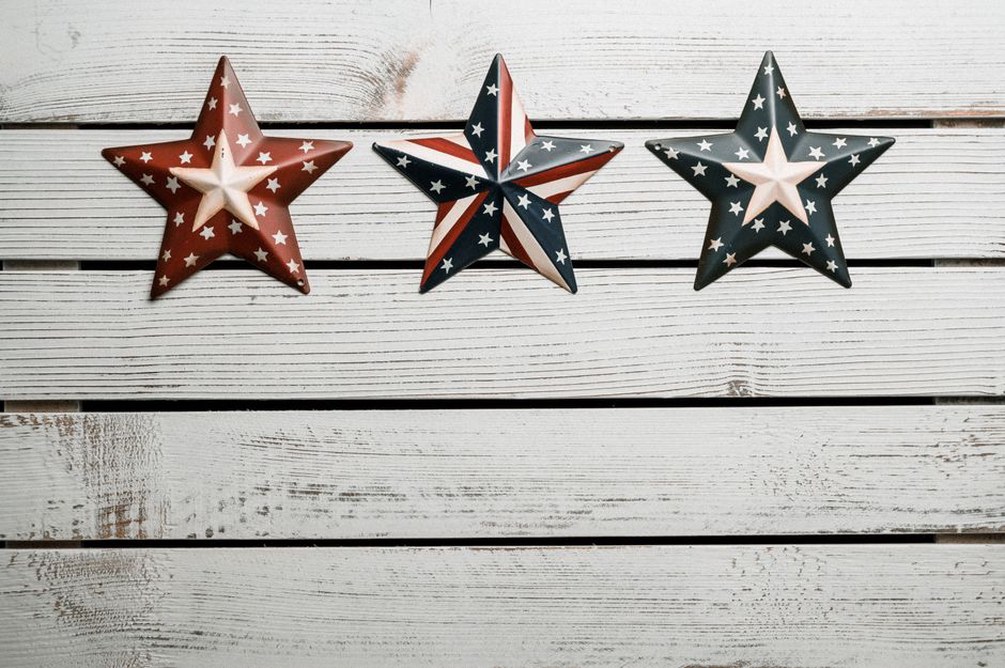
Cult Star Silhouettes of the 20th Century
Beyond the simple five-pointed star, British designers experimented with variations:
- The shooting star – an elongated star with a tail, often set with rhinestones. Popular in the 1950s for formal occasions.
- The star cluster – three or four small stars connected by a thin metal frame. These were often used as side combs in the 1930s.
- The star comb – a decorative comb with a star-shaped top. Celluloid or tortoiseshell versions are highly collectible.
- The star headband – a thin metal or plastic band with a star motif at the centre front. Look for examples from the 1920s with delicate filigree.
Each silhouette responds differently to hair texture. A star comb works best in thick, mid-length hair; a small star clip can hold a fine strand in place without pulling.
Finding and Choosing Vintage Star Pieces
British charity shops, car boot sales, and specialist vintage fairs are the best hunting grounds. When evaluating a piece:
- Check the spring mechanism on barrettes – it should snap firmly without sticking.
- Hold the star up to the light: genuine rhinestones will sparkle evenly; plastic imitations look dull.
- Look for hallmarks or stamps. Even small makers often stamped their initials or a patent number inside the clip.
- Beware of modern reproductions that mimic vintage styles. A genuine 1950s star barrette will have a slightly asymmetrical hand-applied enamel finish, whereas a new piece looks perfectly uniform.
For a champagne-toned accessory that complements star pieces, the Lottie Hair Claw in Champagne offers a warm neutral that lets a coloured star stand out. Similarly, the Millie Green Collection, with its hand-painted floral motifs, shares the same attention to colour history that makes vintage stars so appealing.
Wearing Vintage Stars Today
The key to integrating a vintage star into a modern wardrobe is contrast. A single gold star on a low side bun reads as sophisticated, not costume. A cluster of small enamel stars pinned along a French twist adds a playful touch without overwhelming. For evening, try a rhinestone star barrette at the temple with a simple black dress – the sparkle becomes the focal point. Avoid wearing multiple star accessories at once; let one piece speak.
If your hair is short, a star comb tucked behind the ear works beautifully. For longer hair, a star-shaped claw clip can secure a half-up style. The star motif pairs especially well with textures like velvet, wool, and silk, because the hard metal or enamel creates a pleasing contrast.
Caring for Your Vintage Star Accessories
Metal stars tarnish over time. To clean silver or brass, use a soft cloth and a gentle metal polish – never immerse enamel pieces in liquid. Store star clips separately in a lined box to prevent scratching. If a rhinestone falls out, a jeweller can replace it with a similar stone; keep the original for matching. For plastic or celluloid stars, avoid heat and direct sunlight, which can cause warping or discolouration. A light wipe with a dry microfiber cloth after each wear removes hair oils and extends the piece's life.
One final detail worth seeking: a small star barrette with a hand-painted enamel centre in a faded shade of rose. I found mine at a stall in Portobello Road, its paint chipped at the tip, the spring still strong. It is not perfect, but that imperfection tells the truth of its age – and that, in the world of vintage accessories, is the most honest colour of all.