
Monterey 67: The Hair Accessories That Defined a Summer of Love
On 16 June 1967, the Monterey Pop Festival opened its gates in California. Over three days, the world watched as Janis Joplin, Jimi Hendrix, Otis Redding and a hundred other artists turned a small seaside town into the epicentre of a cultural earthquake. But while the music made headlines, the audience made history in another way: with flowers in their hair. The festival became a living catalogue of the hair accessories that would define the late 1960s — and continue to inspire vintage collectors and conscious fashion lovers in Britain today.
Monterey was not the first festival to see flower crowns, but it was the first to broadcast them globally. Photographs from the weekend show young women (and men) wearing daisy chains, silk headscarves twisted into bands, and hand-beaded headbands that sat low across the forehead. These were not merely decorative; they were statements of a new way of living — anti‑consumerist, handmade, and deeply personal. For the British audience watching from across the Atlantic, the images were a call to action. Within months, London’s Chelsea boutiques were stocking their own versions of the Monterey look, often crafted from local materials rather than imported Californian beads.
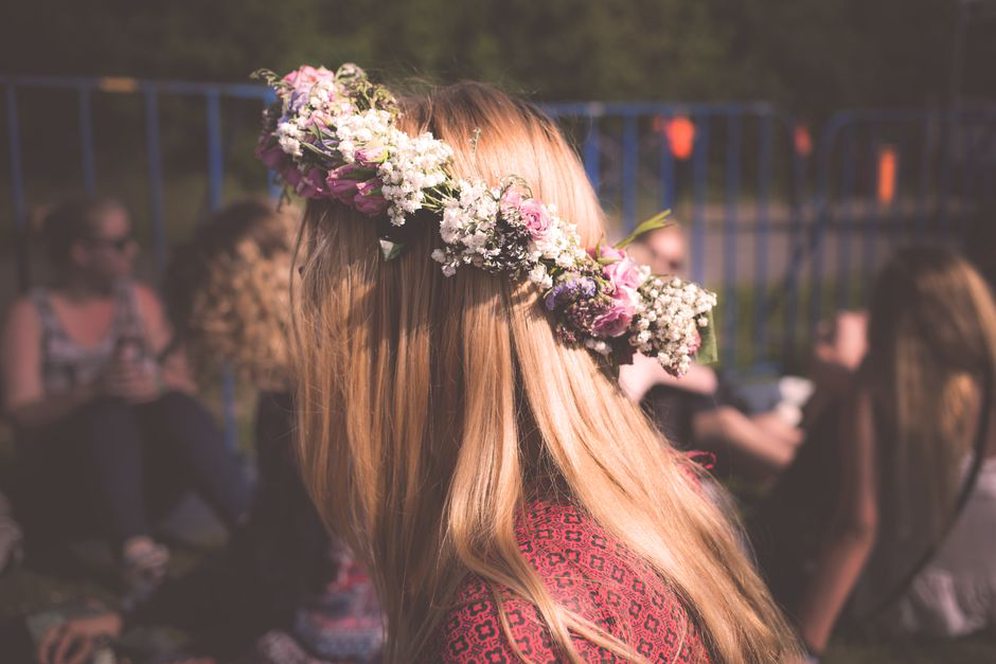
The Key Hair Accessories of Monterey ’67
If you are building a vintage hair accessory collection with a 1960s bohemian focus, these are the pieces that appeared again and again at Monterey and in its immediate aftermath:
- Flower crowns and daisy chains. Fresh flowers were the original choice, but dried and fabric versions quickly followed. Look for silk petals stitched onto a wire base — a technique that allowed the crown to be worn for days without wilting.
- Beaded headbands. Often made with wooden or glass beads strung on elastic or leather. The beads were sometimes spaced with small metal rings, creating a gentle rattle when the wearer moved.
- Silk scarves as head wraps. A simple square of silk folded into a band and tied at the nape of the neck. The scarf could also be worn as a full wrap, covering the hair entirely — a practical choice for the dusty festival grounds.
- Feather clips and combs. Pheasant and peacock feathers were popular, often tucked into a metal hair comb or clipped directly into long, loose hair.
- Leather thongs with pendants. Thin strips of leather tied around the forehead, sometimes with a small charm or stone hanging at the centre.
These accessories were rarely mass‑produced. Most were handmade by the wearer or bought from small stalls run by local artisans. That artisanal quality is what makes surviving examples so desirable today. A genuine 1967 beaded headband might show uneven bead sizes, a slightly crooked wire frame, or hand‑painted wooden beads — imperfections that tell a story of real hands at work.
Materials and Techniques: What to Look For
When you are hunting for Monterey‑era hair accessories in British vintage markets or online, knowing the typical materials will help you date a piece accurately.
Beads: Wooden beads were often left unfinished or stained with natural dyes. Glass beads came from Czechoslovakia or Italy; they are heavier than modern plastic beads and have a distinct, slightly irregular shape when blown by hand. Plastic beads did exist, but they were usually a solid colour with a matte finish — not the shiny, uniform beads of later decades.
Metal components: Headbands used thin, pliable wire that could be bent to fit the head. Clips and combs were made of stamped metal — brass or steel — and often had a tarnished patina by now. If a piece has a modern spring‑loaded clip, it is almost certainly a reproduction.
Fabric: Silk scarves from 1967 were often printed with paisley or floral patterns using screen‑printing techniques. The colours may be slightly faded, but the silk itself should still feel supple — not brittle. Cotton scarves were also common, but they were usually plain or tie‑dyed.
Feathers: Real feathers were the norm. Look for the quill base and the natural variation in colour. Synthetic feathers (often stiff and uniform) did not become widespread until the 1970s.
One technique that stands out from the period is the use of macramé knots to secure beads or pendants onto leather thongs. This was a skill that many festival‑goers learned from the same counter‑culture magazines that taught macramé plant hangers. A well‑preserved macramé headband is a rare find and highly prized.
How Monterey ’67 Hairstyles Shaped the Silhouettes
The hair accessories of Monterey were inseparable from the hairstyles they adorned. Long, centre‑parted hair — worn straight or with a slight wave — was the canvas. The accessories were not meant to hold the hair in place so much as to decorate it. A flower crown sat like a halo; a beaded headband rested across the forehead, leaving the rest of the hair free to fall.
This silhouette — long hair with a decorative band or crown — became the defining look of the late 1960s and early 1970s. In Britain, it was adopted by models such as Twiggy and Jean Shrimpton, though they often wore simpler, more refined versions for magazine shoots. The British interpretation tended to use smaller flowers and narrower bands, reflecting a more restrained aesthetic than the Californian original.
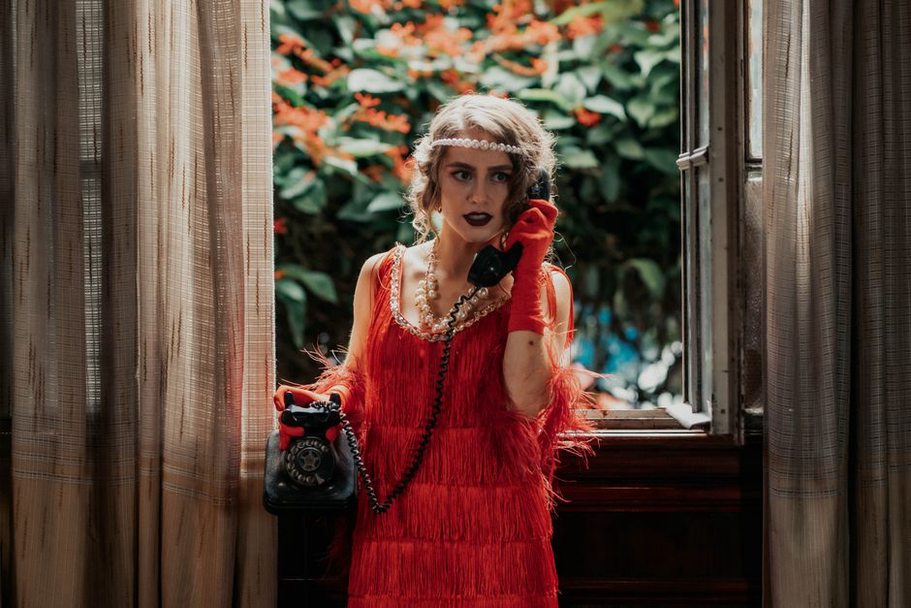
For those with shorter hair, a silk scarf tied as a head wrap was the go‑to style. It could be worn with a small bow at the front or twisted into a turban. The scarf also served a practical purpose: keeping dust and sun off the hair during long outdoor days.
Pairing Monterey‑Era Accessories with a Modern Wardrobe
Vintage hair accessories from 1967 are not museum pieces — they can be worn today with thought and care. The key is to let the accessory be the focal point and keep the rest of your outfit simple. Here are three ways to bring a Monterey‑era piece into your daily style:
- A beaded headband with a white linen dress. The headband adds texture and a pop of colour without competing with the clean lines of the dress. Choose a headband with wooden or earthy‑toned beads for a warm, organic feel.
- A silk scarf as a head wrap with a tailored blazer. This creates an unexpected contrast between bohemian and structured. A paisley scarf can soften the sharp shoulders of a 1960s‑inspired blazer. For a deeper dive into how to style vintage accessories with modern pieces, you might enjoy our article on The Rose Crown Headband: A Vintage Accessory for Modern Style.
- A feather comb tucked into a low bun. Perfect for evenings. The feather adds movement and a touch of drama while keeping the hairstyle neat.
When mixing eras, aim for one vintage piece per outfit. A full head‑to‑toe 1967 look can feel costume‑like; a single accessory, on the other hand, reads as intentional and personal.
Care and Preservation of Monterey‑Era Hair Accessories
Because these pieces are often handmade and over fifty years old, they require gentle handling. Follow these practical guidelines to keep them in good condition:
- Beaded headbands: Store flat in a fabric‑lined box. Avoid hanging them, as the elastic or thread can stretch over time. If the elastic has lost its snap, replace it with a similar‑weight elastic — do not use modern elastic that is too tight, as it may break the beads.
- Flower crowns: If the flowers are fabric, dust them with a soft brush. Never soak them. If the crown has a wire frame, check for rust spots and treat them with a gentle metal polish (test on an inconspicuous area first).
- Silk scarves: Hand wash in cool water with a mild detergent designed for silk. Do not wring; roll in a towel to remove excess water and hang to dry away from direct sunlight.
- Feather clips: Keep away from moisture and heat. A light spritz of feather‑safe conditioner (available from millinery suppliers) can restore suppleness, but only if the quill is intact.
Vintage hair accessories are not indestructible, but with proper care they can be worn for many more years. The goal is not to seal them in a glass case, but to honour their history by using them — carefully.
Why Monterey ’67 Still Matters for British Vintage Enthusiasts
The festival was a turning point not just for music but for the way we think about personal style. It proved that what you wear on your head — a crown of flowers, a beaded band, a silk scarf — could be a form of self‑expression as powerful as any lyric. For British collectors, the Monterey look offers a direct link to a moment when fashion was being democratised, when handmade objects became more valuable than factory‑made ones, and when the line between accessory and art blurred.
Today, as we search for vintage pieces that are both beautiful and meaningful, the hair accessories of Monterey ’67 remind us that true style is never mass‑produced. It is found in the details: the uneven bead, the hand‑stitched flower, the faded paisley print. And if you are lucky enough to find one, you are not just buying an accessory — you are keeping a piece of that summer alive.