
Products Millie Pink: A Vintage Hair Accessory Guide for British Collectors
If you have spent any time browsing vintage hair accessory collections in Britain, you will have encountered the name Millie Pink. It appears on satin pouches, inside metal hair clips, and stamped onto the back of tortoiseshell-effect combs. The products associated with this name are not a single brand in the modern sense, but a constellation of small-batch accessories produced between the late 1940s and the early 1970s, mostly by independent makers in London and the Home Counties. Understanding what "Millie Pink" actually refers to, and how to identify genuine pieces, is essential for any serious collector.
The name itself is a point of affectionate confusion. Millie Pink was not a woman, nor a company director. Rather, it was a trade nickname used by a cluster of haberdashery workshops in the East End, where a woman named Millicent Pink — a forewoman known for her exacting standards — oversaw the finishing of decorative hair ornaments. Her initials appear on dozens of designs, but the products were sold under various retail labels. Over time, the term "Millie Pink" became a collector's shorthand for a specific aesthetic: softly rounded shapes, pastel tones, and a preference for hand-wired embellishments over mass-produced plastic.
This guide covers the core product categories you will encounter under the Millie Pink umbrella, the materials and techniques that define them, and practical advice for integrating these pieces into a modern wardrobe. Whether you are hunting for your first Millie Pink clip or refining a curated collection, the details below will help you recognise quality and make informed choices.
The Core Products of the Millie Pink Catalogue
Millie Pink products fall into three main categories: spring-loaded barrettes, ornamental combs, and fabric-covered bands. Each type served a different purpose in the mid-century British woman's dressing table, and each has its own hallmarks of authenticity.
Spring-Loaded Barrettes
These are the most frequently found Millie Pink pieces. They measure between 5 and 8 centimetres in length and feature a metal spring mechanism that clamps onto a section of hair. The distinguishing feature is the top plate: Millie Pink barrettes use a thin layer of celluloid or early acrylic, often in salmon pink, powder blue, or cream, over a brass or nickel-silver base. The edges are hand-painted with a fine line of matching colour, a detail that machine-made alternatives lack.
To test authenticity, hold the barrette up to a strong light. Genuine Millie Pink celluloid shows a faint, uneven swirl pattern — the result of hand-mixing pigments. Later reproductions have perfectly uniform colour. The spring should feel firm but not stiff; if it resists opening, the piece has likely corroded internally and will not hold hair securely.
One particularly sought-after variant is the leaf-shaped barrette, which echoes the organic forms popular in 1950s British design. For a deeper look at that specific silhouette, our guide to The Salmon Pink Leaf Hair Clip: A Vintage British Accessory Guide covers the colour variations and how to spot a genuine leaf clip from the Millie Pink period.
Ornamental Combs
Millie Pink combs were designed to be worn as decorative accents, not functional hair holders. They are typically small — 4 to 6 centimetres wide — with five to seven teeth. The top curve is adorned with hand-wired beads, tiny fabric flowers, or small metal charms. The base material is always cellulose acetate, which develops a warm amber tone as it ages. A comb that remains uniformly black or bright white is almost certainly a later reproduction.
These combs were originally sold in sets of two or three, intended to be placed on either side of a chignon or at the crown of an updo. Single combs are common on the resale market, but a matched set with original stitching on the backing card commands a premium. Look for the words "Millie Pink" handwritten in pencil on the card — this is the mark of the original workshop, not a retailer's stamp.
Fabric-Covered Bands
Less common but highly prized, the fabric-covered headbands from Millie Pink workshops use a thin wire frame wrapped in silk or velvet. The colour palette is restrained: dusty rose, sage green, and charcoal grey appear most often. The ends are finished with small metal loops that allow the band to be adjusted by threading a ribbon through them. This design detail is unique to Millie Pink and is not found on mass-produced bands from the same era.
When inspecting a fabric-covered band, check the underside. The original Millie Pink bands have a hand-stitched seam running the entire length, with tiny, even stitches. Machine stitching or glue marks indicate a later copy or a repair that may have altered the piece's structure.
Materials and Techniques That Define Authenticity
Millie Pink products were made during a transitional period in accessory manufacturing. The workshops combined traditional hand-finishing methods with newly available synthetic materials, creating pieces that feel both refined and durable. Understanding these materials helps you evaluate condition and longevity.
Celluloid and Early Acrylics
Celluloid was the primary material for Millie Pink barrettes and combs until the mid-1950s. It is lightweight, slightly flexible, and can be polished to a soft sheen. Its main vulnerability is heat: celluloid becomes brittle when exposed to direct sunlight for long periods, and it can develop a faint camphor smell if stored in airtight containers. If you find a piece that smells strongly of mothballs or vinegar, the material is degrading and should be aired out in a cool, dry place away from direct light before being worn.
By the early 1960s, many Millie Pink products shifted to acrylic, which is more stable and less prone to yellowing. Acrylic pieces feel slightly heavier in the hand and have a clearer, glossier surface. The transition was gradual, so you will find hybrid pieces — celluloid bases with acrylic top plates — from the late 1950s. These hybrids are particularly collectible because they show the workshop's experimental approach.
Hand-Wired Embellishments
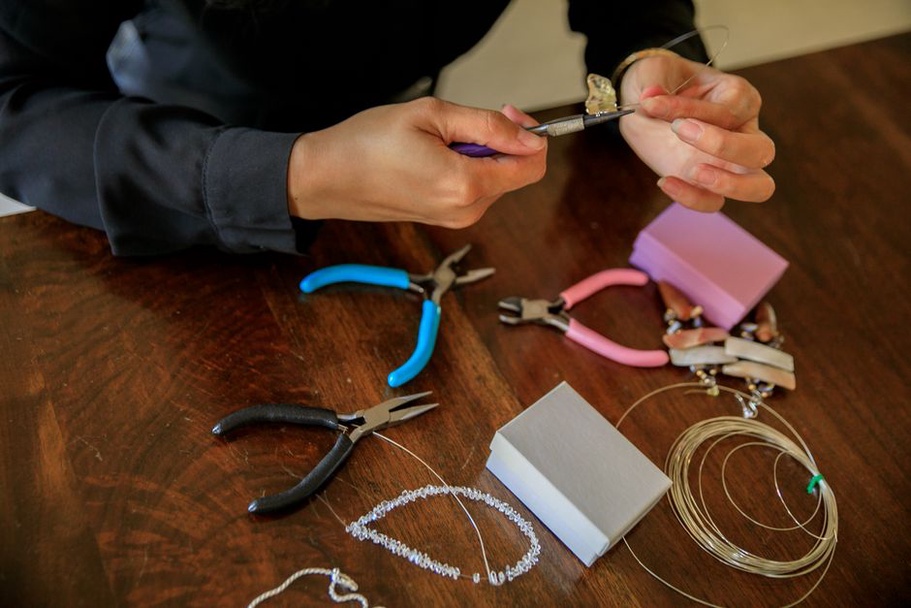
The defining technique of Millie Pink products is hand-wiring. Small beads, charms, and flowers are attached to the base piece using fine copper wire, which is then twisted and tucked into the underside. This method allows for intricate, three-dimensional designs that machine assembly cannot replicate. On a genuine Millie Pink piece, the wire ends are never visible from the front; they are always hidden beneath the embellishment or folded into the clip's hinge.
If you see glue or visible knots, the piece may have been repaired with modern materials, which can reduce its value. A skilled restorer can re-wire a loose charm using the original technique, but this requires access to period-appropriate wire and a steady hand.
Styling Millie Pink with a Contemporary Wardrobe
Vintage hair accessories can feel like museum pieces if they are worn with period costumes. The secret to making Millie Pink products work today is contrast. A salmon pink barrette clipped into a sleek, low ponytail adds a soft colour accent without looking theatrical. A pair of ornamental combs placed at the nape of the neck can elevate a simple cashmere jumper and wide-leg trousers into something quietly polished.
Fabric-covered bands work particularly well with modern minimalism. Choose a dusty rose band to wear with a cream linen dress in summer, or a charcoal grey band to add texture to a black wool coat in winter. The key is to let the accessory be the only decorative element — avoid competing patterns or heavy jewellery.
For readers who enjoy the 1970s maxi dress silhouette, Millie Pink bands and combs complement the flowing lines of that era beautifully. Our post on The 70s Maxi Dress 2: A Vintage Hair Accessory Revival explores how to pair specific accessories with revival styles for a cohesive vintage-inspired look.
Care and Storage for Longevity
Millie Pink products have survived for decades because their original owners stored them correctly. You can extend their life by following the same principles.
- Keep them dry. Moisture is the enemy of celluloid and metal springs. Never wear Millie Pink pieces in heavy rain or during exercise. If they get damp, pat them dry immediately with a soft cloth and leave them to air out for 24 hours before storing.
- Avoid airtight containers. Celluloid needs to breathe. Store barrettes and combs in a fabric-lined box or a drawer with a loose lid. Do not seal them in plastic bags or airtight tins, as trapped humidity can cause the material to cloud.
- Separate metal from fabric. If you store fabric-covered bands next to metal barrettes, the metal springs can snag the silk or velvet. Wrap each band in acid-free tissue paper, or use individual compartments in a divided box.
- Polish sparingly. A soft, dry cloth is sufficient for most Millie Pink pieces. Do not use commercial polish or cleaning solutions, as they can strip the hand-painted edges or damage the cellulose acetate. For stubborn dirt, a barely damp cotton bud can be used on the metal parts only.
Building a Millie Pink Collection
Starting a collection does not require a large budget. Single barrettes in common colours can still be found at British flea markets and vintage fairs for under £15. The key is to buy the best condition you can afford — chips, cracks, and missing embellishments are difficult to repair without specialist skills. A pristine common piece holds its value better than a damaged rare piece.
When you are ready to move beyond single pieces, look for matched sets. The original workshop often produced barrettes and combs in coordinated colour families, and finding two or three pieces that were clearly made together is a rewarding hunt. The backing cards, if present, are a bonus: they confirm the provenance and often include the original retailer's name, adding historical context to your collection.
Finally, wear your Millie Pink pieces. These accessories were designed to be seen, not locked away. A small barrette on a Tuesday morning, a comb at a dinner party, a velvet band on a Sunday walk — each use adds a layer of personal history to an object that already carries decades of British craft tradition. That is the quiet pleasure of collecting Millie Pink: you are not just owning a piece of the past, you are continuing its story.