
How to Wear Hair Accessories With a 1920s Cloche
A cloche should sit close to the head without a row of visible grips holding it down. That fit dictates what happens beneath the brim. A smooth crown leaves little room for a high bun, a substantial comb or a large bow, so the most useful hair accessory often does its work quietly at the nape. The hat supplies the ornament.
Cloche means “bell” in French, a neat description of the hat’s rounded shape. It became popular through the 1920s alongside shorter hairstyles, but wearing one did not require a bob. Longer hair could be tucked beneath the crown or gathered low at the back. Think about that relationship between hat and hair before treating the cloche as something to put over a finished hairstyle.
How the cloche changed the arrangement of hair
Cloche shapes varied across the decade. Some sat snugly over the forehead; others had a shorter brim on one side or a turned-back edge that revealed more of the face. Soft felt allowed a little more variation beneath the crown than firm straw. Neither was made to perch above a tall Edwardian-style arrangement.
In Britain, as elsewhere, bobbed and waved hair appeared alongside the new hat shape in fashion imagery. Those pictures can make a haircut seem compulsory, but period wear was less uniform. Age, preference, occasion and the cost or commitment of cutting one’s hair all played a part. Longer hair could look bobbed from the front while its length was gathered behind or tucked away.
That gives you more than one route to the look. A straight fringe and cropped ends are an option, not a requirement. A low roll, a compact coil at the nape or hair gathered into a discreet net can let a cloche sit at its intended angle. The aim is not to flatten every strand; it is to avoid a ridge that lifts the crown or distorts the brim.

Which accessories belonged beneath the brim?
Hairpins: the unseen structure
For longer hair, plain pins are a practical starting point. They can anchor a low coil or tuck short lengths beneath a roll without competing with the hat’s trim. Place them where the hat presses least, usually towards the back rather than along the forehead. Check that no ends protrude through an open weave or catch the lining. Fine hair or a very smooth style may need several anchoring points, but bulky hardware can make a close-fitting crown uncomfortable.
A wave visible at the cheek or temple may be all the hairstyle needs to suggest the 1920s. Small grips can hold it while you arrange it without remaining conspicuous afterwards. Period photographs show carefully dressed waves, though they seldom reveal precisely how each was secured; they show the result, not a set of instructions.
Nets for longer hair
A fine hairnet can contain gathered hair without the bulk of a large clip. Under a cloche, it is particularly useful at the back, where loose ends might otherwise escape below the brim. If the net is meant to disappear, choose one close to the hair colour and keep its edge away from the exposed forehead. A decorative net that remains visible is a separate feature, and should be judged alongside the hat’s trim.
For a present-day version, a low bun held with pins and covered by a fine net is often easier than trying to pack long hair into a shallow crown. Try the hat on before leaving home. If the brim lifts at the back, move the bun lower rather than pulling the hat down harder.
Combs, slides and ribbons
A small comb or slide can secure hair where the brim leaves space, particularly at the nape. Its teeth and back need to lie flat enough not to press against the head. An ornate comb above the ear may look lovely without the hat, then vanish beneath it—or create a lump. Save it for when the hat comes off, or set it low enough to remain visible behind the brim.
A narrow ribbon can help control hair; a broad bow beneath a snug cloche usually adds too much bulk. Ribbons also served as hat trim, where a band around the crown, a flat side bow or a small knot near the brim could be seen. The distinction is practical: a ribbon securing hair must be comfortable under the hat, while one decorating the hat must leave its fit undisturbed.
Decoration on the hat is not the same as a hair accessory
Cloche trim could include grosgrain ribbon, fabric flowers, embroidery, beadwork, feathers or an applied motif. Placement was often asymmetrical. A flower or bow on one side might balance a brim that dipped lower on the other, leaving little need for another ornament in the hair.
Before moving a detail, check whether it belongs to the hat. Original trim may be stitched through the crown or attached to a band, and tugging at it can damage felt, straw or a fragile lining. A brooch on a vintage cloche is not necessarily original; its pin may also leave holes. If you like changing the accent, a modern hat with a replaceable band is a better candidate than an older crown repeatedly pierced with sharp hardware.
Take care with descriptions of feathers and other embellished trims when buying vintage. An online photograph may not establish the material, and a period-looking motif does not date the whole hat. Ask for clear views of the interior, fastening and reverse of the decoration if those details matter to you. “1920s style” may describe the shape rather than the hat’s age.
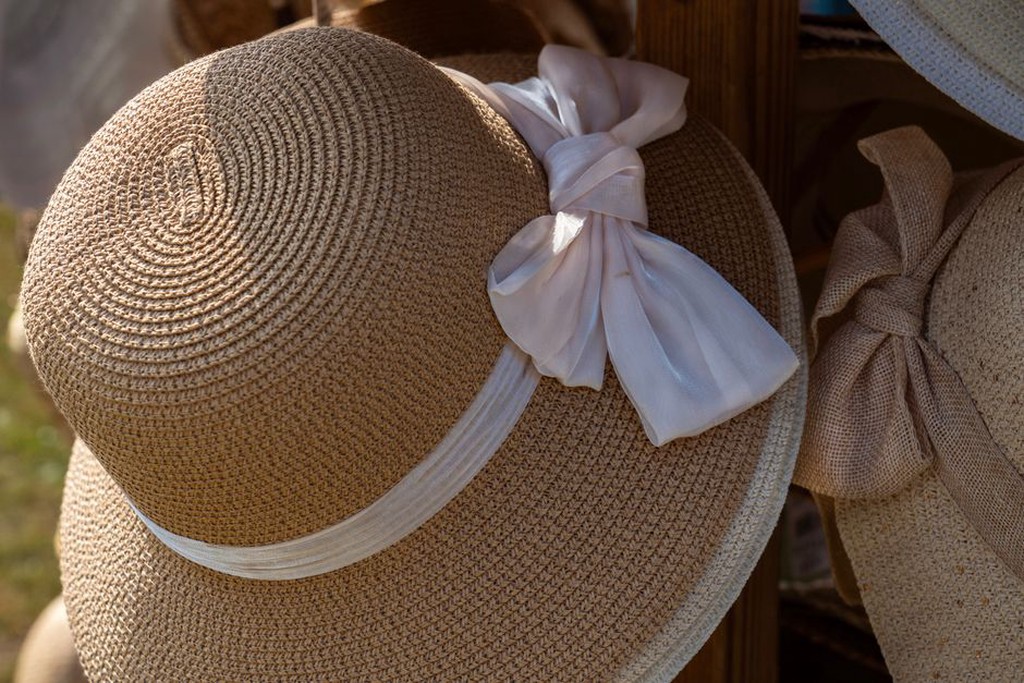
Matching accessories to three cloche silhouettes
- Deep felt cloche with a low brim: Leave the crown free of raised clips. Use pins or a fine net for longer hair, with any visible detail low at the nape. A pronounced brim already frames the face; ornament near the temples can feel crowded.
- Cloche with an upturned or shortened side: The exposed side has room for a small, flat slide or a neatly arranged wave. Look at it from both sides to check that the accessory complements the opening rather than making the brim seem accidentally uneven.
- Open-weave or lightweight summer cloche: Notice what shows through the crown. A dark, bulky fastener may be visible beneath pale straw. Small pins and tidy hair underneath let the hat’s texture take the lead.
These are starting points, not rules about hair length or face shape. Hat size and brim position matter more immediately for comfort. Pinning the hair flatter will not make a cloche that is too small fit.
Building a period-informed look without a costume effect
Start with a recognisable cloche shape and one restrained hair detail. A plain felt hat might need only a glimpse of waved hair at the cheek. If the hat is beaded or trimmed with flowers, keep visible clips plain. There is no need to wear every familiar 1920s motif at once.
For daytime, try a close-fitting felt cloche with a coat collar that does not push against the brim. Gather longer hair into a low roll and let the hat band be the main accent. An off-centre bow or flower reads more clearly when earrings and hair ornaments are modest. If you will remove the hat indoors, a small slide at the nape can keep the hairstyle in place without adding bulk beneath the crown.
The hat can sit easily with clothes already in your wardrobe. Its curved outline contrasts with a neatly cut coat or simple knit; it does not call for a matching dress. To bring in colour, pick up one shade from the trim elsewhere in the outfit rather than adding several competing accents. The low hat, controlled hair and slight asymmetry will still be apparent.
Choosing and caring for an older cloche
Before buying, ask for the internal circumference in centimetres and compare it with a hat you already wear comfortably. Crown depth and brim shape count too: hats with the same circumference may sit differently, especially over gathered hair. Look for dents, thinning felt, damaged straw, loose trim and staining inside the band. Ask to see the interior, since a lining can conceal repairs.
“Art Deco” names a design vocabulary; it does not prove a hat dates from the 1920s. Geometric embroidery or a striking side motif could belong to a later revival. Labels, construction and provenance may help, but no single flourish settles the date. If the evidence points to a revival hat, buy it as one. It may be a more practical choice for regular wear than a fragile original.
Handle an older cloche with clean, dry hands, supporting the crown and brim instead of repeatedly pinching one spot. Gently brush dust from felt with a suitable soft brush. Avoid soaking it or treating stains before you know how the trim is attached. Protect delicate straw and applied flowers from being crushed, and store the hat on a suitable support or in a box with room for the brim. Keep pins and slides separately so their metal edges cannot snag the lining.
At the first fitting, pin longer hair into a low coil, put on the cloche and check the brim from the side. If the crown rises over the coil, take out a pin and move the hair lower before trying again. That small adjustment is usually more useful than adding another ornament.