
The Number 1 Wool Blazer Copy: Precision Reproduction of a 1963 J. H. Cording & Co. Pattern
Three buttons, a notched lapel, and patch pockets that sit exactly four inches from the hem—the Number 1 wool blazer copy recreates every detail of a 1963 pattern from the now-defunct British tailoring house, J. H. Cording & Co. Unlike generic vintage-inspired jackets, this copy is built from a surviving original block, right down to the slight forward pitch of the shoulder seam that gives the blazer its characteristic clean line.
Why the Original Blazer Matters
J. H. Cording & Co. produced this blazer from 1961 to 1967, primarily for the university and mod crowds. Its appeal lay in the precise cut: a semi-fitted body, a three-button front with the top button worn open, and a gentle waist suppression that flattered without constricting. The original fabric was a 14-ounce navy wool flannel from the West Yorkshire mill of Abraham Moon & Sons. The reproduction uses the same mill today, weaving the flannel to the original weight and twill angle.
Materials and Construction of the Copy
Getting the copy right takes more than matching the fabric. The Number 1 copy includes:
- Horn buttons – natural brown horn, hand-polished, with four holes and a slight dome. Each button is cut from a single piece, never moulded resin.
- Canvas chest piece – a floating canvas made from horsehair and cotton, hand-basted to the front panels, not fused. This allows the lapel to roll naturally and the chest to soften with wear.
- Full lining – cupro in a dark navy, with a single interior pocket on the left breast, exactly where the original had it.
- Hand-finished buttonholes – the buttonholes on the front and cuffs are hand-stitched with silk thread, a detail that machine stitching cannot mimic.
How to Spot a Quality Copy
Not every reproduction is created equal. When examining a wool blazer copy, check these indicators:
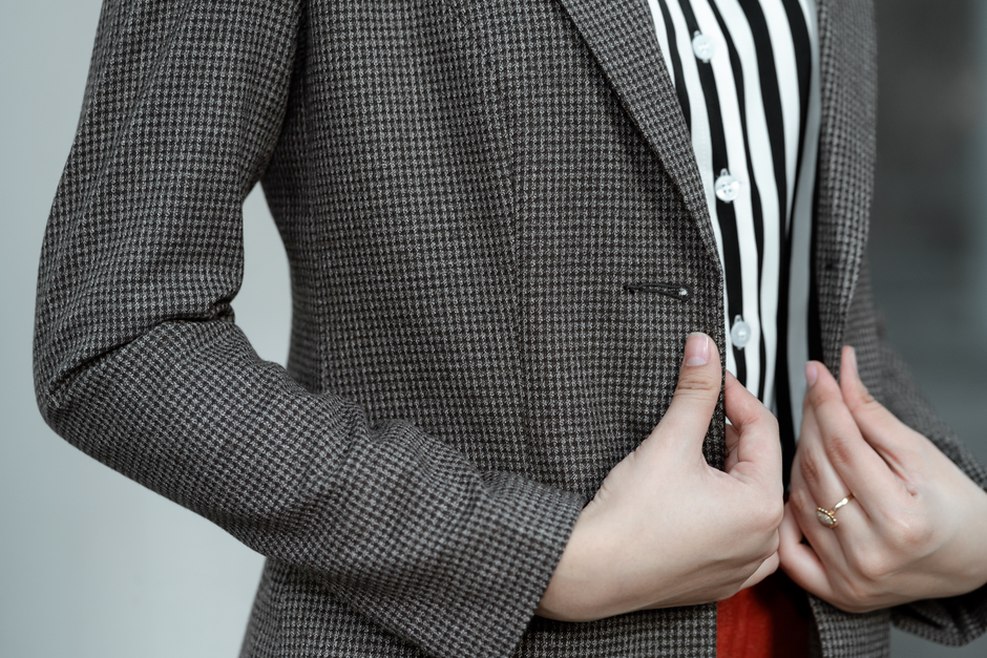
- Fabric weight – genuine 14-ounce flannel hangs with a soft drape and feels substantial without being stiff. Lighter copies often use a 10-ounce suiting that lacks body.
- Buttonhole stitching – look for a tiny keyhole shape and irregular stitch length, signs of handwork. Machine buttonholes are uniform and often have a plastic thread.
- Lining attachment – the cupro lining should be attached by a separate seam at the armhole, not fused or glued. You can feel the slight give when you pull the lining away from the shell.
- Label – the reproduction includes a woven label that replicates the original J. H. Cording & Co. label, but with a small “R” for reproduction woven into the edge. This is a mark of transparency from the maker.
Pairing the Blazer with Vintage Hair Accessories
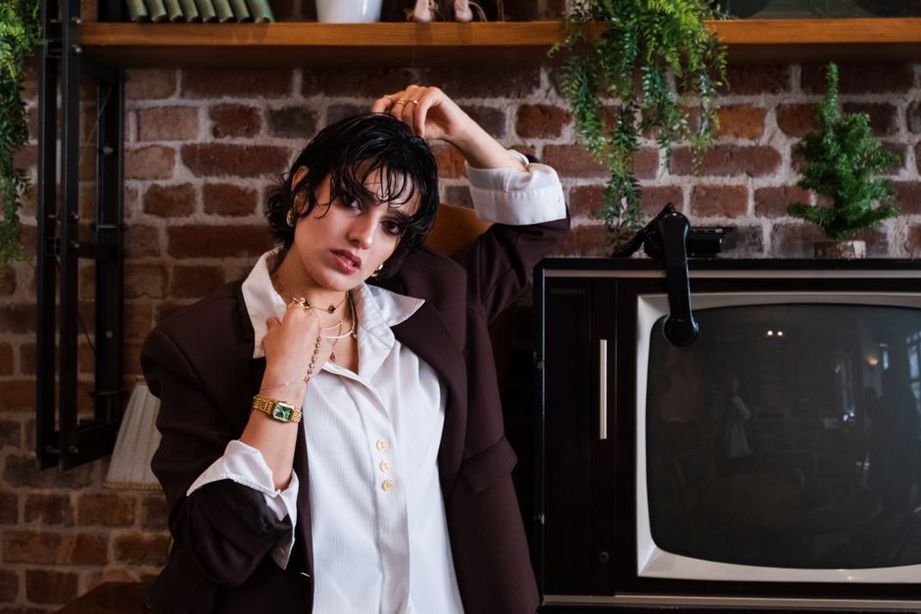
The structured lines of the Number 1 blazer work well with hair accessories that either echo its precision or offer a gentle contrast. A tortoiseshell hair comb worn at the temple complements the warm horn buttons, while a wide navy velvet headband repeats the jacket’s colour in a softer texture. For a playful touch, consider a candy-coloured hair claw from the 1980s—the bright pink or coral offers a deliberate clash that feels intentional rather than careless. You can read more about that style in The Sweet Appeal of Candy Hair Claws: A Vintage Hair Accessory Guide.
If you prefer a more romantic silhouette, the pink Caroline turban headband introduces a soft, draped element that balances the blazer’s structured shoulders. The combination works especially well for daytime events where you want both polish and personality. Details on that accessory are available in Caroline Turban Head band Pink: Vintage Elegance Reimagined.
Care for Your Wool Blazer Copy
Wool flannel needs air, not constant cleaning. After each wear, hang the blazer on a padded hanger and let it rest for 24 hours. Use a soft clothes brush to lift dust and lint—avoid sticky rollers that can pull the fibres. When a full clean is needed, choose a dry cleaner who handles vintage garments. Ask them to press the jacket with a low-temperature iron and a pressing cloth, never a steam iron directly on the wool, which can flatten the nap. Store the blazer in a breathable garment bag, away from moth-prone areas. Cedar blocks in the wardrobe help more than chemical repellents.
The reproduction’s cupro lining is delicate; if a seam pulls, take it to a tailor who works with natural fibres. The horn buttons can be polished with a tiny drop of almond oil on a soft cloth, but avoid soaking them—the oil can darken the natural grain over time. After a season of wear, the canvas chest piece will mold to your shoulders, and the horn buttons will take on a warm patina. That’s the kind of aging that no factory-made jacket can fake. And if you ever need a button replaced, the maker keeps spare horn buttons from the same batch—just ask.