
The El Poncho Hair Comb: A Collector’s Guide to a 1970s British Resin Accessory
Among the many treasures that surface at vintage fairs and online marketplaces, few spark as much curiosity as the hair comb stamped with the words “El Poncho”. The name itself feels like a whisper from a different decade – perhaps 1970s Spain meets British high street. But what exactly is an El Poncho hair accessory, and why do seasoned collectors speak of it with a mix of reverence and caution? The answer lies in a small British company that, for a brief period in the late 1970s and early 1980s, produced a line of resin hair combs and clips that blended bold geometric shapes with a distinctive, almost textile-like surface finish.
A Brief History of the El Poncho Line
The El Poncho range was launched by a London-based accessories house that specialised in translating international folk motifs into affordable fashion pieces. The “poncho” reference came not from the garment itself, but from the woven patterns and earthy colour palettes that inspired the combs’ surface decoration. Unlike the glossy, uniform resin pieces common at the time, El Poncho combs were matte-finished and often featured subtle striations or speckles that mimicked the look of natural stone or hand-dyed yarn. Production was small-scale and lasted only about four years – from 1978 to 1982 – making genuine examples relatively scarce today.
How to Recognise an Authentic El Poncho Comb
Because the line was not mass-produced, the easiest way to identify an El Poncho piece is by the embossed mark. Look for a tiny “El Poncho” or “E.P.” stamp on the back of the comb’s spine, usually near the centre. The letters are often shallow but crisp. Counterfeit pieces are rare – the line is too obscure for large-scale faking – but generic resin combs with similar colours are sometimes mislabelled. Here are the key characteristics to check:
- Material: A hard, slightly translucent cellulose acetate or polyester resin. Genuine pieces feel warm to the touch and have a faint, sweetish smell when rubbed – a sign of old cellulose acetate.
- Surface: Matte, never high-gloss. Many El Poncho combs have a subtle “pepper” texture – tiny dark or light flecks suspended in the resin.
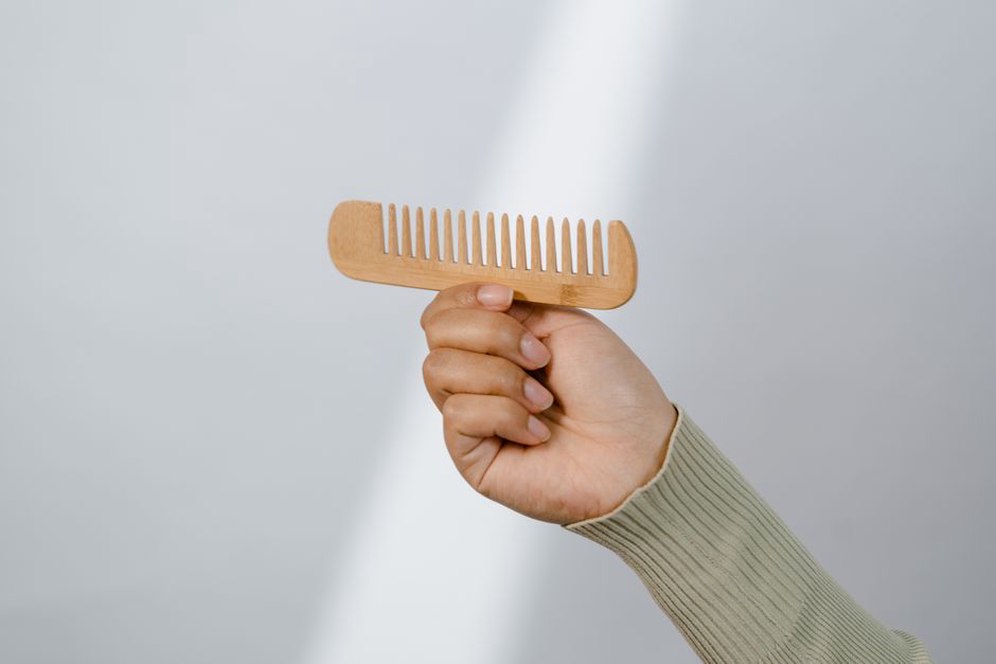
- Shape: Most are wide, curved combs (6–8 inches across) designed to sit horizontally at the back of the head. A few smaller claw clips exist, but the comb is the signature silhouette.
- Colours: Earth tones dominate – burnt sienna, olive, taupe, charcoal, and a distinctive “camel” beige. A rare series in deep teal and brick red also exists; these command higher prices.
Materials and Craftsmanship
The El Poncho line was made using a technique called “mottled casting”, where two or more colours of liquid resin were partially mixed before pouring into a mould. This created the stone-like veining that gives each comb a unique appearance. The process was labour-intensive, which explains both the limited production run and the slight variations between pieces. Unlike modern injection-moulded accessories, El Poncho combs have hand-polished edges – run your finger along the teeth; they should feel smooth, not sharp. The teeth themselves are rounded at the tips, designed to grip hair without snagging.
Styling El Poncho with a Modern Wardrobe
The earthy, understated palette of El Poncho combs makes them surprisingly versatile. A taupe or olive comb pairs beautifully with a cream linen blouse or a chunky knit cardigan – the matte finish avoids competing with textured fabrics. For evening, the teal or brick red variants add a quiet pop of colour against a black velvet dress. Because the combs are wide, they work best for half-up styles or as a single statement piece holding a low chignon. Avoid pairing them with overly glossy hair products; the contrast between shiny hair and matte resin can feel disjointed. Instead, use a light texturising spray to give hair a natural, slightly matte finish.
Collectors who already own pieces from the Bertha Comb series in its four colourways will notice a kinship in scale and weight, though the El Poncho combs are generally lighter and more flexible. If you are building a collection of British resin accessories from the late 1970s, the El Poncho line fills a unique niche – it is neither as common as the mass-market brands nor as fragile as some earlier celluloid pieces.
Care and Storage for El Poncho Combs
Because cellulose acetate can degrade over time, proper storage is essential. Keep El Poncho combs away from direct sunlight and extreme heat – a dark, cool drawer or a fabric-lined jewellery box is ideal. Never soak them in water or use alcohol-based cleaners; a soft, dry cloth is all that is needed to remove dust. If a comb develops a white haze (a sign of plasticiser migration), a very gentle buff with a tiny drop of mineral oil on a cotton bud can sometimes restore clarity – but test on an inconspicuous area first. Avoid storing them in airtight plastic bags, which can trap moisture and accelerate deterioration.
For those new to collecting, the El Poncho line offers an affordable entry point into vintage resin accessories. Prices at UK vintage fairs typically range from £8 to £25, depending on colour and condition. The teal and brick red variants are the most sought-after and can reach £40 in excellent condition. Always check for cracks near the teeth – these are the most common damage point. A comb with a single small crack can still be worn if the crack does not affect the structural integrity, but its value drops significantly.
Where El Poncho Fits in Vintage Hair Accessory History
The late 1970s saw a shift away from the ultra-glossy, brightly coloured plastics of the mid-decade. Consumers began gravitating toward natural textures and muted tones – a trend that paralleled the broader “back to the land” movement in fashion. El Poncho combs were a direct response to that shift. They offered the durability of modern resin with the visual warmth of handcrafted objects. In that sense, they are a perfect example of the tension between industrial production and artisanal aesthetics that defined so much of late-20th-century design.
If you come across an El Poncho comb at a car boot sale or online auction, take a moment to study its markings and surface. Each one is a small artefact of a moment when British accessory makers looked to global textile traditions for inspiration – and produced something that still feels fresh and wearable four decades later. Whether you wear it as a functional hair tool or display it as a design object, an El Poncho comb carries a quiet story of craftsmanship and cultural curiosity that deserves to be remembered.