
How to Wear a Silk Scarf with Vintage Hair Clips and Combs
A vintage clip needn’t bear the weight of a ponytail on its own. Secure the hair with a plain elastic, fasten the clip over it, then tie a narrow fold of silk scarf around the base. The elastic holds everything in place; the clip adds detail; the scarf brings colour and movement. It’s a useful arrangement when an older fastening looks lovely but feels too delicate to trust by itself.
Think of the scarf and ornament as separate pieces that happen to work together. A printed square can soften a severe metal barrette, while a plain scarf leaves an ornate comb in full view. They don’t have to belong to the same decade.
Start with the scarf’s scale
Shape matters more than exact measurements. A long, narrow scarf or twilly wraps neatly around a ponytail or plait, with short ends less likely to catch on a clip. Fold a medium square corner to corner, then roll it towards the point for a versatile band. A large square covers more of the head, but the extra fabric can overwhelm a small ornament or pull against an older fastening.
Silk drapes beautifully, though a smooth weave can slip. Rather than pulling the knot tighter, put it over a hairstyle that’s already secure and add ordinary hairpins if needed. With an older printed scarf, check where the design lands once it’s folded. A border might frame the face or sit alongside a comb; the central motif may vanish inside the fold. Try it loosely before tying the knot.
Let each accessory have a job
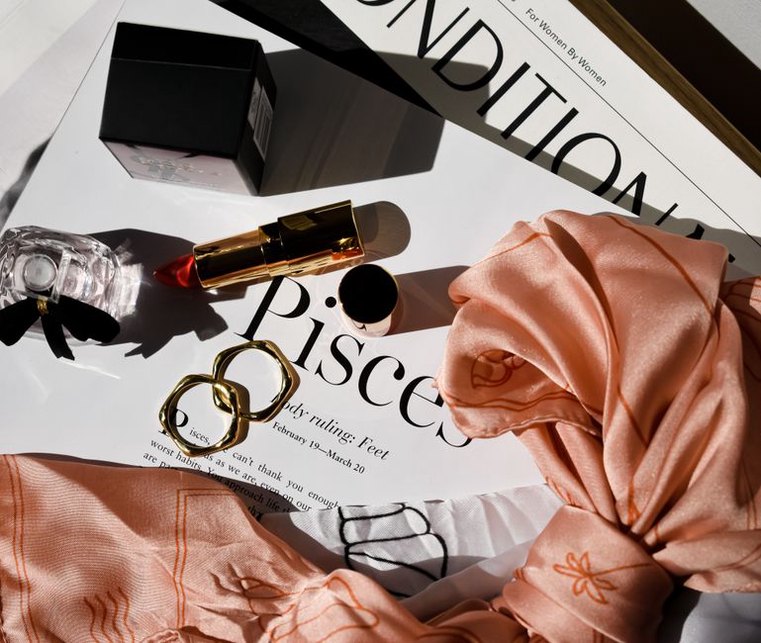
A scarf moves; a barrette, comb or pair of pins has a fixed shape. Decide which piece is holding the hair and which is there for decoration. That way, you won’t have to force a fragile mechanism through several layers of silk.
- With a barrette: Fasten it into the hair, not through a bulky scarf knot. Tie the scarf beneath the barrette or weave a narrow end through the hairstyle nearby. Leave room to open the clasp without tugging the fabric.
- With a comb: Anchor it in gathered hair, then arrange a folded scarf behind or beside it. Silk tied over the teeth may dislodge the comb as you walk.
- With pins: Secure a twist first, then tie the scarf ends around the finished shape. Keep knots clear of decorative pin heads so you can see them and remove them easily.
- With a plain hair band: Fold the scarf into a band and tuck its ends underneath at the nape. A small clip to one side adds a hint of vintage style without making the look feel like costume.
If an ornament is especially delicate or heavy, don’t use it as the main fastener. Let a sturdy contemporary pin support the hairstyle and place the vintage piece where it’s visible but under little tension.
Three combinations to try
A scarf border and a side clip
Fold a medium square into a strip, leaving a contrasting printed border visible along one edge. Lay it over the crown as a narrow band and tie the ends at the nape, under the hair. Set a small side clip just beyond the scarf’s edge rather than on top of the silk. A little space lets you see the shape of each piece. Against a plain shirt or dark knit, the border provides plenty of detail.
A low twist with a restrained comb
Make and secure a low twist, then slide a comb into the gathered hair at a comfortable angle. Roll a scarf into a slim length and tie it around the base, leaving short ends. If the comb has carving, stones or a striking outline, you could pick up one quieter colour from the scarf’s pattern in your clothes. Keep the silk off the face of the comb: covering it hides the workmanship and makes removal awkward.
A plait with a soft finish
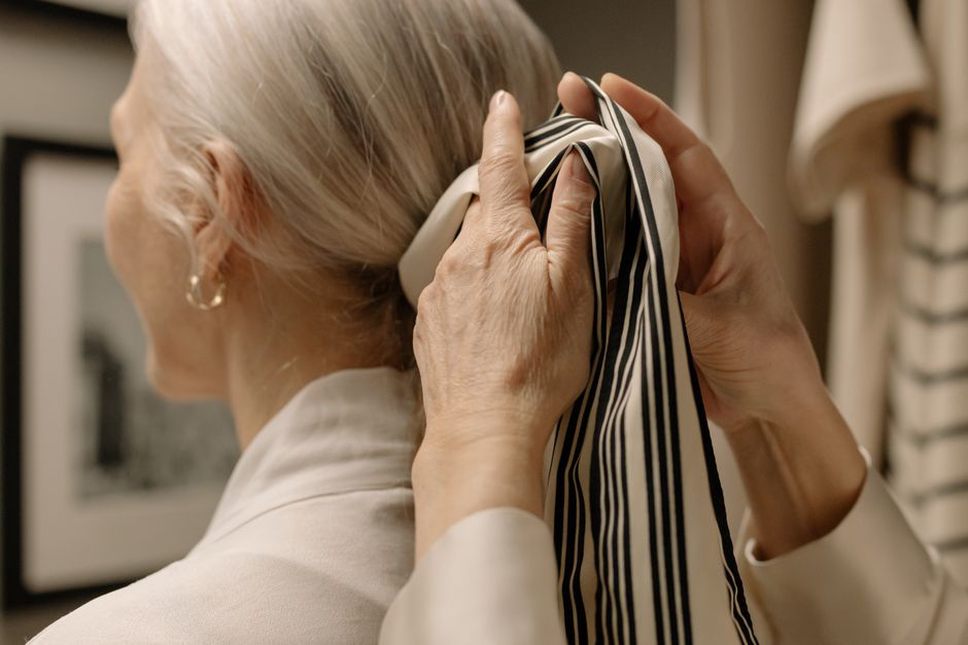
Secure the plait before adding silk. Tie a narrow scarf over the elastic at its end, letting two uneven tails fall beside the hair, or thread one tail loosely through a few sections. A modest clip near the start of the plait gives the eye another place to settle. Keep silk away from the hinge so the clip closes properly.
Mix decades by looking at shape, not labels
A scarf and hair ornament needn’t be historically matched. British wardrobes have long had room for practical scarves alongside decorative accessories, but a modern pairing isn’t a reconstruction of a single era. Look for a shared line instead: the curve of a comb echoed in a rounded print, perhaps, or a geometric barrette beside the straight border of a folded square.
Colour needn’t match exactly either. A navy scarf with several accent colours can sit happily beside a brass-toned clip. If both pieces are heavily patterned or embellished, give them space: move the scarf farther back, shorten its visible tails or choose a smaller ornament. For a contrast in volume around the crown, the P389 Frida Rosecrown turban headband has a fuller shape than a folded silk scarf.
Check contact points before wearing
Vintage silk and old hardware can damage one another. Run a finger along the underside of a clip to find rough edges, and check comb teeth for chips before they touch the scarf. Don’t thread silk through a sprung clasp or pin straight through a valuable print; repeated pressure can leave creases, pulled threads or tiny holes. If a scarf has a weakened seam, keep that section away from the knot.
Look at the finished style from the side as well as the front. If the scarf shifts or the ornament tilts, adjust the elastic or underlying pins rather than tightening the silk. Afterwards, untie the scarf gently, let the creases relax and store the clip separately so its edges can’t snag the fabric.
For a first pairing, fold a square until its border makes a band about two fingers wide. Secure a low ponytail with an elastic, tie the scarf beneath it and set a small barrette just above the knot. Leave roughly a finger’s width between metal and silk so both remain visible and the clasp is easy to open.