
How to Store a Bella Freud Anita Printed Tee (and Style It as a Hair Accessory)
A printed cotton tee from Bella Freud’s archive—especially the Anita print, with its bold typography and pop-culture nod—presents a peculiar dilemma. The fabric is soft, the graphic is irreplaceable, and the cut is deliberately oversized. Yet the very qualities that make it a cult piece also make it a challenge to keep pristine. Unlike a stiff barrette or a metal hair comb, a printed T-shirt demands a storage philosophy that respects both the print’s integrity and the garment’s ease of wear. This guide walks through the specific steps for preserving a Bella Freud Anita tee, with an eye toward how such a piece can later be styled as a hair accessory—a trick that vintage-minded readers in Britain are increasingly adopting.
Why the Anita Print Matters for Storage
The Anita print, referencing the iconic 1960s model Anita Pallenberg, is screen-printed onto lightweight cotton jersey. Screen printing sits on the surface of the fabric, not woven into it. Over time, improper folding, hanging, or stacking can cause the ink to crack, peel, or transfer onto adjacent garments. The tee’s typical composition—100% cotton with a subtle slub texture—also means it breathes well but can stretch out of shape if stored under tension. For collectors who intend to use the tee as a scarf, headwrap, or even a makeshift scrunchie cover (a practice that has quietly gained traction in vintage hair circles), the priority shifts from keeping the tee museum-ready to keeping it flexible enough to tie, twist, and knot without damaging the print.
The Hanging vs. Folding Decision
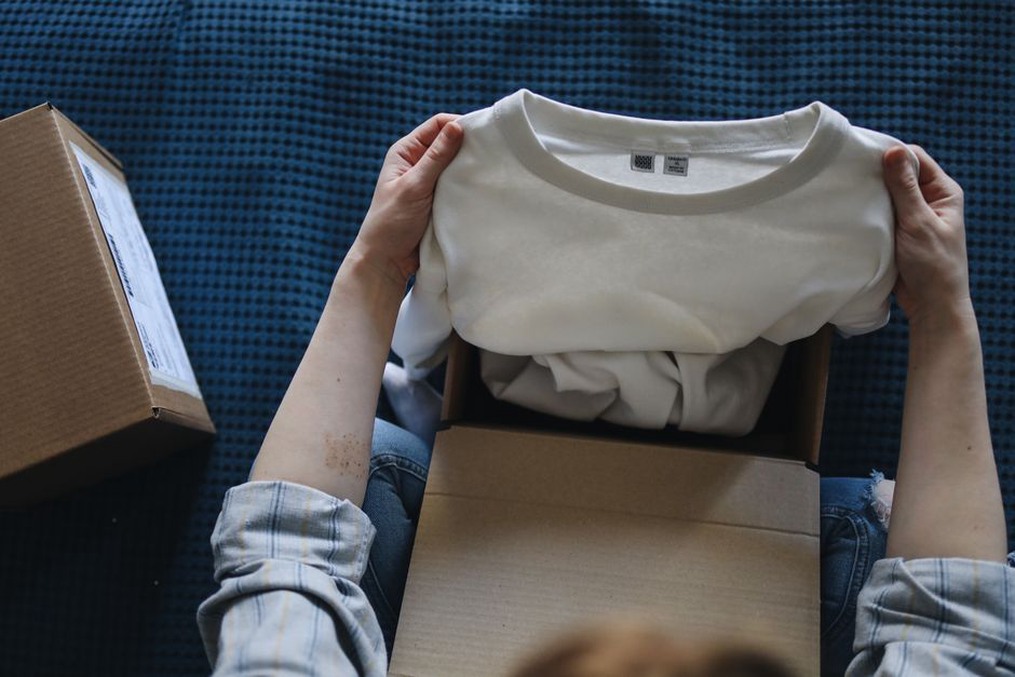
Conventional wisdom says fold knits, hang wovens. A cotton jersey tee sits in a grey area. Hanging a Bella Freud Anita tee on a standard plastic or wire hanger can create “shoulder horns”—permanent bumps where the fabric stretches over the hanger’s edges. Worse, the weight of the damp air in a British wardrobe can pull the neckband into a boat-neck shape over a few seasons. Folding is safer, but the method matters. Lay the tee face down on a clean, flat surface. Fold each sleeve inward so they lie parallel to the side seams, then fold the body in thirds vertically. Finally, fold the hem up to the collar, creating a flat rectangle. This keeps the Anita print on the inside of the fold, shielded from light and friction. Store the folded tee in a shallow archival box or a cotton-lined drawer, never stacked more than three tees high—pressure from above can emboss the print into the fabric below.
Light, Humidity, and the British Climate
UK homes, especially older Victorian and Edwardian terraces, fluctuate in humidity more than purpose-built collections storage. A printed tee stored in a loft or a damp cellar can develop foxing—small brown spots of mildew that eat into the cotton fibres. The Anita print, often in high-contrast black or red ink, is particularly vulnerable because mildew spores thrive on the starch residues left in screen-printed areas. Keep the tee in a room with relative humidity between 40% and 55%. A small digital hygrometer costs little and removes the guesswork. Avoid cedar chests unless the cedar is unfinished; the oils can migrate onto the cotton and yellow the white areas of the print. Acid-free tissue paper, loosely crumpled inside the folded tee, helps maintain shape and wicks away micro-moisture.
Using the Anita Tee as a Hair Accessory: Storage Implications
One of the most creative ways to wear a vintage printed tee is to repurpose it as a hair wrap, a knotted headband, or a fabric scrunchie cover. Bella Freud’s Anita tee, with its generous cut, provides enough fabric to cut a 50 cm strip from the lower hem without ruining the garment’s resale value—if you cut carefully. But once you have that strip, storage changes. A cotton strip used for hair picks up natural oils, hairspray residue, and moisture from the scalp. Never store a worn hair strip back in the same drawer as the unworn tee. The oils will transfer to the clean fabric and can cause the ink to soften and smudge. Instead, keep the hair strip in a separate muslin bag or a small cotton pouch, washed after every third use in cold water with a gentle detergent (no fabric softener, which coats the fibres and dulls the print).
Cutting the Strip Without Compromising the Tee
If you decide to harvest a strip for a hair tie, mark a line 4 cm above the original hem. Use a rotary cutter and a self-healing mat for a straight edge. The cut edge will need a narrow hem—fold under 5 mm, then another 5 mm, and stitch with a straight stitch or a narrow zigzag. This prevents fraying during knotting. The remaining tee can be stored as a cropped top or a collector’s piece, but note that any alteration affects the garment’s provenance. For serious collectors, it is wiser to source a second Anita tee specifically for hair use, keeping the first one untouched.
Temperature and the Problem of Ironing
Screen-printed ink bonds to cotton through heat during manufacturing. Reapplying heat through ironing can remelt the ink, causing it to stick to the iron plate or to another garment. If the tee emerges from storage with creases that you must remove, turn the garment inside out. Set the iron to a low cotton setting (no steam). Place a pressing cloth—a plain white cotton handkerchief works—over the print area. Iron the back of the print through the cloth, moving quickly. Never let the iron rest on the print. For hair strips that have been tied and knotted, steaming is safer than ironing. Hang the strip in a bathroom while you shower; the steam will release wrinkles without direct heat.
Integrating the Tee into a Vintage Hair Accessory Collection
A printed tee can live alongside hair clips, barrettes, and scrunchies, but not in the same compartment. The metal findings on a vintage clip can snag the cotton jersey, and the oils from hair accessories can migrate. Store the tee in a separate drawer or a dedicated fabric bin. If you own a vintage cowrie shell clip, such as the one discussed in How to Store a Vintage P330 Cowrie Shell Clip, the shell’s porous surface can absorb moisture from the cotton if stored in direct contact. Keep a layer of acid-free tissue or a piece of unbleached muslin between the two items. Similarly, if you collect velvet scrunchies like the Store P306 Black Velvet Scrunchiebow, the nap of the velvet can catch on the cotton tee’s slub texture—again, separation is key.

Cleaning Before Long-Term Storage
A common mistake is storing a tee that has been worn once without washing. Perspiration contains salts and acids that weaken cotton fibres over months of storage, and the Anita print’s ink can become brittle where salt concentrates. Hand-wash the tee in cool water with a pH-neutral soap. Soak for no more than ten minutes—prolonged soaking lifts the ink. Rinse thoroughly, then roll the tee in a clean white towel to remove excess water. Lay flat to dry on a mesh rack, away from direct sunlight. Sunlight is the enemy of screen prints; even indirect daylight through a window can fade black ink to grey within a few years. Dry the tee in a shaded room or in a cupboard with good air circulation.
Label and Documentation
For a collector who also writes about vintage fashion, a small label sewn into the hem or pinned to the storage box can record the tee’s provenance: date of acquisition, original retailer (if known), fabric composition, and any alterations. This is especially useful if you later decide to sell or trade the piece. The Bella Freud Anita tee, depending on the specific production year, may have a small woven label inside the neck. Do not cut it out—it is part of the garment’s history. If the label is itchy, cover it with a small piece of soft cotton tape rather than removing it.
Final Practical Note on Display
Some collectors enjoy framing a printed tee as wall art. If you choose this route, use a UV-protective acrylic frame and mount the tee on an acid-free foam core board with stainless steel pins. Do not use adhesive spray or glue—they soak through the cotton and ruin the print. A framed tee can be a striking addition to a dressing room, and it keeps the garment flat and visible without the risk of creasing. Just remember that even UV glass does not block all light; rotate the frame’s position every six months to avoid uneven fading.
Whether you keep the Anita tee whole for occasional wear or transform it into a hair wrap that channels 1960s rock-and-roll glamour, the storage choices you make now determine how long the print stays sharp and the fabric stays soft. A little discipline with humidity, light, and folding pays off in decades of use—and in the quiet satisfaction of knowing your vintage piece still looks as bold as the day it left the shop floor.