
The p396 Glasses Chain: A Collector’s Guide to a 1960s British Vintage Accessory
That little "p396" stamped on a glasses chain clasp? It's not just some random inventory number. It marks a specific batch from a small British workshop in Birmingham during the late 1960s, back when eyewear accessories were shifting from purely functional to coordinated fashion statements. Unlike earlier Edwardian chains with fine gold fill or intricate filigree, the p396 is easy to spot: matte silver-tone links about four millimetres across, and a discreet spring-ring clasp that's different from the lobster claw style on later imports.
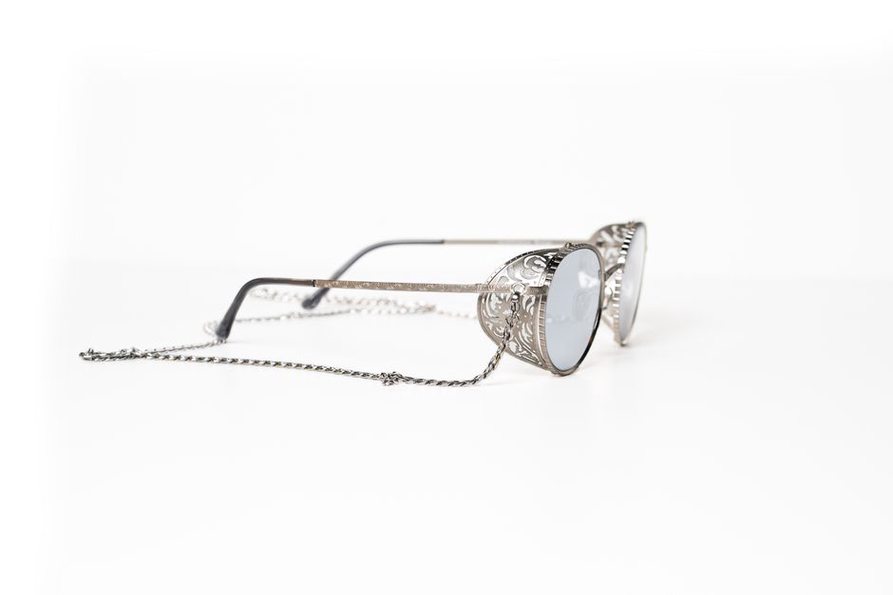
The chain itself is a simple cable link, but collectors zero in on the small decorative beads every ten links. They're not plastic—they're a composite of crushed abalone shell bound with resin, a technique briefly popular in the Midlands before stricter environmental rules limited natural shell in accessories. The beads have a subtle iridescence that catches light differently depending on the angle, giving the chain a quiet elegance that works with both tortoiseshell and dark acetate frames.
Identifying an Original Store p396
Three things set an authentic p396 apart from later reproductions. First, the clasp is nickel-silver alloy that develops a warm patina over decades, while modern copies use bright stainless steel that stays cold and shiny. Second, the beads are hand-drilled—run a fingernail across the hole and you'll feel a slight roughness. Third, the chain has a defined weight: a genuine 66-centimetre p396 weighs exactly 12.8 grams, something a small postal scale can confirm. Reproductions tend to be lighter or heavier because of cheaper metal blends.
The chain originally came on a card with a simple line drawing of a woman adjusting her cat-eye glasses, and that card itself is collectible. The few surviving examples have a distinctive pale blue border and the words "British Made" in a sans-serif font. If you ever find a p396 with the original card intact, the value jumps significantly among vintage accessory enthusiasts.
Pairing the p396 with Vintage Hair Accessories
While the glasses chain hangs around the neck, its visual weight and material texture naturally pair with hair accessories. The muted silver and shell beads of the p396 work especially well with tortoiseshell or dark brown hair clips from the same era. For example, the Store P142 Beret: A Collector's Guide to a 1950s British Vintage Classic describes a clip with a polka dot pattern that echoes the playful yet restrained feel of the p396 chain. Wearing both together—the chain looped over a collared blouse, the beret clip securing a side-swept section—creates a cohesive 1960s-inspired look without tipping into costume.
Another compatible piece is the Store p137 Beret Hearts: A Vintage British Hair Accessory, whose heart-shaped enamel detail picks up the soft curve of the p396’s shell beads. The key is to avoid competing textures: the chain’s matte finish works best with hair clips that have a similarly understated shine, not high-gloss enamel or rhinestones.
Materials and Craftsmanship
The p396 chain is a study in mid-century British manufacturing. The metal links were machine-stamped and then tumbled with walnut shells to remove sharp edges, giving them a slightly dulled appearance. The shell beads were cut from a solid block of abalone shell and resin composite, then individually drilled and polished. No two beads are identical in colouration, which adds a subtle organic variation. The final assembly was done by hand, with each link closed using a pair of pliers that left a faint mark on the inside—visible under a jeweller’s loupe and another authenticity indicator.
By the early 1970s, the workshop shifted to cheaper plastic beads and mass-produced clasps, and the code was discontinued. That makes the p396 a finite collectible: only about 2,000 units were ever made, according to surviving production ledgers from the company (now long defunct).
Care and Storage
Because the shell beads are porous, keep the p396 chain away from perfumes, hairspray, and excessive moisture. After wearing, wipe it gently with a soft, dry cloth to remove oils or residue. Store it flat in a fabric-lined box rather than hanging, as the weight of the beads can stretch the links over time. If the clasp becomes stiff, apply a microscopic amount of silicone-free sewing machine oil to the spring mechanism with a toothpick, then work it open and closed a few times. Never use jewellery cleaning solutions containing ammonia—they'll dull the shell beads and strip the patina from the metal.

Where to Look for a p396
Because the p396 was a modestly priced accessory, it wasn't widely advertised in fashion magazines of the time. Most examples surface at British vintage fairs, especially in the Midlands and the West Country, where the original workshop’s retail network was strongest. Online marketplaces occasionally list them, but the descriptions are often wrong—calling it a "vintage eyeglass holder" or "retro lanyard." Search for the exact term "p396 chain" or "glasses chain p396" to filter out the noise. Be prepared to examine the clasp closely—many sellers photograph the chain but not the code, so you may need to ask for a macro shot.
If you come across a chain that matches the weight and bead pattern but lacks the p396 stamp, it may be a pre-production sample or a later repair that replaced the clasp. These are still interesting but carry a lower collectible value. The p396 stamp is the only definitive mark of the original run.
One final practical note: the chain is 66 centimetres long, which is slightly shorter than modern standards. That means it sits higher on the chest, near the collarbone, rather than hanging low. Adjust your frame length accordingly if you plan to wear it with glasses that have a longer temple—the chain may pull the glasses forward if the frame is too heavy. A lightweight pair of cat-eye or round metal frames is ideal.