
The Store p373 Faux Pearl and Wood Hair Choker: A 1960s British Vintage
The tag inside the headband reads Store p373 — a stamped code that tells any seasoned collector: this is a piece from a specific 1960s British haberdashery line. The choker itself is a slim band of round wooden beads alternating with faux pearls, strung on a nylon cord and finished with a brass clasp that doubles as an adjustable slide. It is designed to sit just behind the crown of the head, skimming the hairline at the nape, or to be worn lower as a forehead bandeau. The combination of warm wood tones with milky faux pearls gives it an understated texture that works as easily with a tweed blazer as with a silk slip dress. The hair choker has a distinct place in mid‑century hairstyling, and the store p373 version is a particularly fine example of the form.
What Exactly Is a Hair Choker?
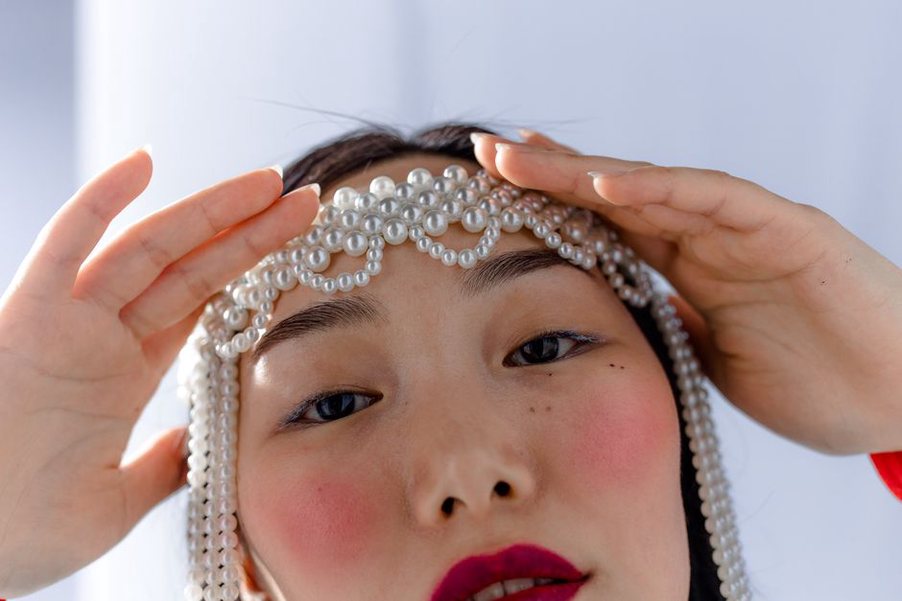
A hair choker, unlike its neck‑hugging cousin, is a flexible ornament that wraps around the head. In the 1920s, flapper headbands often featured a choker‑like fit across the forehead. By the 1960s, the design had evolved into a slim, often beaded band that could be worn low over the hairline or looped through an updo. The store p373 choker belongs to this later wave. Its faux pearls and wood beads are strung so that the beads sit closely together, creating a continuous linear pattern that catches light without being ostentatious. The wood beads are turned from light‑coloured hardwood — likely beech or birch — and sealed with a clear lacquer. The faux pearls are hollow glass beads coated with a pearlescent finish; they are lightweight and have a subtle, irregular surface that mimics natural blister pearls.
Materials and Manufacturing
The store p373 piece is a product of its time. Faux pearls in the 1960s were typically made by coating glass beads with a mixture of fish‑scale essence (guanine) and lacquer — a technique that gave them a convincing lustre. The wood beads were turned on a lathe and often hand‑polished. The brass clasp is a tiny barrel‑shaped slider, stamped with the same store p373 mark. This level of detail indicates a quality commercial manufacture, not a handmade craft item. The materials were chosen for both durability and visual appeal: wood wears well against hair, and faux pearls do not chip as easily as natural ones. The cord inside is a synthetic nylon, which helps the choker retain its shape even after decades of storage.
How to Wear a Vintage Hair Choker Today
The beauty of a piece like the store p373 is its versatility. Here are a few ways to integrate it into a modern outfit:
- As a headband. Slide it over your head and let it rest just behind the hairline. For a 1960s mod look, pair it with a high ponytail or a short bob. The wood beads add warmth to neutral palettes.
- As a nape accent. Wear it low around the back of the head, just above the neck, with a sleek low bun or chignon. This placement echoes the 1920s fashion for decorative hair bands that framed the face from behind.
- As a hair wrap. Wrap the choker twice around a loose ponytail and let the clasp hang as a subtle pendant. The adjustable slide makes it easy to tighten or loosen without damaging the string.
- Layered with other pieces. Stack it with a thin velvet headband or a simple metal comb. The contrast of textures — matte wood, glossy pearl, plush velvet — creates visual interest without overwhelming the hairstyle.
For those who collect vintage hair accessories, the store p373 choker also pairs beautifully with mid‑century hair clips from the same era. A 1960s rectangle barrette, like the styles discussed in our guide to the Malena Dul Uno comb, can anchor an updo while the choker frames the crown.
Care and Maintenance
Vintage materials require gentle handling. Follow these practical steps to keep your store p373 choker in wearable condition:
- Check the cord. Nylon can become brittle after decades. Gently stretch the choker to see if any beads slide or if the cord shows fraying near the clasp. If the cord is loose, restringing by a jeweller is inexpensive and preserves the original beads.
- Clean with a soft cloth. Faux pearls and lacquered wood are both sensitive to moisture. Wipe the beads with a dry microfiber cloth after each wear. If you must remove oil or makeup residue, dampen the cloth very slightly with distilled water, then dry immediately.
- Store flat or coiled. Do not hang the choker by the clasp — the weight of the beads can stretch the cord over time. Instead, lay it flat in a fabric‑lined box or coil it loosely in a breathable cotton pouch.
- Avoid perfume and hairspray. The alcohol in these products can dull the faux‑pearl finish and cloud the wood lacquer. Put the choker on after you finish styling your hair and applying fragrance.
- Keep away from direct sunlight. Prolonged UV exposure can yellow the faux pearls and fade the wood. A drawer or a box in a climate‑controlled room is ideal.
Identifying Authenticity
Because the store p373 code appears on several vintage hair accessory lines (including earlier 1950s items), collectors sometimes confuse it with similar codes. The choker’s specific features — the brass slide clasp, the even drill holes in the wood beads, and the slightly irregular pearl coating — are reliable markers. If you find a piece described as “faux pearl and wood choker” without a tag, examine the clasp: a barrel‑shaped slider with no stamp is likely a later reproduction. The original has a tiny, cleanly embossed “p373” that you may need a loupe to read. The beads should not be perfectly uniform in size; a slight variation in the wood beads (by about 0.5 mm) is normal for mid‑century turning, whereas modern mass‑production tends to be more precise. The faux pearls, when held to the light, should show a faint iridescence along the edge — a sign of the fish‑scale coating.
Why This Piece Matters
The store p373 choker occupies a small but meaningful niche in British fashion history. It represents a shift from heavily ornamental Edwardian hair combs to the lighter, more graphic accessories of the 1960s. The use of synthetic pearls and simple wood beads reflects a broader postwar turn toward affordable materials that still looked elegant. For today’s conscious consumer, it offers a way to wear a genuine 60‑year‑old object without the fragility of a purely antique piece. The wood beads develop a gentle patina over time — a surface sheen that comes from contact with hair and skin — and that patina tells a story of the heads it has adorned.
After a few wears, the wood beads will develop a gentle sheen from contact with your hair—a patina that no reproduction can replicate. That subtle glow is the choker’s way of settling into its new life. When you store it flat and check the clasp every few months, you’ll ensure this 60‑year‑old piece keeps its shape for decades more. The store p373 isn’t just an accessory; it’s a quiet link to a mid‑century British haberdashery tradition.