
The Vintage Orange Satin Squared Headband: A Quiet Statement of Mid-Century Style
The satin squared headband in orange is not a piece that shouts for attention—it is a quiet statement, a slice of mid-century British polish that feels both familiar and rare. Unlike the elasticated fabric bands that slip after an hour, this headband is structured: a flat, square-formed top that sits gracefully on the crown, held in place by a slim satin ribbon tied beneath the hair. The colour orange, far from being a mere novelty, was a deliberate choice in post-war British millinery—a hue that signalled optimism, warmth, and a subtle rebellion against the muted tones of austerity.
The Origins of the Satin Squared Headband
The squared headband emerged in the late 1950s, when hairdressers and accessory designers began moving away from the stiff, all-encompassing turbans of the 1940s. Women wanted something that held a voluminous bouffant or a sleek bob without crushing the shape. The solution was a headband with a rigid, square top—often padded with a thin layer of cotton wadding—covered in a lustrous satin. The ribbon ties allowed for a custom fit, and the square shape created a clean, architectural line that complemented the geometric haircuts of the era. British fashion houses, particularly those in London’s West End, produced these headbands in a range of jewel tones, with orange being a favourite for spring and summer collections.
Satin was the material of choice because of its smooth, light-reflecting surface. Unlike velvet or wool, satin did not catch on hairspray or lacquer, and it slid easily over even the most elaborate updos. The squared top was often finished with a small bow or a decorative stitch at the centre front, though the pure, unadorned square remained the most versatile version.
Why Orange? The Colour in British Vintage Fashion
Orange occupies a special place in British vintage colour palettes. During the 1960s, designers like Mary Quant and Biba pushed bright, almost fluorescent shades into the mainstream, but orange had already been a staple in the 1950s as a symbol of Caribbean holidays and new worldliness. The specific shade used in these headbands—often a deep, burnt orange or a clear tangerine—was chosen to complement the warm skin tones that were fashionable after the rise of self-tanning lotions and Mediterranean travel. In a vintage context, an orange satin squared headband is a reliable indicator of a piece made between 1957 and 1965, when the colour was at its peak popularity in British accessories.
How to Wear the Satin Squared Headband Today
The beauty of this accessory lies in its adaptability. The squared top sits best on hair that has some height at the crown—a soft bump or a teased section gives the headband something to anchor against. For a modern interpretation, try the following approaches:
- Low ponytail with a side part. Slide the headband over the crown, letting the square rest just behind the hairline. The ribbon ties can be tucked under the ponytail or tied in a small bow at the nape.
- Half-up style. Gather the top section of hair into a loose twist, then place the headband so the square sits above the twist. This works particularly well with wavy or curly hair, as the satin contrasts with the texture.
- With a silk scarf. Fold a small silk scarf into a narrow band and tie it over the headband’s ribbon for a layered, 1970s-inspired look. The orange and a complementary print (like a navy polka dot) create a striking combination.
- As an evening piece. Pair the headband with a simple black dress and pearl earrings. The orange adds a pop of colour without competing with other accessories.
For those who prefer a more understated approach, the headband can be worn with all hair down, tucked behind the ears, so the square becomes a subtle crown-like detail. If you own a vintage piece that has lost its shape slightly, a gentle steam over a kettle (holding the headband at arm’s length) can help re-form the square top—just be careful not to wet the satin directly.
Caring for Your Satin Headband
Satin is a delicate fabric, and vintage satin requires extra attention. The main risks are snagging, colour fading, and distortion of the square shape. Here are practical care steps:
- Storage. Keep the headband flat in a drawer or on a padded hanger. Never fold the square top, as creases can become permanent. If you must stack it with other accessories, place a piece of acid-free tissue paper over the satin.
- Cleaning. Spot clean only. Use a cotton swab dipped in lukewarm water with a drop of mild soap (such as baby shampoo). Blot the stained area gently—never rub, as satin fibres can fray. For deeper cleaning, consult a dry cleaner who specialises in vintage textiles.
- Sunlight. Orange satin is particularly prone to fading. Display the headband away from direct sunlight, and avoid wearing it for long periods in strong summer light if you want to preserve the original colour.
- Restoration. If the ribbon ties become frayed, they can be replaced with a matching satin ribbon from a haberdashery. The square top itself can be re-padded if the cotton wadding has shifted—this is a simple job for a tailor or a confident sewist.
Finding Vintage Treasures
Orange satin squared headbands appear regularly at British vintage fairs, car boot sales, and online marketplaces. When hunting for one, look for the tell-tale signs of quality: a tightly woven satin with no loose threads, a square that retains its crisp edges, and ribbon ties that are at least 30 centimetres long (shorter ties indicate a child’s size or a later reproduction). The original makers often stamped a small label inside the headband—names like “London Headwear” or “Birmingham Millinery” are common. If you come across a headband with a faded label or no label at all, examine the stitching: hand-stitched ribbon attachments are a strong sign of a pre-1970 piece.
For readers who enjoy collecting accessories from the same era, the Cherry Beret offers a similarly playful yet refined silhouette, and its red tones pair beautifully with an orange headband for a coordinated vintage look. Meanwhile, the Gingham Bow Barrette shares the same mid-century spirit, though its patterned fabric provides a contrasting texture that keeps an outfit from becoming too monochromatic.
A Final Detail on the Square
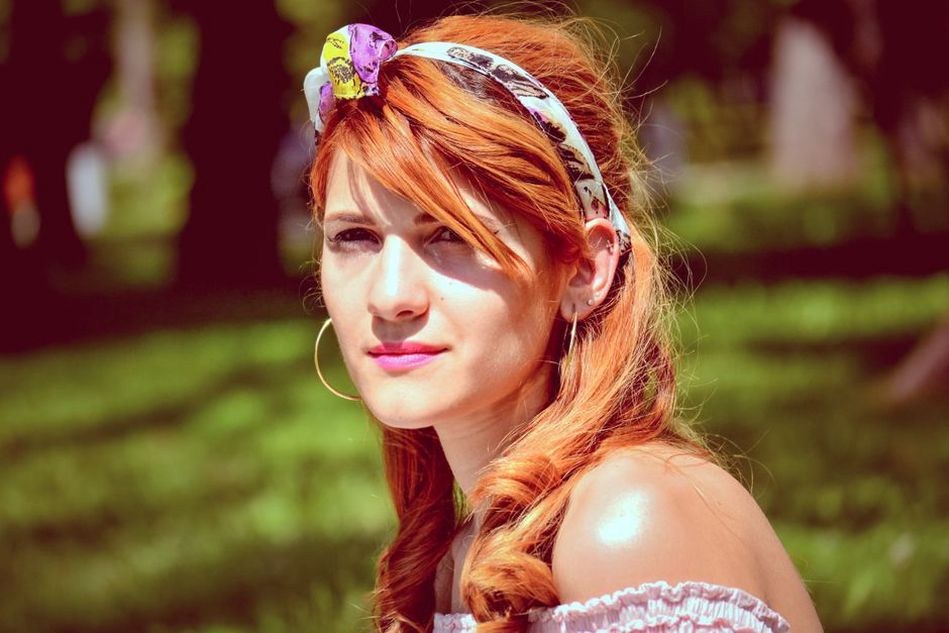
The precise geometry of the squared headband is what separates it from a simple ribbon. The square should measure roughly 5 to 7 centimetres across—any smaller and it looks like a child’s accessory, any larger and it becomes a hat. When you place it on your head, the bottom edge of the square should sit just above your eyebrows, not pressed against the hairline. That small gap creates the illusion of height and keeps the headband from looking like a corrective device. If you find a vintage piece that is slightly too large, you can shorten the ribbon ties and reposition the square by hand-sewing a small pleat in the satin at the back—this is a reversible alteration that preserves the original integrity of the accessory.