
Vintage Hair Accessories for Summer: The July 2018 Archive
A humid British summer is the sternest test a vintage hair accessory can face. The July 2018 archive was assembled with that test in mind: it is a month of lightweight combs, shell pins, and silk ribbons, chosen for their ability to hold a twist or a low chignon without weighing the wearer down. If you have ever abandoned a favourite 1950s clip at the last minute because it felt too heavy for a garden party, this collection explains why — and what to reach for instead.
What the July 2018 Archive Holds
The archive is not a large one, but it is unusually focused. Every post in July circled back to the same question: how did British women wear hair accessories in warm weather before air conditioning, and what can we learn from their choices today? The answer turned out to be a set of small, clever objects that favour lightness over ornament.
- A close study of 1920s celluloid combs in pale amber and mottled “sunrise” patterns, including how to tell them from later plastics.
- A practical guide to genuine shell hairpins from the 1930s, with close-up notes on colour, translucency, and the tell-tale lines of natural material.
- A field guide to ribbon-and-comb combinations for outdoor events, from Ascot to a village fête.
- A collector’s essay on “summer-only” accessories — the pieces that stay in a drawer from October to May and come out only when the days lengthen.
- A care primer for heat-sensitive materials, written after a reader asked what to do with a celluloid comb that had begun to warp.
The month also includes a short glossary of trade terms — “sunrise”, “mottled”, “clouded” — that collectors will encounter when reading original advertisements and auction lots. It is the kind of vocabulary that makes a trip to a flea market far more productive, because the right word can help you spot a promising piece in a crowded stall.
The collector’s essay is the emotional heart of the month. One woman describes a shell pin inherited from her grandmother as “a piece of the sea I can wear in my hair”, and explains why she only wears it in summer. That sentiment — the way a small object can carry memory and affection — is the same territory we explored in All the Love in the World, a post about collecting vintage hair accessories with heart.
The Gilded Pin, our earlier look at the February 2017 Edwardian Hair Accessory Archive, traced how Edwardian combs earned their reputation for sculptural drama. The July 2018 archive picks up that thread in a quieter register: the same comb-making techniques, but scaled down and lightened for summer.
Summer Materials: Shell, Celluloid, and Silk
Three materials dominate the July archive, and each behaves differently in heat and humidity. Understanding those differences is the key to choosing a piece that will last the day.
Genuine shell — tortoiseshell, in the pre-1940s sense — is warm to the touch, slightly translucent, and surprisingly strong when thin. It holds its shape well in warm weather and does not feel sticky against the skin. The archive’s guide to shell pins notes that the best pieces have a subtle depth of colour, from pale honey to dark amber, and that the surface is never perfectly uniform. Genuine tortoiseshell has been restricted in international trade since the 1970s, so the July archive is careful to advise readers to seek only vintage pieces and to avoid anything newly made.
Celluloid was the great early-twentieth-century substitute. British manufacturers often sold it under the trade name xylonite, and it appeared in everything from dresser sets to hair combs. It is lighter than shell and could be made in extraordinary mottled patterns, including the “sunrise” effect that looks like bands of orange and gold. The archive explains that this pattern was created by mixing different coloured celluloid while it was still soft, which is why no two sunrise combs are exactly alike. But celluloid is also sensitive: direct sunlight can fade it, and heat can make it warp. The July archive includes a careful checklist for spotting celluloid combs that have already been damaged by poor storage.
Silk ribbons appear throughout the archive as the third element of the summer kit. In the 1930s, ribbons were often stitched to small metal or celluloid clips, making them practical for women who wanted colour without the weight of a comb. The archive’s field guide shows how to tie a ribbon into a low ponytail or weave it through a braid so that it stays put on a windy afternoon.
| Material | Weight | Heat tolerance | Best used for |
|---|---|---|---|
| Shell | Light | Good | Pins, small combs |
| Celluloid | Very light | Poor | Ornamental combs, clips |
| Bakelite | Heavy | Good | Winter accessories |
Bakelite, which appears in several earlier archive posts, is a reminder of what summer is not for: it is a dense, glossy plastic that can feel weighty and uncomfortable on a hot day. The July archive mentions it only to set it aside.
The archive repeats one warning about identification: the hot-pin test, sometimes suggested as a way to tell shell from celluloid, can easily damage a piece. Instead, look for the soft glow of natural material, the absence of a mould seam, and the slight irregularity of colour that no later plastic quite replicates.
Techniques That Survive a Warm Day
The July posts are refreshingly practical about technique. A low chignon held with two crossed shell pins is the single most recommended style in the archive; it keeps hair off the neck without requiring pins that dig into the scalp. The trick, as one post explains, is to slide the pins in at a slight angle so that they lock against each other beneath the twist. This works best on hair that is not freshly washed — a useful detail for anyone who has fought with slippery pins on a humid morning.
A long comb, worn vertically at the back of the head, is another summer classic. The archive recommends choosing one with widely spaced teeth, because it grips well without pulling. For a French twist, a single comb inserted downward from the crown holds the roll in place while leaving the nape bare — a small mercy when the temperature climbs. The difference between a 1920s comb and a 1940s comb matters here: the earlier pieces tend to have finer teeth and a gentler curve, while the later ones are deeper and more assertive. Both can work, but the archive suggests letting the shape of your head, rather than the decade of the piece, be the guide.
Ribbons, the archive argues, are the most forgiving option of all. A narrow silk ribbon tied around a low bun or threaded through a braid adds a period touch without any of the pressure that a clip can create. The key is to use a ribbon with enough texture to grip the hair; the glossy, slippery varieties look lovely but slide off by midday. The archive’s field guide recommends testing a ribbon knot the evening before an event, because a knot that feels tight at the dressing table will often loosen after an hour of movement.
Wearing Vintage Accessories with a Modern Summer Wardrobe
The July 2018 archive also spends time on how these pieces fit into contemporary dressing. A 1920s sunrise comb, worn at the side of a deep side-part, works just as well with a modern slip dress as it did with a beaded shift. A 1930s shell pin can hold a low twist while you wear a linen shirt and tailored trousers. The archive’s styling notes are emphatic on one point: do not save these pieces for costume events. They were everyday objects, and they still function best as everyday accessories.
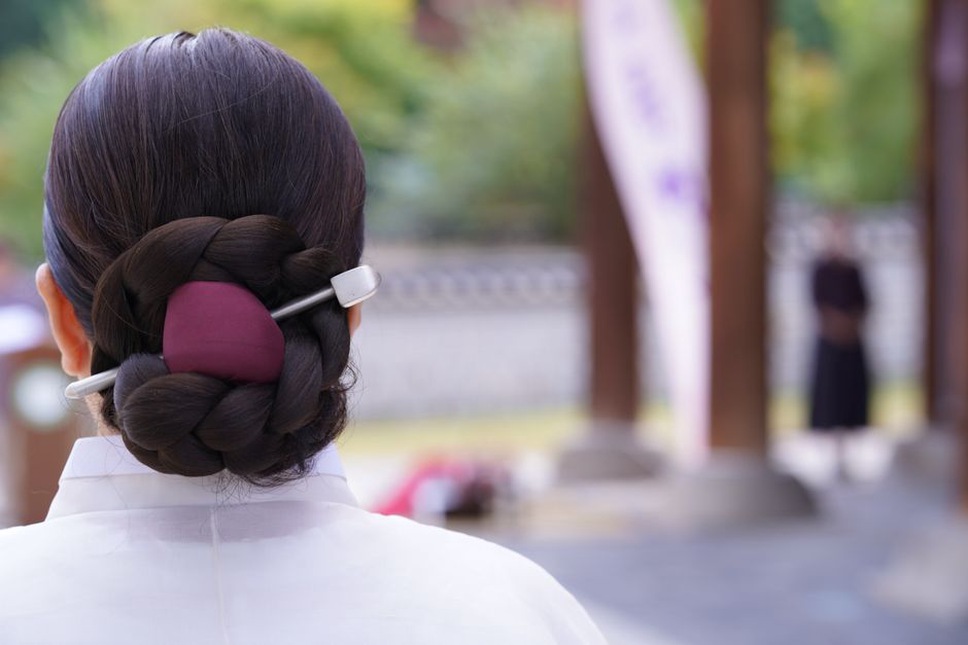
One post in the archive is devoted to outdoor events, and it reads like a survival guide for race days and weddings. Its advice: choose one focal accessory, keep the rest of the hairstyle simple, and test the piece at home before the event. A comb that feels secure indoors can loosen after an hour of warm weather and movement, so the archive recommends a trial run with a brisk walk around the block. It also suggests carrying a spare pin in a pocket, not because the chosen accessory is likely to fail, but because the confidence of having a backup makes it easier to enjoy the day.
Caring for Heat-Sensitive Pieces
The final practical thread in the July archive is care. Celluloid needs the most attention: keep it out of direct sunlight, never leave it on a windowsill, and store it flat in a fabric-lined box rather than in a heap where it can bend. If a celluloid comb has already warped, the archive advises against trying to force it back into shape with heat — that will only make the problem worse. Instead, lay it flat under a light weight in a cool room and allow it to settle slowly. Patience matters more than pressure.
Shell is more forgiving, but it still benefits from being wiped with a soft, dry cloth after wear to remove any natural oils from the skin. The archive suggests a very occasional rub with a tiny drop of mineral oil on a cotton bud, applied only to the surface of the shell and then buffed off. This is about the material, not the hair, and it should be done sparingly. Over-oiling can dull the surface, so the guiding rule is to use less than you think you need.
Ribbons should be untied after each wear and pressed with a cool iron if they have creased. The archive notes that many 1930s ribbons are made of pure silk, which is delicate when wet, so spot-clean them rather than submerging them. If a ribbon has lost its crispness, a gentle starch can help, but test it on an inconspicuous section first.
The final post in the July 2018 archive ends with a simple exercise: take your least-used vintage comb, lay it on a piece of white paper, and look at it in daylight. You will notice the colour variations that tell you whether it is shell, celluloid, or a later plastic — and you will know exactly how to wear it next time the sun comes out.