
The Nina Headband: A Vintage British Hair Accessory Guide
In a small antiques shop off Portobello Road, a velvet headband marked simply “Nina, London, 1950s” sat among a pile of costume jewellery. The band was a deep burgundy, barely wider than a finger, with a subtle dip at the centre and a single silk rose at the temple. It was not signed by a famous house, yet the quality of the millinery wire and the hand-stitched backing told a story of meticulous craftsmanship. That headband, named after the unknown maker or perhaps the first owner, is the kind of piece that defines the quiet elegance of British vintage hair accessories. This article explores the Nina headband—its origins, materials, and how to wear it today without it feeling like a costume.
What Exactly Is a “Nina” Headband?
The term “Nina headband” does not refer to a single mass-produced item but rather to a distinct style that emerged in mid-20th-century British millinery. Typically, a Nina headband is a narrow, flexible band (often velvet or satin) that sits close to the hairline, sometimes with a small ornament—a rose, a cluster of leaves, or a single pearl—placed asymmetrically. Unlike halo headbands that encircle the entire crown, the Nina design usually stops behind the ears, held in place by a hidden wire or elastic. The name “Nina” may have come from a small London workroom that produced these pieces for society women in the 1950s; records are scarce, but collectors recognise the silhouette instantly.

A Brief History: From Workroom to Wardrobe
The 1950s and early 1960s were a golden age for British hair accessories. Women wore hats less often for casual occasions, but headbands offered a lighter alternative that still framed the face elegantly. Milliners began experimenting with flexible metal frames covered in fabric, creating pieces that could be worn for an afternoon tea or an evening event. The Nina headband fits squarely into this era. It was popularised by women who wanted a polished look without the bulk of a hat—think of the neat, feminine profiles seen in photographs of the Queen’s garden parties or the Royal Ascot. By the late 1960s, as hair grew longer and more free-flowing, the Nina headband receded from daily wear but never disappeared entirely. It remained a staple for brides, bridesmaids, and women attending formal occasions, often passed down as heirlooms.
Materials and Craftsmanship
Authentic vintage Nina headbands are prized for their materials. The base is almost always a millinery wire—thin, flexible, and able to hold its shape without pinching. The fabric covering is either silk velvet, rayon velvet, or fine satin. The ornamentation is hand-made: a silk rose with individually shaped petals, a mother-of-pearl leaf, or a tiny cluster of glass beads. The backing is often a grosgrain ribbon or a strip of cotton, sewn by hand to conceal the wire ends. Because these pieces were made in small batches, no two are identical. The stitching is a clue to authenticity: machine stitching is straight and uniform, whereas hand-stitching shows slight variations in tension and length. When examining a vintage Nina headband, look for a label or a remnant of one—many came from workrooms in Soho or the West End, though the “Nina” name is rarely branded.
Iconic Silhouettes of the 20th Century
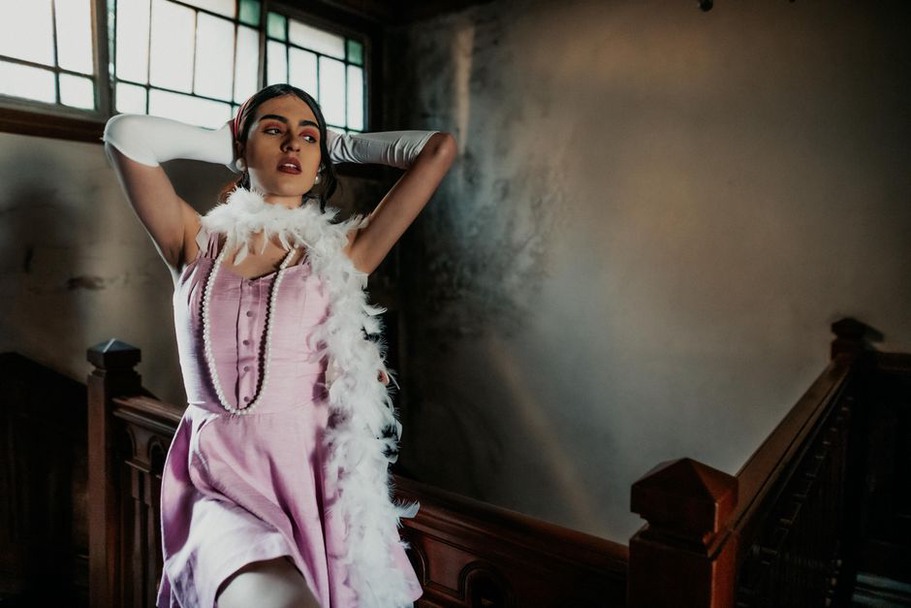
The Nina headband belongs to a family of mid-century hair accessories that include the cone hair clip and the braided headband. While the cone clip is a structural wonder, the Nina is about subtlety. Its silhouette is narrow and close to the head, contrasting with the wider, more dramatic headbands of the 1970s. The most iconic Nina shape is the “dip” at the centre—the band rises slightly at the temples and dips over the crown, creating a soft arc that suits oval and heart-shaped faces. Another variant is the “double band,” where two thin wires run parallel, meeting at the ornament. This gives a more sculptural look without adding bulk. Collectors often seek the burgundy, navy, and forest green versions, though black and ivory remain the most common for formal wear.
How to Wear a Nina Headband Today
The beauty of the Nina headband is its versatility. It does not require a period costume to look natural. Here are three ways to incorporate it into a modern wardrobe:
- With a sleek low bun: Place the headband about an inch behind your hairline, letting the ornament sit at the temple. The narrow band adds a touch of old-world elegance to a simple updo, especially when paired with a silk blouse or a tailored blazer.
- With loose waves: For a softer look, wear the headband over mid-length hair that has been curled with a large-barrel iron. Tuck the band behind your ears, allowing the ornament to peek out. This works well with a linen dress or a cashmere sweater.
- As a bridal or occasion accessory: The Nina headband is an understated alternative to a tiara. Choose a vintage piece in ivory or pale pink, and let the ornament echo the flowers in your bouquet. It pairs beautifully with a simple veil or a short mantilla.
For a deeper dive into styling vintage accessories with modern silhouettes, you might find our guide on The 70s Maxi Dress Revival useful—it shows how to blend era-specific pieces with contemporary pieces.
Caring for Your Vintage Nina Headband
Because these headbands are often made of delicate silk and metal, gentle care is essential. Avoid storing them in direct sunlight, which can fade the velvet or satin. Wrap the headband in acid-free tissue paper and place it in a padded box, separate from heavier jewellery. If the wire becomes misshapen, gently bend it back with your fingers—do not use pliers, which can break the fabric. For cleaning, spot-clean with a damp cloth only if necessary, and never submerge the headband in water. If the ornament is loose, take it to a specialist in vintage millinery repairs rather than attempting a DIY fix. A well-maintained Nina headband can last for decades and even be passed down to the next generation.
Conclusion: A Final Practical Note
When you next browse a vintage fair or an online marketplace, look for the narrow, wire-backed headband with a hand-made ornament. If it is marked “Nina” or simply has that unmistakable mid-century silhouette, consider it a worthy addition to your collection. Check the internal wire for rust by gently flexing the band—if it feels smooth and the fabric is intact, the piece is likely sound. And remember that the most charming Nina headbands are often the ones with a small imperfection: a slightly off-centre rose or a faint line where the grosgrain ribbon was re-sewn. Those are the details that tell a real story, not a reproduced one.