
All a Girl Really Wants: Vintage Hair Accessories and a Lot More
There is a particular moment every collector knows: you lift the lid of a battered hatbox at a car boot sale in the Cotswolds, and there, nestled among yellowed tissue paper, lies a tortoiseshell comb with hand-cut teeth and a patina that no modern machine could replicate. Your heart skips, not because the comb is rare, but because it has a story — a dance in a village hall, a wedding in 1928, a hundred quiet mornings of pinning and tucking. That is what we mean when we say all a girl really wants: not just the object, but the history, the craft, and the way a single accessory can transform an ordinary Tuesday into something a little more special. And yes, a lot more — because vintage hair accessories are never just about the hair. They are about identity, memory, and the joy of wearing something that has already lived a full life.
The Anatomy of a Vintage Hair Accessory: What to Look For
Before you spend a single pound, train your eye to read the physical clues that separate a genuine vintage piece from a modern repro. Start with the material. Celluloid, popular from the 1880s to the 1930s, feels warm to the touch and often smells faintly of camphor when rubbed. Bakelite, the workhorse of the 1930s and 1940s, is heavier, and a drop of 409 cleaner on a cotton bud will leave a yellow mark on true Bakelite. Tortoiseshell — the real thing, from the hawksbill turtle — has a translucent, mottled depth that no plastic can imitate, and it was widely used in combs and slides until the 1970s ban. If you find a piece marked “French ivory” or “Galalith,” you are looking at casein plastic, a milk-based material that was a favourite for Art Deco buckles and barrettes.
Next, examine the construction. Vintage combs are often hand-cut, with teeth that are slightly irregular in spacing. The base of a good comb will be polished, and the teeth will be smoothly rounded at the tips — not sharp or splintery. For metal pieces, look for stamped hallmarks or maker’s marks on the back of a slide or the stem of a pin. British makers like Adolph Saurer and the Birmingham-based firm of W. & S. were known for fine silver and gilt work. Finally, consider the closure: old barrettes use a spring-loaded hinge that clicks with a satisfying snap, whereas modern ones often have a flimsy pinch clasp.
Bows, Combs, and Pins: The Icons of Each Decade
Every era left its signature in the hair. The Edwardian era (1901–1910) gave us the pompadour, and with it, the need for large, ornate combs that swept up from the nape of the neck. These combs were often made of horn, tortoiseshell, or celluloid, and decorated with paste stones, seed pearls, or intricate engraving. The 1920s flipped the script: short bobs called for small, geometric slides and bandeaus — headbands encrusted with rhinestones or cut steel that caught the light in smoky jazz clubs. By the 1930s, Hollywood glamour brought back longer hair, and the French twist demanded sturdy metal combs with decorative tops, often in silver or gold plate.
The 1940s were all about practicality with polish. Wartime rationing limited materials, so designers turned to wood, bakelite, and even recycled plastic. Barrette clips became wider and more sculptural, often shaped like leaves, bows, or abstract flowers. The 1950s celebrated volume: think Audrey Hepburn’s chic chignon, anchored by a simple tortoiseshell comb, or the iconic “poodle” cut adorned with a velvet bow. The 1960s brought the beehive and the need for long, sturdy pins that could hold a mountain of teased hair. And the 1970s, of course, saw the rise of the scarf-tied ponytail and the return of romantic, flowing styles that favoured soft fabric flowers and delicate metal slides.
Materials and Techniques: The Craft Behind the Beauty
Understanding how vintage pieces were made deepens your appreciation and helps you care for them. Celluloid was the first successful synthetic plastic, and it was a marvel of its time — light, glossy, and cheap. But it is also highly flammable and can degrade over time, so store celluloid pieces away from heat and direct sunlight. Bakelite, a phenol-formaldehyde resin, was moulded under heat and pressure, then carved and polished by hand. Its colours range from butterscotch and cherry red to deep green and marbled brown. To test for Bakelite, rub the piece vigorously with a soft cloth — it should smell of formaldehyde, a sharp, chemical scent that some collectors find oddly comforting.
For metalwork, look for techniques like die-stamping (where a sheet of metal is pressed into a mould) and filigree (fine wires twisted and soldered into lace-like patterns). Silver pieces may be marked “sterling” or “925,” while gilt pieces are often stamped “18ct” or “9ct.” Pearl and stone settings were usually glued or prong-set, and it is not uncommon to find a missing stone — a small loss that can be repaired by a jeweller who specialises in antique work. If you are drawn to fabric pieces, such as velvet bows or silk flowers, note the stitching: hand-rolled hems and tiny, even stitches indicate quality, while machine zigzag suggests a later date.
How to Wear Vintage Hair Accessories Today
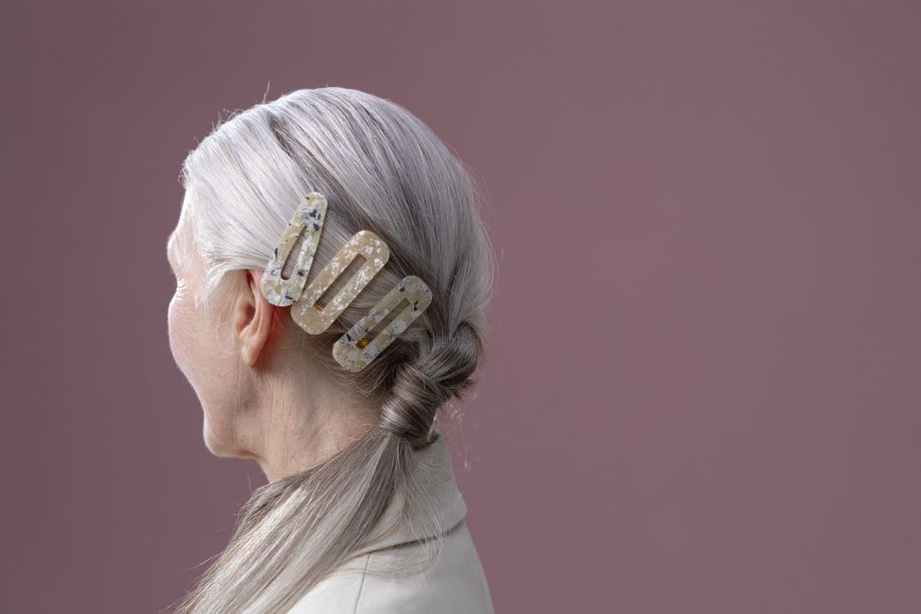
The secret to wearing vintage without looking costumed is to let the accessory do the talking. A 1940s bakelite barrette in a bright cherry red adds a pop of colour to a simple chignon. An Edwardian tortoiseshell comb can anchor a low bun, and the warm tones complement almost any hair colour. For a modern twist, try a single 1920s rhinestone slide clipped onto a sleek side part — it catches the light like a piece of jewellery. Layering is also key: stack two or three small vintage pins in a row along a ponytail, or mix a velvet bow with a modern silk scrunchie for texture contrast.
When choosing a piece for everyday wear, consider your hair’s thickness and length. Heavy combs need a secure grip, so look for ones with longer teeth and a curved back that hugs the skull. For fine hair, a light celluloid slide or a small metal pin is safer — heavy bakelite may slip. And don’t be afraid to pair vintage with contemporary clothing: a 1950s pearl-studded comb looks stunning against a sharp blazer, and a 1970s wooden slide adds an earthy note to a linen shirt. The key is confidence — wear the piece as if it were made for you, because in a sense, it was.
Where to Find Authentic Vintage Pieces in the UK
British soil is rich with vintage treasure. Start with antiques fairs and markets, such as the famous Portobello Road Market in London, or the monthly flea at Kempton Park Racecourse. Charity shops in affluent areas often yield surprises — a box of old combs for a few pounds. Online platforms like Etsy and eBay are useful, but you must be diligent: ask for close-up photos of markings and edges, and request a smell test for bakelite if possible (though most sellers are not that accommodating). Auction houses, especially regional ones, sometimes sell lots of vintage accessories, and you can often find bargains if you are willing to sort through a job lot.
When you do find a piece, check for damage. A missing tooth on a comb can be repaired by a skilled restorer, but a cracked bakelite barrette is often beyond saving. Loose stones can be re-set, but check the prongs — if they are brittle, they may break during wear. Always ask about provenance if the seller offers it; a piece with a documented history is more valuable and more meaningful. And if you are just starting your collection, focus on one era that speaks to you — perhaps the clean lines of the 1930s or the romantic flourishes of the 1950s — and build from there.
Caring for Your Treasures: Storage, Cleaning, and Repair
Proper care ensures your vintage accessories last another century. Store them flat in a lined jewellery box or a drawer with acid-free tissue paper. Avoid plastic bags, which trap moisture and can cause celluloid to off-gas and become brittle. Keep them away from radiators and sunny windowsills — heat and UV light are the enemies of both plastic and tortoiseshell. For cleaning, use a soft, dry cloth for dust. For metal pieces, a gentle silver polish is fine, but avoid getting it on any stones or enamel. For bakelite, a soft cloth with a tiny bit of mild soap and water can work, but dry immediately. Never soak any piece, as water can seep into joints and loosen stones.
If a piece needs repair, seek a professional who specialises in antique jewellery or vintage accessories. A jeweller can re-tip a comb tooth, re-set a stone, or re-plate a worn metal slide. For celluloid, repair is tricky because the material is unstable; often it is better to preserve the piece as a display item rather than risk breaking it further. For fabric bows and flowers, a gentle hand-wash in cold water with a drop of mild detergent can revive them, but always test a hidden area first. And if you have a beloved piece that is too fragile to wear, consider framing it in a shadow box — it becomes a work of art that still tells its story.
The Joy of the Hunt: Building a Meaningful Collection
Collecting vintage hair accessories is not about hoarding; it is about curating a personal museum of style. Each piece you choose should resonate with you — a colour that flatters your skin, a shape that echoes a favourite film, or a material that reminds you of your grandmother’s dressing table. As you build your collection, keep a small notebook or a digital spreadsheet to record where you found each piece, what you paid, and any known history. This not only helps you remember but also adds to the story you can share when you wear them.
One of the most rewarding aspects is the community. Join online forums or local vintage clubs where collectors share tips on cleaning, repairing, and identifying pieces. You might even find a fellow enthusiast who can help you date a mysterious comb or identify a maker’s mark. And if you are feeling generous, consider donating a piece to a local museum or costume archive — it is a way to preserve history for future generations. After all, the love of vintage is not just about owning beautiful things; it is about honouring the craftsmanship and the people who wore them before us.
So, the next time you find yourself at a flea market, run your fingers over a row of old combs. Feel the weight of the bakelite, the smoothness of the tortoiseshell, the coolness of the silver. Ask yourself: would this make my everyday a little more special? If the answer is yes, then you have found exactly what a girl really wants — and a lot more.